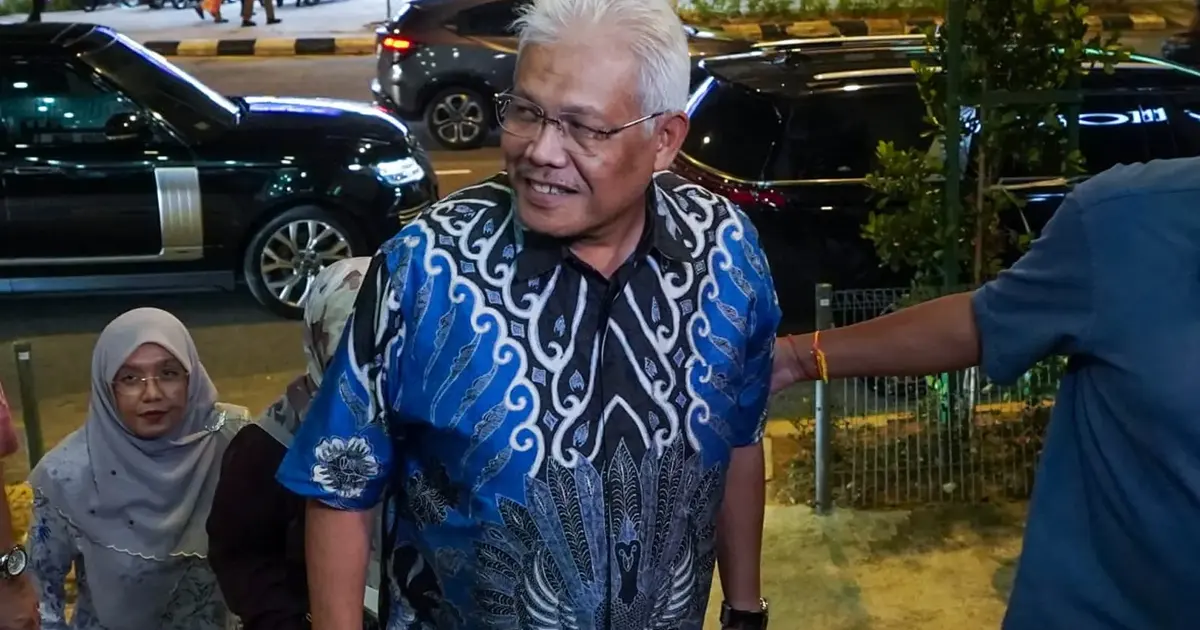
Malaysian politics entered a new phase of instability this week when opposition figures, including prominent deputy president Hamzah Zainudin, were observed converging on Perikatan Nasional's stronghold at PAS headquarters for what observers suggest could signal deeper realignment within the political landscape. The convergence of these MPs marks a turning point in the delicate balance of power that has characterised Malaysian coalition politics since the 2022 general election.
The timing of this gathering carries significant weight, arriving in the immediate aftermath of PAS's dramatic severance of its partnership with Bersatu—a shock that reverberated through Perikatan Nasional and sent tremors across the broader opposition bloc. This fracture within PN, which has traditionally presented itself as a unified counterweight to the ruling Pakatan Harapan government, exposes fundamental fissures that have been widening beneath the surface for months. The departure of Bersatu from the coalition leaves significant questions about PN's cohesion and electoral viability moving forward.
The presence of Hamzah at the PAS meeting carries particular weight given his standing within opposition circles. As a prominent figure straddling various political configurations, his attendance suggests that conversations about potential regroupings or strategic adjustments are already underway at senior levels. This is not merely a ceremonial visit but appears to reflect substantive discussions about the future direction of opposition politics in Malaysia during a period of pronounced institutional flux.
PAS, as the largest component of the now-fractured coalition, finds itself in a pivotal position. The Islamic party has long maintained stronger grassroots organisation than its coalition partners and possesses significant electoral reach, particularly in the peninsular states. By convening this meeting, PAS signals its intention to consolidate its position and potentially reshape alliances according to its own strategic interests, rather than remaining tethered to arrangements that no longer serve its political objectives.
For Malaysian observers, the PAS-Bersatu rupture represents a watershed moment reminiscent of earlier coalition collapses that have periodically destabilised the political system. The decision by PAS to sever ties followed mounting tensions over leadership direction, policy priorities, and the distribution of political spoils within the alliance. These disagreements, which had been simmering for some time, finally boiled over into open confrontation, leaving coalition structures scrambling to recalibrate.
The appearance of multiple opposition MPs at PAS headquarters simultaneously suggests coordination at a higher level. This coordinated engagement indicates that various opposition elements are exploring whether a post-Bersatu PN might offer greater utility for their individual and collective political objectives. The mechanics of Malaysian coalition politics often turn on such calculated repositioning, where MPs assess which configuration offers the greatest leverage for advancing their constituencies' interests and their own political survival.
The broader implications extend beyond immediate parliamentary mathematics. A reformed opposition structure could alter the competitive dynamics for the next election cycle, potentially affecting which coalitions control particular states and regions. For Southeast Asia's largest economy and a crucial regional player, such political realignment carries consequences for governance capacity, policy continuity, and economic decision-making. Investors and regional partners typically watch Malaysian political volatility with concern, as it can signal instability in policymaking.
The strengthening of PAS's position within opposition politics also reflects demographic and geographic realities that have shaped Malaysian electoral outcomes in recent cycles. The party's appeal among rural voters and traditional constituencies provides a foundation that urban-based parties often lack. As other opposition components recalibrate their strategies, the calculus inevitably leads them to consider alignment with PAS rather than attempting to build parallel structures.
However, the sustainability of any new configuration remains uncertain. The contradictions that produced earlier coalition collapses—fundamental differences in ideology, competing ambitions for leadership, and incompatible visions of Malaysia's future—have not vanished. A reformed grouping might prove more durable than its predecessors if underpinned by clearer agreements and more realistic expectations, but the history of Malaysian coalition politics offers limited cause for optimism on this front.
For the Pakatan Harapan government, these developments present both opportunities and complications. The fragmentation of opposition forces might appear advantageous for government cohesion in the short term, yet it also potentially destabilises the broader political ecosystem in ways that could eventually rebound on the ruling coalition. Malaysian politics functions most effectively when opposition groupings maintain sufficient viability to fulfill their checking function, even as they remain unable to dislodge the government.
The meeting at PAS headquarters, therefore, should be understood not as a isolated incident but as a visible manifestation of deeper structural changes unfolding across the opposition landscape. Whether this repositioning crystallises into a more stable configuration or merely precedes further turmoil remains to be seen, but the engagement of senior figures like Hamzah underscores that meaningful negotiations about the future shape of opposition politics are actively underway.
Moving forward, Malaysian political observers should monitor whether this gathering leads to formal arrangement announcements or whether it represents preliminary exploration destined to yield little concrete outcome. The answers to these questions will significantly shape the competitive terrain for the remainder of this electoral term and potentially influence the character of the next general election.