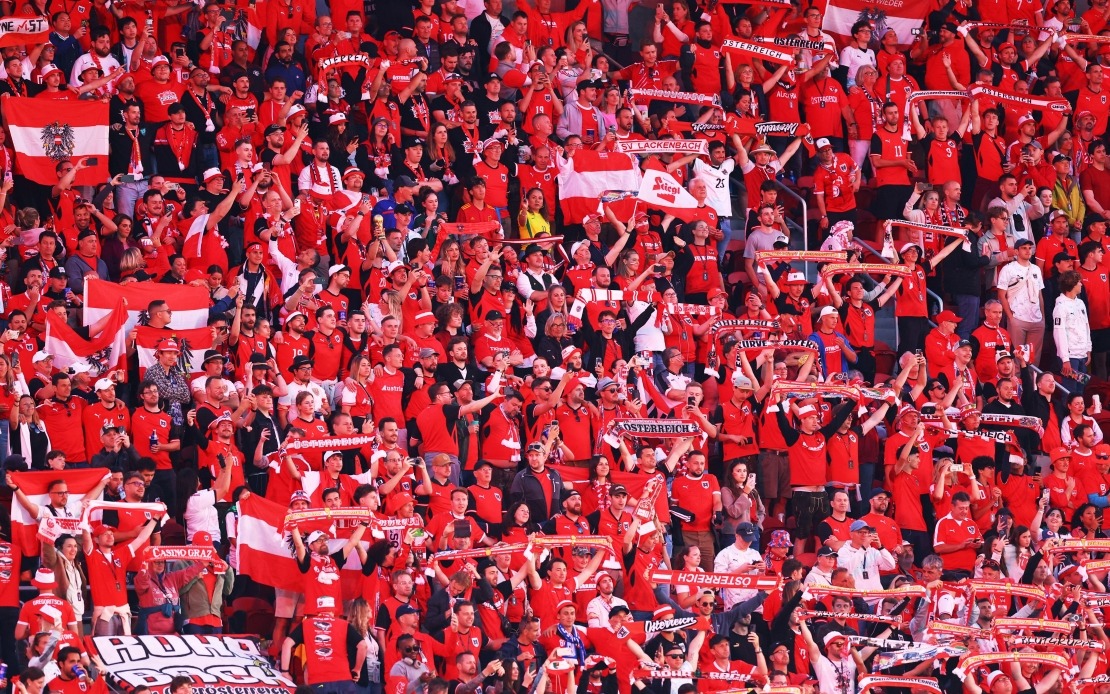
The opening fortnight of the World Cup in North America has drawn exceptionally strong attendance figures, with FIFA revealing that more than 1.03 million fans filled stadiums across the tournament's first 16 fixtures. The cumulative crowd of 1,028,429 spectators represents a significant validation of the tournament's appeal to North American audiences, with stadiums operating at an impressive 99.34 per cent capacity through to Monday of the second week. This achievement comes despite widespread predictions that expensive ticket prices would dampen enthusiasm and leave numerous empty seats throughout the competition.
The early attendance success delivers positive momentum for the tournament organisers and contradicts pre-tournament scepticism from ticket market observers. Many analysts had anticipated that pricing strategies would prove prohibitively expensive for casual supporters and families, potentially creating visible gaps in stadium crowds that could undermine the tournament's visual spectacle and fan atmosphere on broadcasts. FIFA president Gianni Infantino marked the milestone by meeting with Aaron Bren, identified as the one millionth attendee, reinforcing the symbolic importance of the crowd figures to the governing body's narrative around the competition.
Infantino seized the opportunity to praise supporter engagement, posting on Instagram that fans "have brought the most inclusive FIFA World Cup to life." The language of inclusivity reflects FIFA's broader strategic messaging around the tournament's expansion and global accessibility, though this framing sits in tension with the very ticket pricing concerns that had threatened attendance. The one million milestone represents not merely a numerical achievement but also serves as promotional material for FIFA's defence of its commercial and ticketing decisions ahead of future tournaments.
Yet the strong aggregate attendance figures mask significant variation across individual matches and venues. The fixture between South Korea and the Czech Republic in Guadalajara the previous Thursday, and Qatar versus Switzerland at a Bay Area venue the following Saturday, both displayed visibly sparse crowds that generated media commentary about empty seating. These instances suggest that pricing remained prohibitively high for certain matches, likely those perceived as less commercially attractive or featuring nations with smaller diaspora populations in North America. The contrast between headline attendance numbers and the reality of specific match-day experiences highlights how aggregate statistics can obscure important dynamics within the tournament.
Beyond attendance metrics, serious concerns have surfaced regarding crowd safety and management protocols. Football Supporters Europe, a representative organisation for fan groups across the continent, has warned that the absence of traditional supporter segregation at North American venues creates heightened risks of inter-fan confrontation. Executive director Ronan Evain articulated concerns to BBC Sport that the ticket resale market, which FIFA has actively promoted to maximise revenue, has eroded the governing body's visibility into ticket distribution patterns. When supporters purchase and resell tickets through secondary markets, FIFA loses the ability to systematically identify and separate fans from opposing nations, fundamentally undermining traditional security architectures developed through decades of European tournament experience.
The vulnerability emerges from FIFA's deliberate encouragement of ticket resales as a mechanism to capture secondary market value. By promoting individual ticket transactions, the organisation has prioritised commercial extraction over the granular crowd intelligence that allows security personnel to anticipate and manage flashpoints between rival supporters. Evain highlighted that this approach represents a significant departure from established best practice at major tournaments, where dedicated allocations for supporter groups create known geographic zones and enable preventative security measures. The absence of such structures in North America exposes the tournament to unpredictable crowd compositions that could rapidly deteriorate if incidents occur.
FIFA has defended its approach by noting that loyal supporters from participating nations receive dedicated allocations through participant member association (PMA) arrangements, which create ring-fenced ticket blocks reserved for official national supporters. This structure, according to FIFA sources, should concentrate the most passionate and coordinated supporters into identifiable sections, reducing the probability of hostile encounters between opposing fan groups scattered throughout general admission seating. However, this defence appears to acknowledge rather than resolve the underlying concern: that secondary ticket markets have undermined the efficacy of traditional segregation models without offering alternative safety mechanisms.
The tension between commercial and operational priorities reflects broader challenges facing FIFA's tournament management in the North American context. North American sporting culture, and the venues developed for major league franchises, typically operate without the rigid supporter segregation standard in European football. Integrating international football fans into this context requires either imposing unfamiliar restrictions that may alienate North American spectators, or accepting greater mingling of opposing supporters with attendant security implications. FIFA has seemingly chosen the latter approach, prioritising market expansion and ticket revenue over the safety protocols refined through generations of European competition.
For Malaysian football supporters and regional observers, these dynamics carry relevance beyond the immediate tournament. As Southeast Asian nations develop capacity to host major football competitions, the World Cup's experience in North America demonstrates both the commercial opportunities and operational risks of large-scale tournament hosting. Malaysia and regional counterparts must consider whether expanded crowds and ticket revenue justify the complexity of managing diverse, potentially volatile supporter compositions without robust segregation infrastructure. The early phases of the North American World Cup suggest that achieving high attendance and maintaining comprehensive crowd safety simultaneously demands significantly more sophisticated planning than simply opening stadiums and pricing tickets competitively.
The coming weeks will determine whether the strong opening attendance persists throughout the tournament or whether the data reflects novelty effects concentrated in early matches. Similarly, the effectiveness of FIFA's PMA-centred security approach will become apparent as tournaments progress through knockout stages, where supporters of eliminated nations redirect their emotional investment and eliminated team fans may seek alternative viewing venues. The interplay between commercial success, measured by attendance and revenue, and operational success, measured by crowd safety and incident avoidance, will ultimately define whether this tournament model becomes a template for future competitions or a cautionary example of excessive prioritisation of ticket sales over established safety protocols.