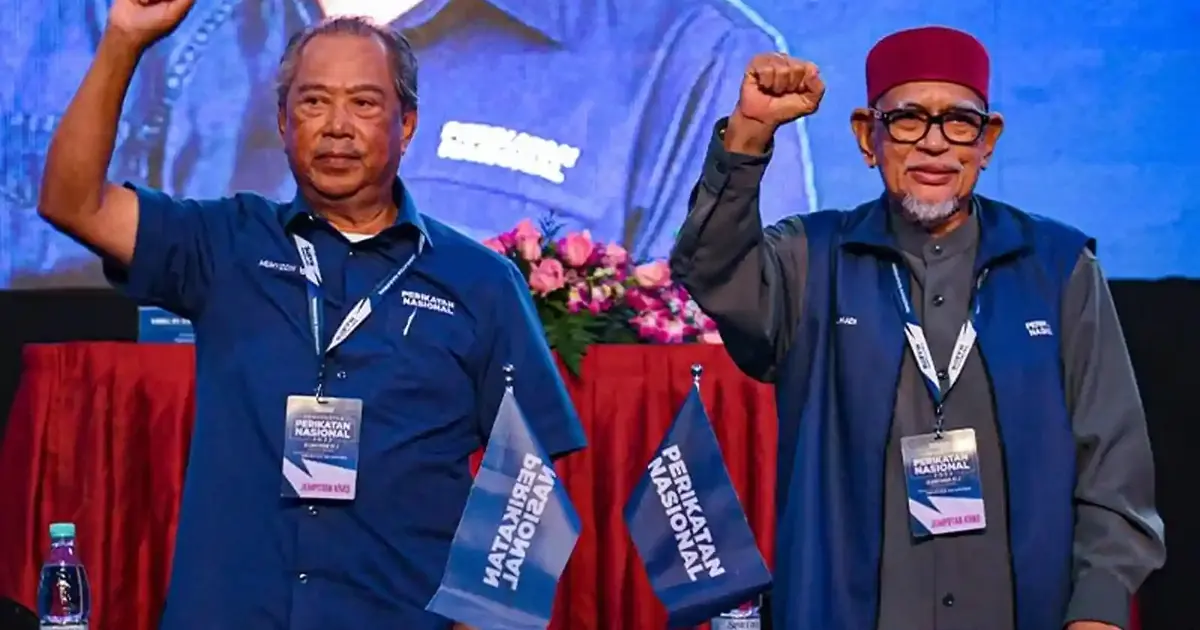
The Perikatan Nasional coalition has become a flashpoint for internal tension as two of its constituent parties, PAS and Bersatu, jostle for greater influence and direction-setting power. Political observers tracking Malaysia's fractious opposition landscape say the competition reflects deeper anxieties about which party will emerge as the dominant force should the coalition expand its electoral footprint or contest as a unified bloc in future elections. The contest reveals how the PN brand itself has transcended its founding parties to become what some analysts describe as a political asset worth fighting for in its own right.
What makes this power struggle particularly acute is the apparent disconnect between the coalition's brand strength and the individual standing of its constituent parties. Researchers who monitor voter sentiment have noted that the Perikatan Nasional label carries stronger appeal among the electorate than either PAS or Bersatu can muster independently. This phenomenon has profound implications for party strategy and resource allocation within the coalition. A voter drawn to the PN banner may harbour reservations about supporting PAS or Bersatu directly, yet feel comfortable backing candidates running under the broader coalition identity. This dynamic gives the PN brand considerable market value in Malaysian politics.
For PAS, an Islamic political party with deep roots in several states, the allure of the Perikatan Nasional identity offers a pathway to expand beyond its traditional constituencies. The party has long struggled with a perception of narrow religious appeal, particularly among urban and non-Malay voters. By anchoring itself within the PN framework, PAS gains the latitude to present itself as part of a broader, non-sectarian political project. This strategic repositioning has already yielded electoral dividends in certain regions, where PN candidates have performed better than candidates running solely under party colours would likely have done.
Bersatu, for its part, entered Malaysian politics as a splinter from the United Malays National Organisation, inheriting considerable machinery and networks at its inception. The party has nevertheless struggled to establish a distinctive political identity separate from the personality of Muhyiddin Yassin, its founding president. The Perikatan Nasional umbrella provides Bersatu with institutional heft and a broader platform that can help detach the party's political prospects from any single leader. For a relatively young political entity, the PN coalition offers both legitimacy and a mechanism to survive potential internal upheaval or shifts in leadership.
The underlying tension between PAS and Bersatu reflects competing visions for what Perikatan Nasional should become. Each party brings different assets, constituencies, and strategic interests to the table. PAS commands grassroots mobilisation capabilities honed over decades of electoral competition, particularly in rural areas and states with significant Muslim populations. Bersatu, by contrast, has inherited administrative experience and networks from federal government positions it has held or influenced. These asymmetries mean that neither party can easily dominate the coalition without provoking resistance from the other.
Observers of Malaysian politics have repeatedly emphasised that voter loyalty to the PN brand cannot be simply redistributed to whichever party gains control of the coalition machinery. The brand's strength appears to derive partly from its position as a third force distinct from both the ruling Barisan Nasional and the fragmented opposition. Attempts by one party to subordinate the other within PN could risk damaging the coalition's carefully cultivated image of representing a viable alternative government. This constraint limits how aggressively either PAS or Bersatu can pursue dominance without threatening the asset they are ostensibly fighting to control.
The competition between the two parties also reflects anxiety about representation and resource distribution. Coalition politics inherently creates friction over seat allocation, campaign funding, and access to party machinery. When the coalition brand outpolls its individual components, these distribution questions become more fraught. A party leadership might reasonably argue that it deserves greater representation because its organisational capacity and electoral machine contribute disproportionately to the coalition's success. The other party might counter that the PN brand itself accounts for a substantial share of support, which should translate into equitable treatment.
Regional dynamics complicate this power struggle significantly. Perikatan Nasional does not command uniform strength across all Malaysian states. In some areas, PAS organisational networks remain the primary asset pulling voters toward the coalition. In others, Bersatu's connections and administrative experience prove more valuable. This geographical variation means that neither party can decisively claim that it alone drives PN's appeal. Instead, both retain leverage in different contexts, creating a fragile balance that resists easy resolution in favour of either party.
Looking ahead, the durability of this internal arrangement remains uncertain. Malaysian coalition politics has repeatedly shown that shared opposition to a common adversary can mask serious organisational and ideological differences. If the PN coalition's electoral prospects improve substantially, or if broader political realignments occur in the national landscape, the question of which party should lead the coalition could move from background tension to acute crisis. Conversely, if the coalition's performance stagnates, both parties might eventually conclude that their interests are better served through alternative arrangements. The Perikatan Nasional brand's current strength offers both PAS and Bersatu powerful incentives to maintain their uneasy partnership, but that calculus could shift rapidly in response to changed political circumstances.