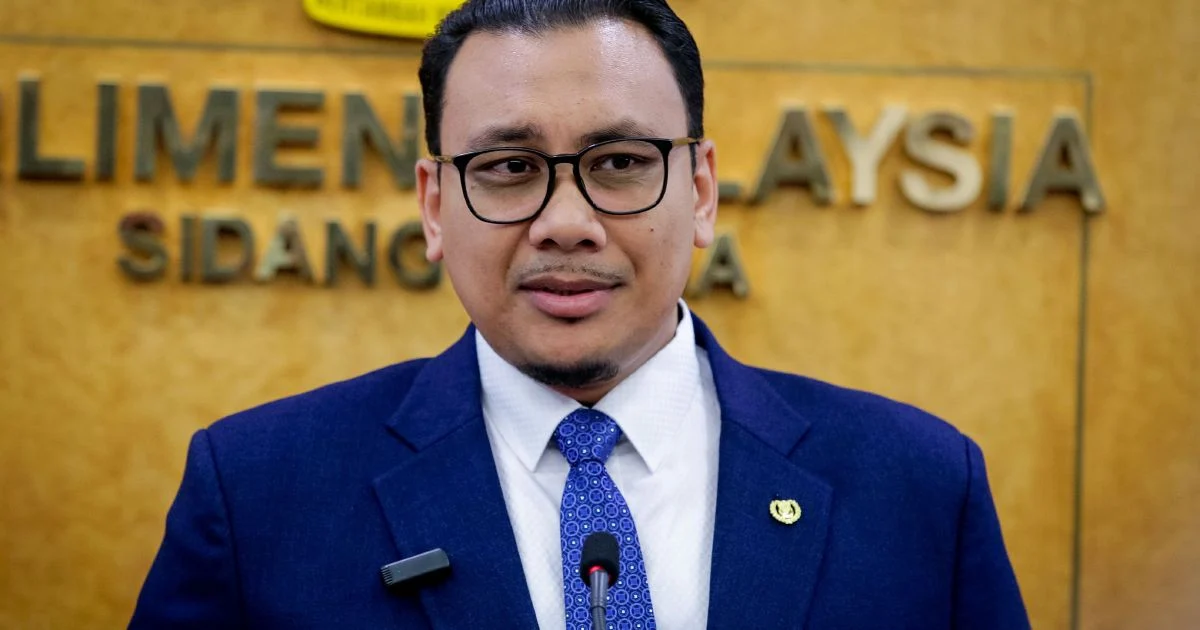
The head of PAS Youth, Afnan Hamimi Taib Azamudden, has moved to pursue legal remedies after instructing his legal team to take action in response to a Facebook post allegedly made by a Bersatu figure. The post, according to Afnan Hamimi, contained insulting remarks directed at his father and other family members, crossing what he considers a line from typical political discourse into personal attacks on his household.
The decision to escalate matters to a legal forum represents a notable shift in how Malaysian political figures are responding to inflammatory social media content. Rather than relying solely on public statements or counter-posts, the PAS Youth chief's move signals a hardening stance among younger generation politicians who appear less willing to tolerate what they view as unwarranted personal attacks masked as political commentary. This development underscores growing tensions between coalition partners within the complex landscape of Malaysian politics, where personal affiliations and family connections often carry significant weight.
Facebook remains a pivotal battleground for political messaging in Malaysia, where both established and emerging political figures maintain substantial followings and use the platform to communicate directly with supporters. The alleged post demonstrates how rapidly such content can escalate from individual commentary into inter-party disputes with potential legal consequences. The platform's reach and the permanence of digital content mean that offensive remarks, whether intentional or not, can trigger responses that go well beyond informal political sparring.
The involvement of Bersatu in this dispute adds another layer of complexity to the current political environment. The party, which has navigated its own internal divisions and shifting coalition alignments in recent years, finds itself at the center of yet another controversy involving its representatives' online conduct. Such incidents raise questions about whether political parties maintain adequate oversight of their members' social media activities and whether more structured guidelines could prevent escalation of personal grievances into legal disputes.
The instruction to proceed with legal action suggests that Afnan Hamimi and his advisors believe the allegations meet a threshold warranting formal judicial intervention. This could involve claims related to defamation or injury to family honour, both recognised grounds for legal action under Malaysian law. The decision reflects confidence in the substantive nature of the grievance, though the ultimate outcome will depend on what evidence can be presented in court and how judicial interpretation applies relevant legal provisions.
For PAS, which has emphasised its role as a stabilising force in Malaysian politics and sought to position itself as a party of principle, such incidents involving its senior figures present a management challenge. The party must balance supporting Afnan Hamimi's assertion of his family's right to protection from personal attacks while maintaining productive relationships with coalition partners. The timing and manner of the legal escalation may also carry political significance within the broader context of coalition dynamics.
The broader implications extend to questions about civility in Malaysian political discourse, particularly on digital platforms where accountability can feel distant and anonymity sometimes encourages more aggressive behaviour. As technology continues reshaping how politicians communicate and how constituents engage with political messages, the gap between what is legally actionable and what is merely offensive remains contested terrain. This case will likely contribute to evolving norms around acceptable conduct for political figures online.
Family-related attacks in politics touch on particularly sensitive nerves in Malaysian society, where respect for family and elders remains culturally significant. An attack on someone's father carries different weight than a direct political disagreement, which may explain why Afnan Hamimi chose not to limit his response to public rebuttals. The cultural context makes the alleged insult potentially more inflammatory than similar remarks might be in other political contexts.
Legal action of this nature typically proceeds through civil courts, which means the burden of proof falls on the plaintiff and proceedings may extend over several months or longer. Both parties will likely marshal evidence regarding the post's content, its attribution, the extent of circulation, and the reputational damage caused. The legal process itself serves as a form of deterrent and statement about the seriousness with which such matters are treated.
The incident also highlights how personal rivalries and family honour intersect with party politics in Malaysia. What begins as a social media disagreement can rapidly acquire institutional dimensions when senior party officials become involved. The resulting legal dispute may ripple beyond the immediate parties, affecting broader relationships within the political coalition and potentially influencing how other politicians calibrate their online communications.
Looking forward, this case may set precedent for how Malaysian politicians handle online personal attacks, whether subsequent complainants will similarly pursue legal remedies, and how courts approach such digital-era disputes. It also raises questions about whether political parties will implement stricter guidelines for member conduct on social media, recognising that individual posts can have consequences extending far beyond the original platform. The outcome may influence the broader trajectory of online political culture in Malaysia during a period when digital communication channels continue gaining prominence in political strategy and public engagement.