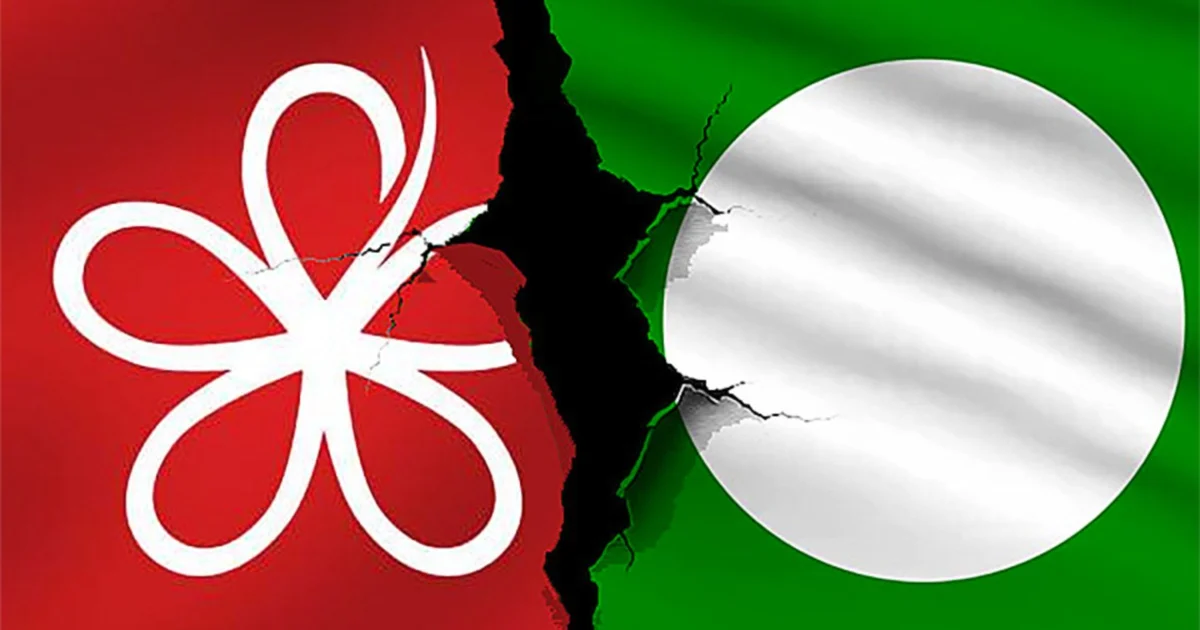
Perikatan Nasional faces internal instability as PAS contemplates a potential move to remove Bersatu from the coalition, a development that could prove strategically counterproductive for the Islamist party according to political observers. The tension underscores growing fractures within a coalition that has served as a significant political force following the 2023 general election, and any internal restructuring carries substantial electoral consequences for all parties involved.
According to political analysts tracking coalition dynamics, such a maneuver would likely damage PAS's carefully cultivated image among centrist and moderate voter demographics who have come to view the party as increasingly mainstream. Throughout the past decade, PAS has invested considerable effort in repositioning itself as a party capable of governing across diverse constituencies, moving beyond its historic association with hardline Islamic governance. Pushing out a coalition partner risks reverting the party to perceptions of factional politicking driven by ideology rather than pragmatic governance.
The stakes of this internal dispute extend beyond immediate coalition management. Malaysia's political landscape has become increasingly volatile since the 2023 elections, with multiple coalitions competing for parliamentary advantage. Perikatan Nasional itself emerged as a formidable force, and any destabilization within its ranks could ripple across the entire political system. For PAS specifically, association with aggressive coalition tactics may undermine the moderate narrative the party has spent years constructing with suburban and urban voters who represent crucial swing demographics in critical federal territories and urban-centered states.
Bersatu's presence within Perikatan Nasional has itself generated controversy and internal debate. The party, founded by former prime minister Muhyiddin Yassin, initially joined the coalition and has maintained an often-uneasy partnership with PAS. The relationship reflects deeper ideological and strategic tensions within the broader opposition-turned-governing coalition. Understanding these tensions requires recognizing that coalition politics in Malaysia frequently involves partners with fundamentally different visions for the nation's direction, and reconciling these differences often proves more challenging than initial agreements suggest.
The timing of any potential PAS action carries political weight as well. Malaysia approaches the next general election with multiple coalitions jostling for electoral advantage, and internal coalition disruptions typically benefit opposition parties seeking to exploit divisions. Should PAS proceed with removing Bersatu, competing coalitions would likely seize the opportunity to criticize both parties for prioritizing internal politics over national governance. Such criticism, however fair or unfair, resonates particularly strongly with moderate voters fatigued by what they perceive as excessive political instability.
Historical precedent in Malaysian politics demonstrates that aggressive coalition consolidation efforts frequently produce unintended consequences. Previous attempts by senior coalition partners to restructure or exclude members have often led to counter-mobilization, defections, and unexpected electoral shifts. Voters who feel their chosen party is being unfairly targeted may shift allegiances, while those uncomfortable with heavy-handed tactics may redirect support toward parties presenting themselves as more cooperative and consensus-oriented.
For PAS particularly, the calculation becomes even more fraught given the party's broader positioning challenges. As an Islamist party in a multi-ethnic, multi-religious democracy, PAS has worked to demonstrate that Islamic governance principles can coexist with democratic inclusion and respect for minority rights. Actions perceived as crude power plays within coalitions undermine this narrative significantly. Moderate voters evaluating PAS platforms and candidate selections often do so through the lens of whether the party will govern inclusively or pursue narrower sectarian agendas.
The analyst's warning also reflects understanding of Malaysia's voter composition and electoral arithmetic. Moderate voters frequently constitute swing demographics whose support determines electoral outcomes in competitive constituencies. These voters tend to penalize parties they perceive as ideologically rigid or willing to sacrifice coalition stability for narrow factional advantage. In an increasingly tight electoral environment where coalition calculations matter enormously, losing even modest percentages of moderate support can translate into lost seats and reduced parliamentary influence.
Bersatu's continued membership in Perikatan Nasional may frustrate certain PAS quarters, but the party's practical value to the coalition extends beyond ideological compatibility. Bersatu maintains organizational capacity, parliamentary representation, and historical connections with voters in specific regions. Removing such a partner creates vacuums that often take years to fill, during which competing coalitions capture previously held support. The electoral mathematics of coalition politics frequently favor maintaining flawed partnerships over attempting risky restructuring.
Looking forward, how PAS navigates the Bersatu question will signal important messages to multiple audiences simultaneously. Coalition partners will be watching to assess whether PAS respects agreed arrangements or operates opportunistically. Moderate voters will be evaluating whether PAS prioritizes governance pragmatism or ideological purity. Opposition coalitions will be positioned to exploit any visible divisions within Perikatan Nasional. The stakes involved justify considerable caution before pursuing confrontational strategies that could damage hard-won moderate voter perceptions.