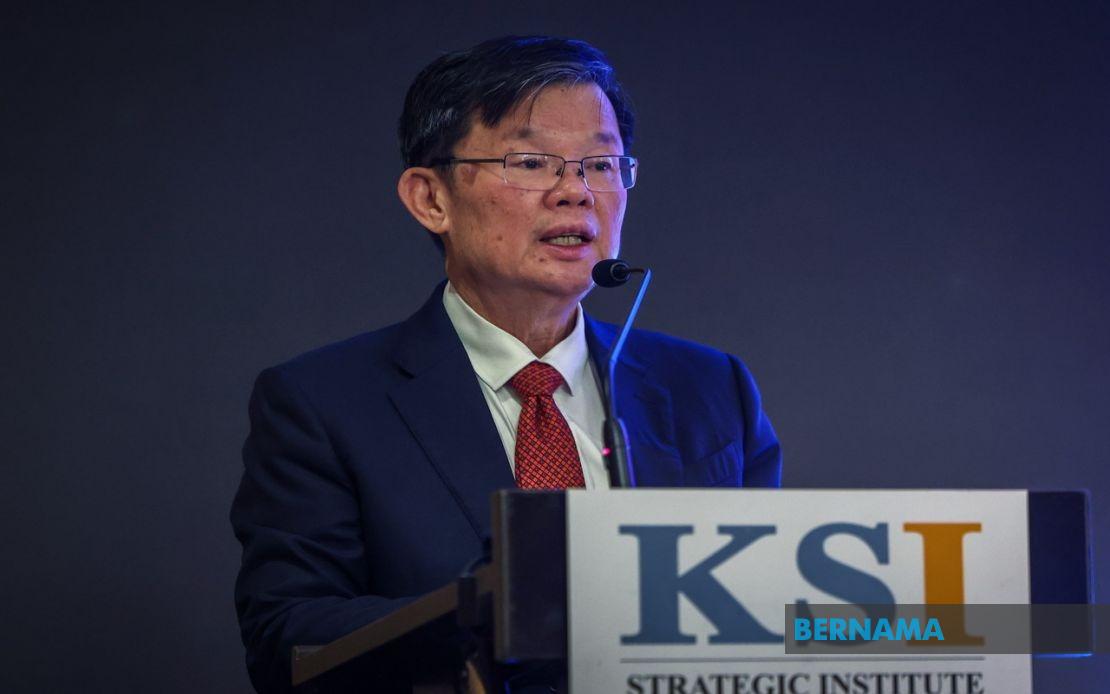
Penang's Pakatan Harapan coalition intends to increase the number of women candidates contesting in the next state election, though identifying sufficient qualified and enthusiastic participants remains an ongoing obstacle, according to party chairman Chow Kon Yeow. The commitment reflects broader efforts within Malaysia's coalition to bolster female representation in electoral contests, yet practical challenges continue to constrain these aspirations. Chow, who also serves as Penang Chief Minister, underscored that while the party remains dedicated to its objective, actual candidate numbers will ultimately hinge on the availability of women genuinely prepared to compete.
The 30 per cent women's participation benchmark in politics and decision-making has become a touchstone for PH's gender equality agenda. Nevertheless, even as Penang PH has worked actively to champion this objective across multiple electoral cycles, the party confronts a persistent gap between ambition and reality. Speaking after inaugurating the World Women Economic and Business Summit 2026 in George Town, Chow acknowledged that sourcing a pipeline of viable candidates willing to embrace the pressures inherent in political contest represents a distinct challenge that demands dedicated attention and fresh approaches.
The constraints facing women's political participation extend beyond simple reluctance to contest. Chow highlighted that despite demonstrable female advancement across education, commerce, engineering and government employment, the political sphere presents distinctive hurdles. These obstacles—encompassing both structural barriers and the considerable personal toll of campaigning—discourage many capable women from pursuing candidacy. The party recognizes that merely expressing commitment to gender parity proves insufficient without addressing the fundamental difficulties that deter women from stepping forward during selection processes.
Nationally, Malaysia's progress toward gender representation in elected office has stalled markedly. The 30 per cent target, formally adopted in 2009, remains unmet across the country. Current figures reveal that women constitute merely 13.5 per cent of federal parliamentarians and 12 per cent of state assembly members nationwide—figures that underscore how far Malaysian politics lags behind international benchmarks and domestic objectives. This persistent shortfall indicates systemic issues transcending any single state or party.
Chow's remarks at the summit highlighted the urgency of renewed institutional commitment. He proposed that political organisations should formalise the 30 per cent target within their candidate selection machinery, moving beyond voluntary pledges toward embedded procedural requirements. Such institutionalisation could establish clear expectations and accountability mechanisms, reducing the discretionary space wherein gender considerations become secondary to other recruitment criteria. Formalising targets transforms aspirational statements into concrete operational standards.
Beyond candidate selection itself, Chow identified complementary measures essential for cultivating women's political participation. Political parties must ensure balanced female representation within decision-making committees that shape party direction and policy. Additionally, parties should establish robust mentoring frameworks and guarantee equitable resource allocation for emerging women leaders developing their political profiles. These support structures address the reality that women entering politics often lack the established networks and institutional backing that male predecessors frequently inherit.
The challenge extends to cultural and social dimensions rarely discussed in formal political discourse. Women contemplating candidacy weigh not merely electoral prospects but also intensified public scrutiny, family considerations, and workplace complications. The combination of these pressures creates a cumulative burden that discourages many potential candidates. Addressing participation gaps therefore requires sustained effort to reshape perceptions of women's political roles and to normalise female candidacy across all electoral tiers.
For Malaysia and the region, the Penang experience reflects broader patterns of stalled progress on gender representation. Despite decades of advocacy and policy pronouncements, women remain dramatically underrepresented in formal political structures across Southeast Asia. The persistence of this gap despite economic advancement and educational parity suggests that conventional recruitment approaches and voluntary commitments prove inadequate for systemic transformation. Penang PH's acknowledgment of these difficulties, while candid, also signals that cosmetic gestures and rhetorical support will not close the representation deficit.
The implications for Malaysian politics extend beyond gender equity metrics themselves. Underrepresentation of women in electoral politics limits the diversity of perspectives informing policy development on education, healthcare, family law, and economic participation. When roughly half the population remains marginalised from formal political decision-making, governance frameworks inevitably reflect incomplete understanding of constituent needs and aspirations. Bridging the representation gap therefore constitutes not merely an equity issue but a governance imperative affecting policy quality and legitimacy.
Looking toward forthcoming state elections, Penang PH faces the practical task of translating renewed commitment into expanded female candidacy. The party's approach—acknowledging constraints whilst reaffirming objectives—demonstrates realistic assessment yet leaves unresolved the fundamental question of how to transform the candidate recruitment pipeline. Success will require sustained investment in identifying, developing, and supporting women leaders at community and grassroots levels, creating conditions wherein capable women view political participation not as exceptional undertaking but as natural career progression. Until such structural shifts occur, the gap between the stated 30 per cent target and actual female representation will likely persist across Malaysian electoral contests.