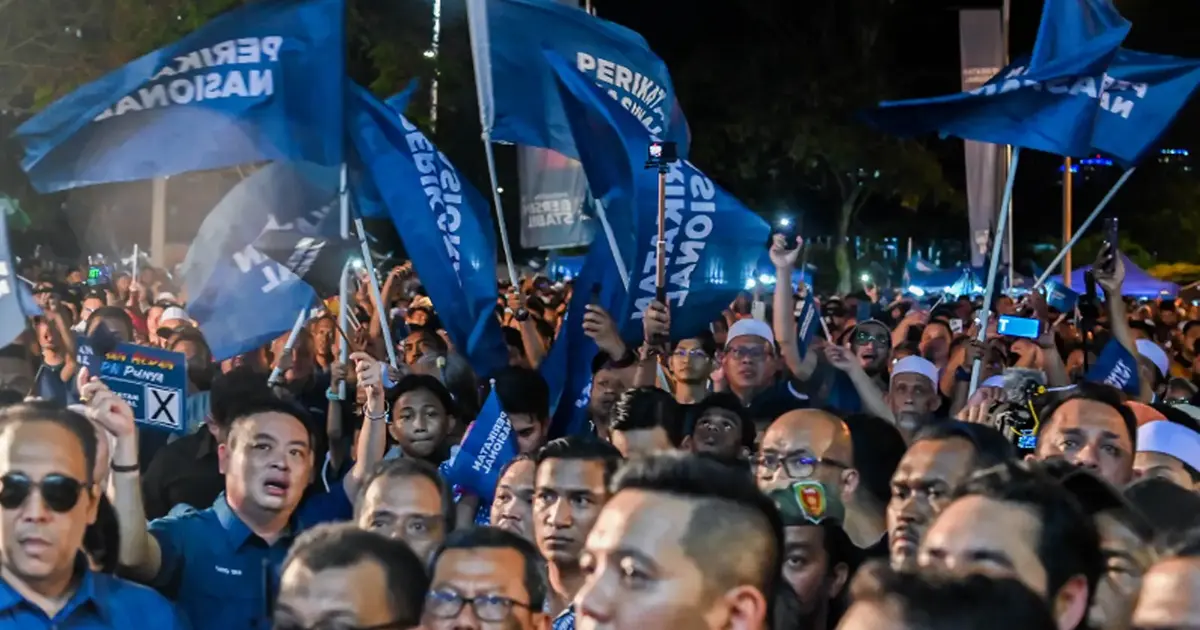
The cohesion of Perikatan Nasional appears increasingly vulnerable as underlying tensions between its two largest constituent parties—PAS and Bersatu—have evolved from episodic disagreements into systematic, protracted conflict. Yusri Ibrahim, chief researcher at the Ilham Centre, has characterized the deteriorating relationship as having entered a 'guerrilla war' phase, suggesting that the friction is now conducted through coordinated, low-intensity skirmishes rather than overt confrontation. This assessment points to a coalition that may lack the structural resilience needed to withstand prolonged internal discord.
The friction between PAS and Bersatu reflects deeper ideological and strategic divergences within Malaysia's opposition-turned-governing bloc. PAS, representing the Islamic conservative constituency with strong grassroots mobilization in rural and traditional communities, holds distinct priorities around governance frameworks and social policy. Bersatu, by contrast, emerged from the Mahathir faction within UMNO and carries legacies of competing institutional interests and patronage networks. These fundamental differences in party DNA have never been fully reconciled, even when the two organizations found temporary common cause against their predecessors in government.
The escalation into 'guerrilla war' tactics suggests that party leaders have largely abandoned the possibility of conventional negotiation and compromise. Instead, the conflict now manifests through proxy manoeuvres—strategic positioning on policy questions, competing claims to organizational territory, and calculated posturing before their respective support bases. This form of attrition is particularly damaging to coalition stability because it operates beneath the threshold of formal crisis, making it harder for senior leaders to intervene decisively without appearing to take sides.
For Malaysian political observers, the implications are considerable. The Perikatan Nasional coalition represents a significant political force, commanding considerable parliamentary numbers and controlling several state administrations. A fractious internal dynamic weakens its capacity to present unified policy positions, complicates legislative processes, and raises questions about its ability to manage federal affairs coherently. When coalition partners are simultaneously engaged in subtle competitive manoeuvring, the administrative efficiency and policy coherence necessary for stable governance becomes compromised.
Historically, Malaysian coalitions have proven vulnerable to precisely this type of sustained friction. The Barisan Nasional maintained its hegemony partly through elaborate mechanisms of revenue-sharing, institutional autonomy guarantees, and carefully balanced ministerial portfolios that insulated partners from direct competition. The Perikatan Nasional lacks some of these stabilizing mechanisms, having been constructed more hastily around electoral and anti-establishment imperatives rather than durable institutional arrangements. This structural vulnerability means that the current tensions are less likely to resolve through informal compromise.
The analyst's characterization also reflects the reality that modern Malaysian political disputes rarely escalate to formal rupture. Instead, they persist in a state of managed dysfunction—where parties maintain nominal unity while pursuing incompatible strategic objectives. This creates an ambiguous political environment where senior leaders must project confidence in coalition stability while simultaneously hedging their bets and preparing contingency plans. For coalition members, the calculus becomes increasingly complicated: remain invested in an unstable arrangement, or invest political capital in cultivating alternative alliances.
Regional implications deserve consideration as well. Southeast Asian governments operate under heightened scrutiny regarding political stability and predictability of governance. A Malaysian coalition demonstrating visible internal fracturing signals weakness to external observers and trading partners, potentially affecting investor confidence and diplomatic positioning. ASEAN neighbors monitoring Malaysian political developments may interpret internal turmoil as a distraction from regional cooperation initiatives or as a sign of diminished governmental capacity for sustained external engagement.
The 'guerrilla war' characterization also suggests that resolution through conventional means appears unlikely in the near term. Party leaders must navigate the delicate balance between maintaining coalition partnership for electoral and legislative purposes, while simultaneously appealing to their respective party bases with displays of principled independence. This contradiction virtually guarantees that surface cracks will continue widening unless extraordinary leadership intervention occurs—an intervention that would require sacrifice from all parties involved.
For the broader Malaysian political landscape, the Perikatan Nasional's internal instability creates both challenges and opportunities. Other political actors—particularly within the Pakatan Harapan opposition—will undoubtedly monitor developments closely, calculating whether the governing coalition's weakening presents openings for parliamentary manoeuvring or electoral realignment. The extended guerrilla warfare phase may ultimately exhaust all parties involved, potentially creating conditions for broader political reorganization or fresh coalition formations that reflect more coherent ideological and strategic alignments. Until such recalibration occurs, Malaysian politics will likely remain characterized by managed dysfunction masquerading as functional governance.