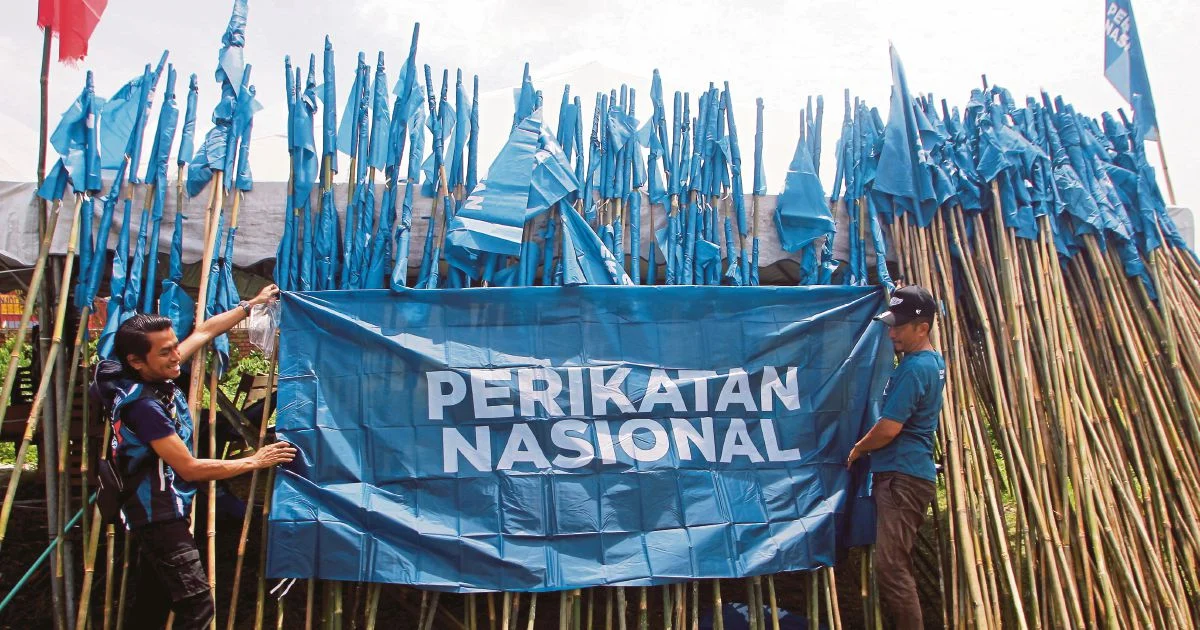
The Perikatan Nasional coalition is preparing for an internal summit scheduled for June 22 at which its Supreme Council will grapple with critical administrative and strategic questions that have remained unresolved within the bloc. Among the principal items on the agenda are decisions regarding the usage rights and branding authority of the coalition's logo, alongside protocols for endorsing candidates who will contest upcoming elections under the PN banner or that of its constituent parties.
The meeting represents a crucial juncture for a coalition that encompasses multiple political entities with distinct organisational interests. Since its formal inception, PN has navigated complex questions about resource allocation, decision-making authority, and the distribution of electoral opportunities among its member parties. The June 22 gathering signals that leadership has recognised the necessity to establish clearer frameworks governing these relationships before the coalition faces additional electoral contests.
Logo usage disputes within political coalitions typically reflect deeper tensions over branding power, media presence, and the ability to claim credit for electoral achievements. By centralising decisions about which symbol may appear on campaign materials, ballot papers, and party communications, the Supreme Council aims to prevent member parties from operating independently in ways that could fragment the coalition's public identity. This standardisation becomes especially important in Malaysian electoral contexts, where voter recognition of party symbols remains a significant factor in election outcomes, particularly in constituencies with lower voter literacy levels.
Candidate endorsement protocols carry even greater strategic weight, as they determine which members of PN-affiliated parties receive institutional support, resource allocation, and the legitimacy that comes from formal coalition backing. In Malaysia's multi-member constituencies and mixed electoral systems, the distribution of candidacies can significantly affect which coalition achieves representation in Parliament or state assemblies. Without clear guidelines, stronger or more assertive member parties risk monopolising endorsed slots, leaving smaller partners with limited opportunities to field competitive candidates.
The timing of this meeting also carries implications for Malaysian politics more broadly. Electoral calendars in Malaysia, whether for federal or state contests, are determined by constitutional and constitutional convention rather than fixed schedules. Yet PN's apparent urgency in resolving these matters suggests the coalition perceives imminent electoral opportunities or feels pressure from rival blocs that have already formalised their internal arrangements. The Democratic Action Party and Malaysian Democratic Party within the Pakatan Harapan coalition, for instance, maintain well-established candidate selection and endorsement mechanisms developed through years of competition and cooperation.
For Southeast Asian observers, PN's institutional growing pains reflect broader dynamics in how regional political coalitions function. Unlike single-party governments, multi-party blocs must constantly negotiate questions of sovereignty, resource-sharing, and unified messaging. The experiences of PN parallel challenges faced by political alliances in Thailand, Indonesia, and the Philippines, where coalition governments have similarly struggled to maintain coherence while respecting the autonomy of member parties. Malaysia's constitutional framework, which distributes power between federal and state levels and between executive and legislative branches, amplifies these coordination challenges.
The Supreme Council structure itself merits attention, as this body typically comprises party presidents and senior leaders from each PN constituent organisation. Its decision-making authority relative to individual member parties, and its enforcement mechanisms for decisions, remain crucial questions. If the June 22 meeting produces binding resolutions about logo usage and candidate endorsements, PN will have strengthened its institutional capacity for collective action. Conversely, if member parties subsequently ignore these decisions or interpret them narrowly, the coalition's effectiveness as a coordinated political force would be significantly compromised heading into any electoral contest.
These discussions also have implications for smaller member parties within PN. While larger constituents such as Parti Islam Se-Malaysia and Bersatu might exert disproportionate influence over collective decisions, the formalisation of candidate endorsement procedures could paradoxically protect smaller partners by establishing transparent criteria rather than allowing allocation to occur through informal negotiation favourable to dominant actors. This institutional clarity might enhance trust among coalition members, provided that the endorsement framework incorporates input from all parties represented on the Supreme Council.
The broader political landscape in Malaysia has shifted significantly since PN's formation, with successive state elections and federal developments reshaping electoral calculations. The June 22 meeting must therefore occur against the backdrop of PN's recent performance in state contests and its current standing in parliamentary mathematics. If the coalition perceives itself as strengthened and positioned to contest elections from a position of relative advantage, the meeting might focus on expansion and strategic positioning. If PN feels threatened by rival coalitions or internal defections, the agenda might emphasise consolidation and damage prevention.
Logo branding and candidate endorsements may appear as technical administrative matters, yet they fundamentally shape how political coalitions communicate with voters and distribute the tangible rewards of political office. The June 22 Supreme Council meeting, while potentially proceeding behind closed doors, will likely produce reverberations throughout Malaysian political circles as member parties respond to whatever decisions emerge regarding these foundational questions.