The Philippine Department of Justice has launched a formal investigation into the circumstances surrounding a dramatic shooting incident at the Senate building on May 13 and the subsequent escape of Senator Ronald dela Rosa from protective custody early the following morning, with prosecutors examining whether public officials may face criminal charges arising from the events.
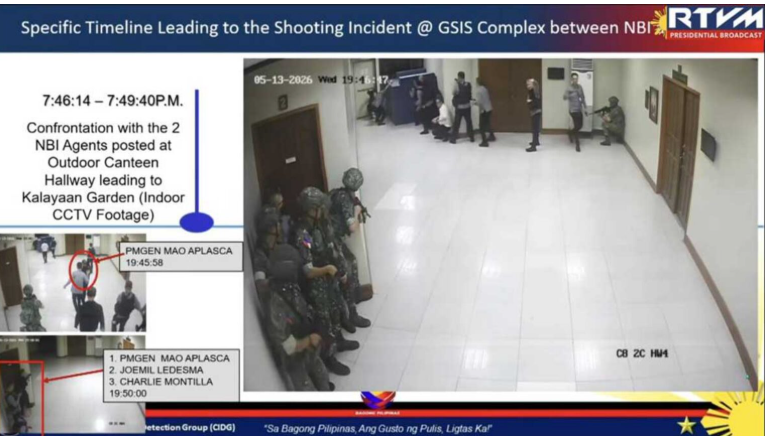
Justice Secretary Fredderick Vida disclosed that the prosecutorial panel has compiled testimonies from National Bureau of Investigation personnel, media representatives, and video surveillance footage as part of its expanding inquiry. According to these accounts, sniper fire was directed from the fifth floor of the Senate building at an identifiable NBI vehicle stationed at the GSIS premises, establishing a clear trajectory and source for the attack.
The investigation represents one of the most significant security breaches in Philippine governance in recent years, raising critical questions about institutional safeguards and the potential involvement of state actors in coordinating the shooting and subsequent escape. The convergence of these two incidents within a 12-hour window has triggered suspicions of a coordinated operation rather than isolated events, compelling authorities to examine chains of command and security protocols at the highest levels.
Vida emphasized that the inquiry remains in its active phase with further evidence collection and analysis ongoing. While refraining from naming specific individuals under investigation at this stage, he indicated that preliminary findings point toward multiple personalities occupying positions of public authority, suggesting the suspected wrongdoing extends beyond isolated low-level operatives into the institutional hierarchy.
The Justice Secretary's language carries particular weight in the Philippine context, where allegations of official misconduct often meet resistance from entrenched power structures. His assurance that the department will proceed "professionally, objectively, and without fear or favor" appears designed to counter historical perceptions of selective prosecution and political interference in major investigations involving government figures.
Dela Rosa, a prominent senator and former Philippine National Police chief, became a key figure in this incident, and questions surrounding the circumstances of his escape from protective custody have intensified scrutiny on security arrangements at government facilities. His previous role overseeing national law enforcement makes his involvement in the May 14 escape particularly sensitive, as it potentially implicates institutional knowledge of security procedures and movements.
The shooting at the Senate building itself constitutes an unprecedented assault on one of the nation's most heavily protected institutions, suggesting either a catastrophic failure in security measures or deliberate facilitation by individuals with authorized access. The specificity of targeting an NBI vehicle indicates foreknowledge of movements and positions, raising the possibility of surveillance and coordination that extended beyond the Senate grounds.
For Malaysian observers, this case underscores the vulnerability of Southeast Asian parliamentary institutions to internal security threats and the challenges facing regional democracies in maintaining institutional integrity when state apparatus components are implicated in potential wrongdoing. The investigation's outcome may influence how other regional governments approach similar contingencies and develop safeguards against official misconduct at the highest levels.
Vida's careful assertion that "no individual is above the law, but equally important, no person should be judged before the evidence has been fully examined" reflects the delicate balancing act Philippine authorities must perform. This statement appears calibrated to address public expectations for accountability while signaling to potentially implicated officials that due process will be observed, a crucial consideration when investigating figures with significant institutional power.
The involvement of multiple state agencies in gathering evidence—including the NBI, CCTV systems, and media documentation—suggests a coordinated approach to preserving investigative integrity. In the Philippine context, where corruption and political interference have historically compromised major inquiries, the public disclosure of methodology and evidence sources serves as a transparency mechanism intended to build confidence in the process.
The implications for Philippine governance extend beyond the immediate investigation. If public officials are ultimately charged and convicted in connection with either the shooting or the escape, the consequences could reshape security protocols across government institutions and redefine relationships between civilian and law enforcement agencies. Such outcomes would also signal to regional counterparts the potential consequences of institutional disloyalty.
Beyond the immediate criminal dimensions, the incident raises broader questions about the state's monopoly on violence and the mechanisms through which internal security breaches occur. The Senate shooting appears unprecedented not merely in its occurrence but in its brazen timing and location, suggesting either extraordinary operational capacity or a breakdown in institutional self-preservation mechanisms that transcends typical criminal motivation.