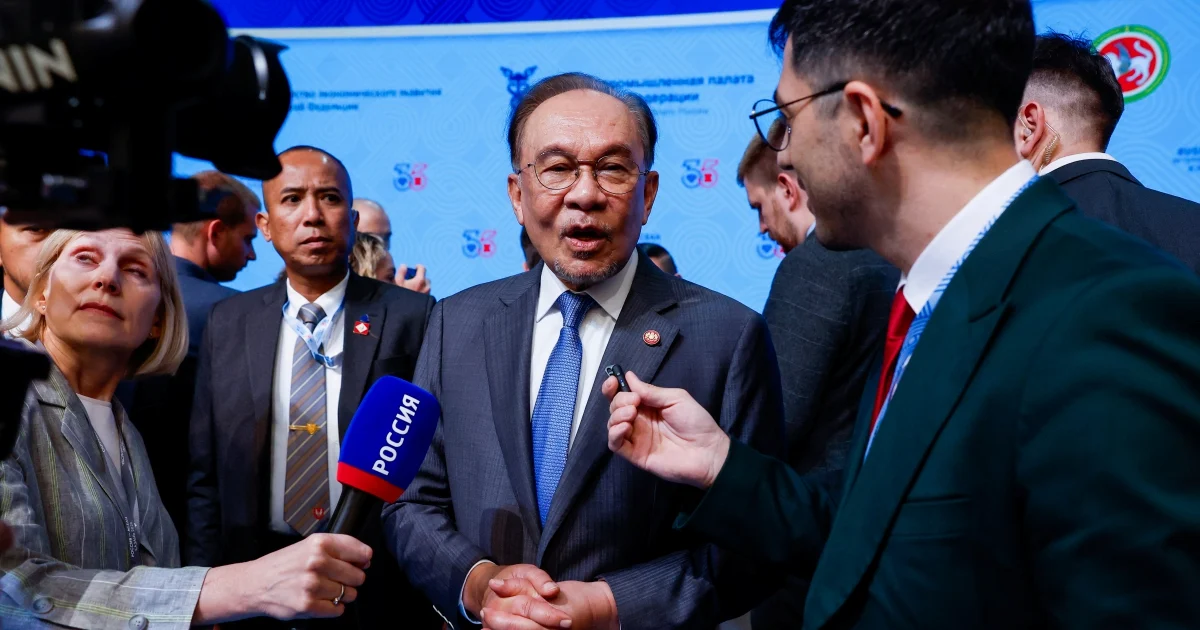
Prime Minister Datuk Seri Anwar Ibrahim has emphasised the role of cultural diplomacy in strengthening international partnerships, disclosing his personal appreciation for Russian music and literature during discussions in Kazan. The remarks reflect an understanding that bilateral relations extend far beyond trade agreements and economic transactions, touching upon the deeper human connections that sustain long-term cooperation between nations.
Anwar's openness about his cultural interests comes at a time when Malaysia actively seeks to diversify its partnerships across the globe. By highlighting his engagement with Russian cultural products, he signals receptivity to understanding and respecting the heritage and artistic traditions of other societies. This approach aligns with Malaysia's broader diplomatic strategy of fostering relationships through multiple channels rather than relying solely on commercial interests. The Prime Minister's emphasis suggests that governments can facilitate genuine people-to-people exchanges that go beyond official ceremonies and formal protocols.
The appreciation for Russian music and literature carries particular significance given the historical context of cultural exchanges between Asian and European societies. Russian classical music and literary traditions have long enjoyed prestige worldwide, and Malaysia's leadership acknowledging this demonstrates intellectual openness. For Malaysian audiences and observers, such diplomatic gestures often influence public perception of other nations and can encourage broader interest in different cultures. When senior political figures express genuine appreciation for foreign arts and literature, it legitimises cultural curiosity among their constituencies.
Cultural diplomacy functions as a soft power tool that complements conventional foreign policy instruments. Unlike economic negotiations or military alliances, cultural exchanges create lasting impressions at the individual level. When Malaysian citizens encounter Russian music or literature promoted indirectly through their Prime Minister's endorsement, it can spark interest that persists regardless of political fluctuations. This human dimension of diplomacy proves particularly valuable in Southeast Asia, where many nations maintain multi-aligned foreign policies and seek stable, friendly relations across diverse geopolitical contexts.
Anwar's statements during the Kazan visit reflect Malaysia's interest in deepening engagement with Russia across multiple sectors. While economic cooperation remains important, the emphasis on cultural dimension suggests Malaysian policymakers recognise that sustainable partnerships require mutual respect and understanding of each nation's values and traditions. For Russia, having Southeast Asian leaders acknowledge its cultural contributions represents validation of its global relevance beyond its role as a geopolitical actor. This reciprocal appreciation creates foundation for more resilient diplomatic relationships.
The timing of these remarks carries additional weight given contemporary international dynamics. As Malaysia navigates complex geopolitical environments in Southeast Asia and beyond, maintaining friendly relations with diverse partners becomes increasingly important. Cultural exchanges offer channels for dialogue that remain productive even during periods of political tension or economic disagreement. Through music and literature, nations can maintain communication lines and foster understanding independent of government-to-government transactions. This cultural bridge-building becomes particularly relevant for a country like Malaysia, which maintains strategic partnerships across multiple continents.
Literature particularly serves as vehicle for cross-cultural understanding. Russian literary traditions exploring themes of philosophy, morality, and human condition have influenced readers globally for centuries. When Malaysia's Prime Minister expresses appreciation for this intellectual heritage, he positions Malaysia as participant in global conversation about universal human experiences. For Malaysian youth and intellectuals, such endorsements from leadership can encourage engagement with diverse literary traditions and broaden intellectual horizons beyond immediate regional contexts.
Musical appreciation similarly transcends language barriers and creates emotional connections that formal diplomacy cannot achieve. Russian musical traditions, from classical composers to contemporary artists, offer Malaysia windows into different aesthetic values and artistic philosophies. The Prime Minister's enjoyment of Russian songs suggests personal engagement with cultural products beyond official state functions, humanising him in ways that resonate with ordinary citizens who similarly consume international cultural content.
For Malaysia's broader cultural sector, Anwar's remarks at Kazan carry implications for arts policy and international cultural programming. Government support for Russian cultural exhibitions, film festivals, or literary translations may receive renewed impetus when leadership openly demonstrates interest. Malaysian cultural institutions could leverage such political support to develop programming that facilitates mutual understanding. Educational institutions might expand Russian language or literature courses, recognising official interest in deepening cultural ties.
The emphasis on cultural cooperation aligns with Malaysia's long-standing commitment to promoting understanding among different civilisations. Islamic Malaysia's appreciation of Russian cultural traditions demonstrates sophisticated, inclusive approach to international relations that respects diversity. This positioning particularly matters in contemporary geopolitical context where cultural and civilisational divides sometimes become weaponised. Malaysia's leadership choosing to celebrate cultural commonalities rather than emphasise differences sends important message about inclusive vision of global relations.
Anwar's remarks from Kazan extend beyond personal preference into broader statement about what Malaysia values in international partnerships. The government's willingness to discuss cultural dimensions alongside economic cooperation signals that Malaysia seeks relationships based on mutual respect and genuine interest rather than transactional calculations alone. As Southeast Asian nations increasingly assert independent foreign policies, such cultural diplomacy offers attractive alternative to purely strategic alignments.