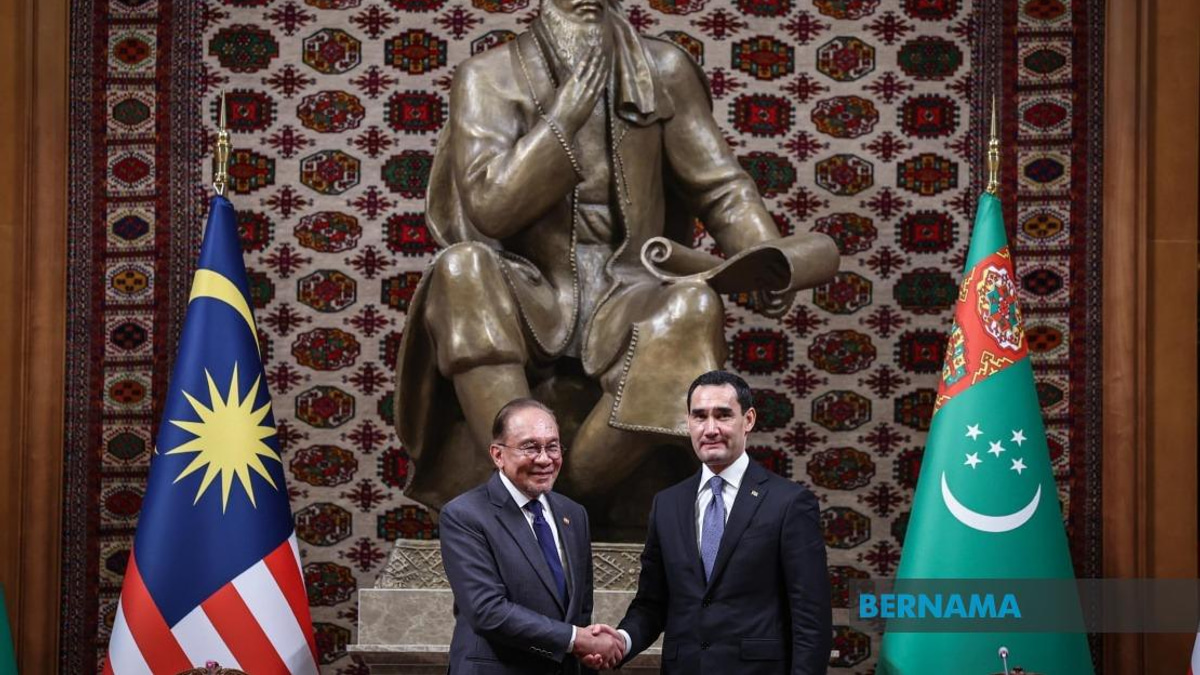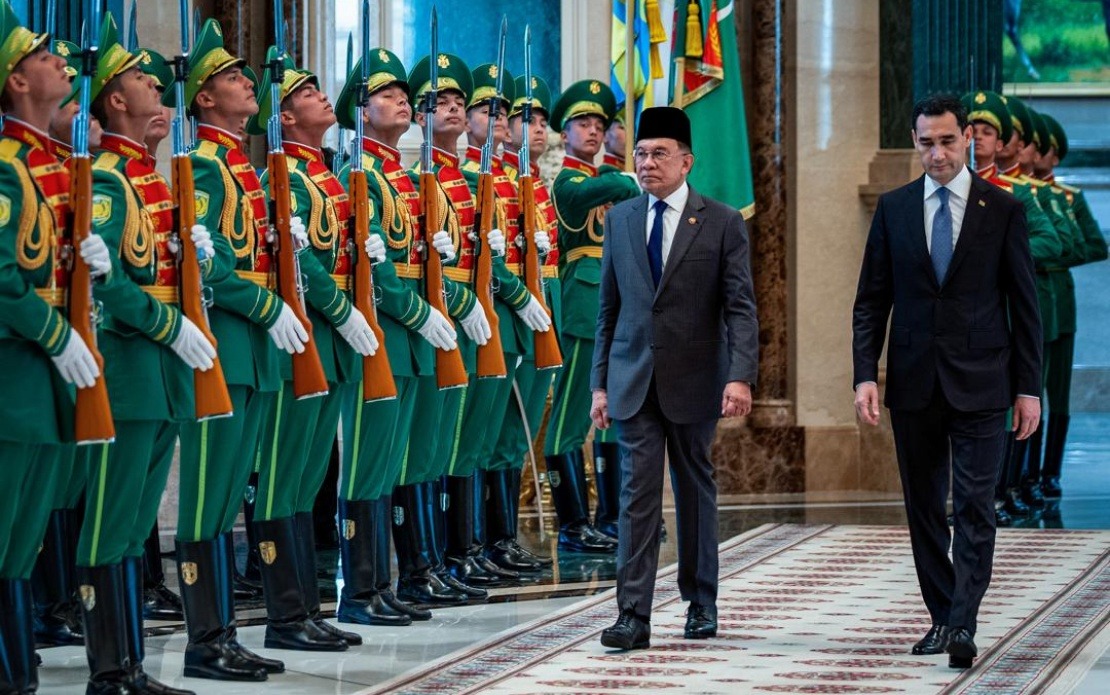
Prime Minister Datuk Seri Anwar Ibrahim was accorded full ceremonial honours during his arrival at the Turkmenistan Presidential Palace in Ashgabat, underscoring the diplomatic significance of his two-day visit to the Central Asian nation. The official welcome marked a milestone in Malaysia's engagement with Turkmenistan, representing the first time the Malaysian premier has visited the oil and gas-rich country since assuming office in November 2022.
President Serdar Berdimuhamedov personally received Anwar at the palace, a gesture reflecting the importance both nations place on strengthening their relationship. The ceremony included a full guard of honour and the playing of both national anthems, traditional protocols reserved for state-level visits that signal the formal nature of the diplomatic engagement. Such ceremonial displays are carefully choreographed in Central Asian diplomacy and often indicate the host nation's commitment to advancing bilateral interests.
Following the initial reception, Anwar was formally introduced to members of the Turkmenistan Cabinet and senior government officials, a procedure that facilitated the establishment of direct working relationships between Malaysian and Turkmenistan leadership structures. This introduction process, while seemingly procedural, serves an important function in diplomatic protocol by creating opportunities for officials from both sides to begin discussions on sectoral cooperation and mutual concerns.
The Malaysian delegation, accompanying the Prime Minister, was subsequently presented to President Berdimuhamedov, establishing the framework for substantive negotiations on bilateral matters. Both the Malaysian and Turkmenistan delegations came prepared to explore avenues of cooperation spanning trade, investment, energy, and cultural exchange. The presence of senior officials from both countries indicated that the discussions would tackle issues of strategic importance to each nation's development priorities.
Anwar and Berdimuhamedov subsequently engaged in a four-eyed meeting, an exclusive session between the two leaders without advisors present, which typically addresses the most sensitive and strategic matters of mutual interest. Such private conversations allow leaders to speak candidly about bilateral relations, regional concerns, and long-term partnership objectives without the constraints of formal diplomatic language. Following this private session, both leaders reconvened for a full bilateral meeting that included delegations from both nations, enabling substantive discussions on specific areas of cooperation.
The visit's timing reflects Malaysia's broader strategic positioning within Asia, particularly its efforts to diversify partnerships beyond traditional Southeast Asian and East Asian relationships. Turkmenistan, as one of Central Asia's most resource-rich nations with significant natural gas reserves and strategic positioning along historic trade corridors, represents an important actor in Malaysia's global economic strategy. For Turkmenistan, strengthening ties with an ASEAN member and Islamic-majority nation offers opportunities to expand its diplomatic reach and explore investment partnerships.
The energy sector likely featured prominently in discussions between the two leaders, given Turkmenistan's hydrocarbon wealth and Malaysia's significant energy interests. Both nations operate in the global energy market and may explore opportunities for cooperation in liquefied natural gas production, energy infrastructure development, and technical expertise sharing. Furthermore, Malaysia's position as a gateway to Southeast Asian markets could interest Turkmenistan in developing trade corridors that leverage existing economic relationships.
Cultural and people-to-people exchanges may also have been on the agenda during these high-level discussions. Malaysia's large Muslim population and Turkmenistan's Islamic heritage create opportunities for religious and educational cooperation. Universities, think tanks, and cultural institutions from both nations could benefit from formalized partnerships that facilitate scholarly exchange and mutual understanding. Such soft power initiatives have become increasingly important in contemporary diplomacy, particularly for nations seeking to expand their influence beyond traditional economic and political channels.
This inaugural visit by Anwar to Turkmenistan since taking office as Malaysia's 10th Prime Minister demonstrates the administration's commitment to expanding Malaysia's diplomatic footprint beyond its traditional spheres of engagement. The formal invitation from President Berdimuhamedov and the ceremonial reception indicate both nations' willingness to elevate their relationship from cordial to substantive partnership. The two-day schedule suggests comprehensive discussions encompassing multiple sectors, with potential outcomes likely to include joint statements or agreements outlining future cooperation frameworks.
From a regional perspective, Malaysia's engagement with Central Asian nations reflects broader ASEAN strategies to develop partnerships across Asia and beyond. As Asian economies increasingly recognize the benefits of trans-regional cooperation, Malaysia's diplomatic overture to Turkmenistan exemplifies efforts to forge meaningful relationships that extend the geographic scope of strategic partnerships. Such initiatives help build networks of cooperation that can address shared challenges including terrorism, climate change, and economic development.