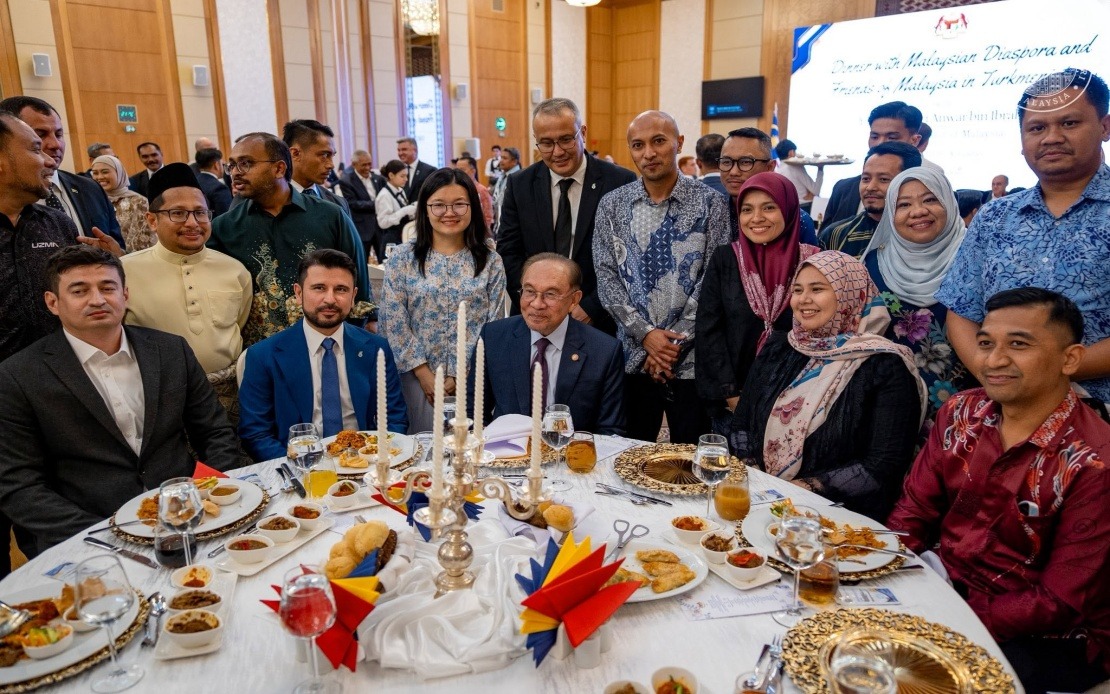
Prime Minister Datuk Seri Anwar Ibrahim has reinforced the government's commitment to the Malaysian diaspora by engaging directly with community members during his current visit to Ashgabat, Turkmenistan. The encounter underscores a deliberate strategy by the MADANI Government to maintain meaningful relationships with Malaysians living and working abroad, recognising their role as informal ambassadors for the nation in global markets and communities.
During his interactions with the diaspora group, Anwar emphasised the importance of staying connected to developments back home, encouraging them to remain informed about Malaysia's progress and transformation under the current administration. This engagement reflects a broader policy shift recognising that Malaysians overseas constitute an invaluable asset to the country's soft power and economic influence, particularly in regions where formal diplomatic presence may be limited.
The Prime Minister characterised the diaspora as unofficial ambassadors actively engaged in building Malaysia's international reputation and expanding the country's networks. By formally acknowledging their contributions, Anwar signalled government recognition that Malaysians abroad serve as crucial conduits for investment opportunities, business partnerships, and cultural exchange that benefit the homeland. This framing elevates diaspora engagement from a peripheral concern to a central component of national strategy.
The visit to Ashgabat represents Anwar's first official engagement with Turkmenistan as Prime Minister, occurring in response to a reciprocal visit by Turkmenistan President Serdar Berdimuhamedov to Malaysia in December 2024. This two-day official engagement demonstrates Malaysia's proactive approach to deepening relationships with Central Asian nations, a region where Malaysian presence has historically been less pronounced than in Southeast Asia or the Middle East.
Beyond ceremonial aspects, Anwar articulated a comprehensive vision for Malaysia-Turkmenistan cooperation that extends substantially further than conventional bilateral arrangements centred on commerce and investment. The Prime Minister explicitly outlined intentions to cultivate broader friendship, deepen mutual understanding, and establish cooperative frameworks addressing shared interests and opportunities. This multifaceted approach recognises that sustainable international relationships require foundations beyond transactional economic exchanges.
The strategic importance of the Turkmenistan engagement reflects Malaysia's efforts to diversify its international partnerships and establish footholds in regions of growing geopolitical and economic significance. Central Asia's proximity to major energy markets, its role in transcontinental trade routes, and its potential as an emerging investment destination make it an increasingly relevant focus for Malaysian foreign policy. Engagement with the diaspora in such contexts helps strengthen Malaysia's cultural and informal diplomatic presence in these areas.
Anwar's comments about the warm reception and sense of unity experienced during the diaspora meeting highlight an emotional dimension often overlooked in traditional diplomatic discourse. Despite geographical distance, the Prime Minister noted that the gathering conveyed a palpable sense of Malaysian identity and collective purpose, suggesting that distance does not necessarily diminish emotional attachment to the homeland among expatriate communities. This observation carries implications for how government might better serve and engage diaspora populations through policy frameworks and support mechanisms.
The emphasis on diaspora as conscious contributors to national dignity and reputation represents a fundamental reorientation in how Malaysia conceptualises its relationship with citizens abroad. Rather than viewing emigration as potential brain drain or loss, the MADANI Government appears to be adopting a framework that values diaspora engagement as strategic national interest. This shift may have practical implications for future policies addressing remittances, skills transfer, investment facilitation, and even potential return migration incentives.
For Malaysian readers and policymakers, the Turkmenistan engagement illustrates how official visits serve dual purposes: advancing bilateral state-to-state relationships while simultaneously nurturing connections with diaspora communities that embody Malaysia's global footprint. As economic competition intensifies and nations compete for talent and investment capital, countries that successfully activate their diaspora networks gain competitive advantages that transcend traditional diplomatic channels. Malaysia's proactive engagement with its overseas population positions it favourably in this emerging paradigm of diaspora-driven development and soft power projection.