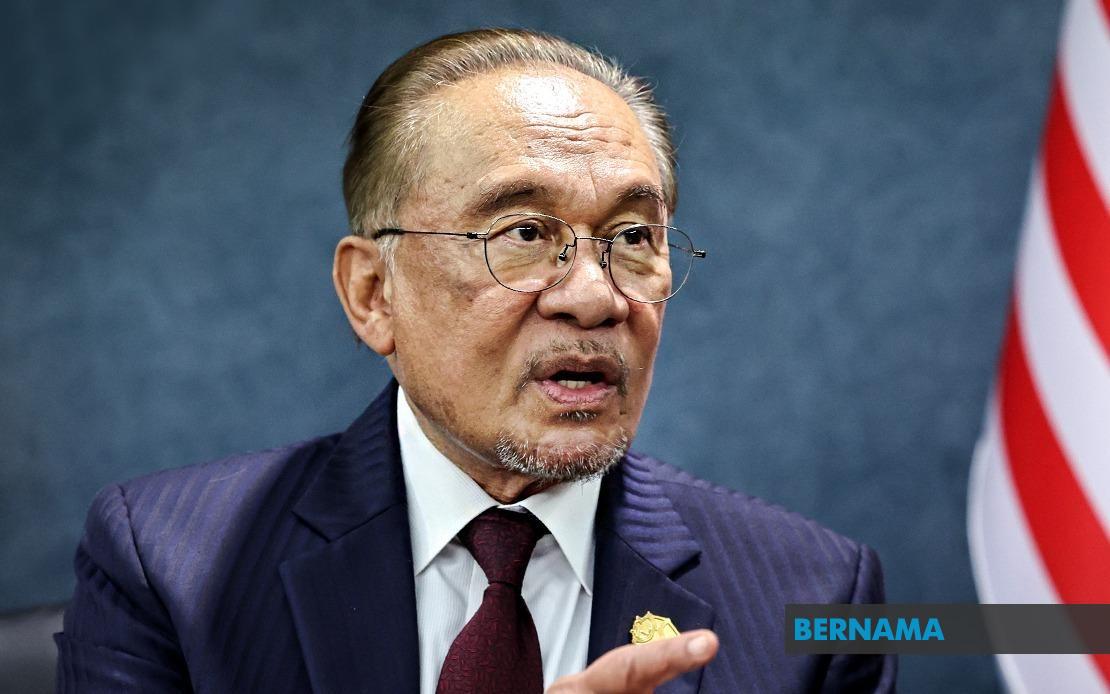
Prime Minister Datuk Seri Anwar Ibrahim is set to deliver a keynote address at the ASEAN-Russia Business Forum in Kazan, reinforcing Malaysia's commitment to deepening bilateral engagement with Moscow at a crucial juncture in regional diplomacy. The forum, hosted at Kazan IT Park, represents a significant occasion for business leaders and officials from across the ten ASEAN member states to explore expanded commercial opportunities with Russia. Anwar's participation underscores Malaysia's active role in steering ASEAN's strategic engagement with the Russian Federation, a relationship that has matured considerably since its inception three decades ago.
The occasion carries particular symbolic weight this year, as delegates gather in Kazan to commemorate the 35th anniversary of ASEAN-Russia dialogue relations. This milestone reflects a partnership that has evolved from its foundational stage in 1991 through various institutional arrangements and frameworks. The relationship gained formal structure when Russia attained full ASEAN Dialogue Partner status in 1996, a designation that positioned Moscow as a key interlocutor for the regional bloc. The subsequent elevation to Strategic Partnership status in 2018 signalled both parties' determination to construct a more comprehensive framework encompassing political-security cooperation, economic integration, and socio-cultural exchanges.
Kazan itself serves as a symbolically appropriate setting for such discussions. Situated roughly 800 kilometres east of Moscow along the Volga and Kazanka rivers, the city functions as a cultural and economic hub within the Russian Federation. With a population exceeding 1.3 million inhabitants, it ranks among Russia's most significant metropolitan centres, often characterised as the nation's third capital after Moscow and St Petersburg. The city's historical significance spans more than a millennium, during which it has developed into a pre-eminent centre of Islamic culture and heritage within Russia. This positioning as a bridge between Russian and Muslim civilisations makes it particularly apt for facilitating dialogue between Russia and ASEAN, a region where Islam plays a substantial political, cultural, and demographic role.
The economic dimensions of ASEAN-Russia relations merit careful attention from Malaysian policymakers and business interests. During 2024, bilateral trade between ASEAN and Russia reached USD18.1 billion, though this figure likely masks significant variation across individual member states. Russian foreign direct investment in ASEAN totalled USD92.97 million, suggesting that while commercial ties exist, investment flows remain constrained, possibly due to geopolitical tensions and international sanctions. For Malaysia specifically, Russia ranked as the ninth-largest trading partner among European nations in 2025, with total bilateral trade valued at RM8.72 billion (USD2.04 billion). This positions Russia as a meaningful but not dominant trade partner for Malaysia, indicating room for expansion across multiple sectors.
Malaysia's trade composition with Russia reveals distinct patterns in commercial specialisation. Malaysian exports to Russia emphasise electrical and electronic products, sophisticated machinery and equipment, along with processed food items. These sectors reflect Malaysia's manufacturing strengths and technological capabilities developed over decades of industrialisation. Conversely, Malaysian imports from Russia concentrate on petroleum products, mineral commodities, and chemicals alongside chemical derivatives. This complementary trade structure, where Malaysia supplies manufactured goods while importing raw materials and energy products, suggests natural foundations for sustained commercial relations. However, the relatively modest trade volumes compared to Malaysia's relationships with other major trading partners indicate untapped potential for deepening economic cooperation.
Anwar's dual role as both Prime Minister and Finance Minister positions him uniquely to articulate Malaysia's vision for expanded ASEAN-Russia economic engagement. His address to forum participants will likely emphasise the need for innovative financial instruments, trade facilitation mechanisms, and sectoral collaboration that could unlock bilateral commerce. The presence of Ilya Nachvin, Minister of Digitalisation of Public Administration, Information Technologies and Communications of Tatarstan, suggests that digital economy cooperation constitutes an emerging frontier for partnership discussions. The IT Park venue reinforces this thematic focus, positioning technology and innovation as central to future relationship development.
Beyond the business forum, the formal summit programme includes a gala dinner at the Tatar State Academic Theater, where diplomatic ceremonies and bilateral exchanges will occur throughout the evening. Particularly significant is Anwar's scheduled courtesy call on Russian President Vladimir Putin, an engagement that carries diplomatic weight in affirming Malaysia's commitment to maintaining substantive relations with Russia despite broader international complexities. Such high-level interactions serve multiple purposes: they reaffirm bilateral respect, permit leaders to exchange views on regional and global matters, and signal to business communities that political commitment underpins economic opportunities.
For Malaysian readers and stakeholders, this summit carries implications beyond immediate business transactions. Malaysia's active participation in ASEAN-Russia engagement reflects its broader strategic calculus of maintaining pragmatic relationships across the geopolitical spectrum. In a region increasingly characterised by great power competition and strategic realignments, ASEAN's collective engagement with Russia serves to preserve space for independent policy manoeuvre and to prevent polarisation along rigid bloc lines. Malaysia's prominent role in these discussions, particularly through Anwar's direct participation, reinforces Kuala Lumpur's positioning as a responsible middle power committed to constructive multilateralism.
The commemorative summit also provides occasion for ASEAN to calibrate its approach toward Russia at a time of significant international tensions. ASEAN's historic commitment to strategic autonomy and non-alignment finds expression through such engagement, which maintains dialogue without surrendering principles or accepting pressure to choose between major powers. For Malaysian companies seeking to expand operations into Russian markets or pursue joint ventures, the government's evident commitment to relationship development creates a more conducive environment for such initiatives. Similarly, Malaysian institutions exploring scientific, technological, or academic collaboration with Russian counterparts receive implicit support through these high-level diplomatic channels.
Looking forward, the success of this forum and summit may establish templates for deeper ASEAN-Russia cooperation across multiple domains. Trade facilitation, infrastructure development, renewable energy collaboration, and scientific research represent sectors where mutually beneficial partnerships could develop. The geographical and demographic diversity within ASEAN, combined with Russia's vast resource endowments and technological capacities, creates natural complementarities. However, realising this potential requires sustained political commitment, streamlined institutional mechanisms, and active participation from both governmental and private sector actors. Anwar's participation signals Malaysia's readiness to play a constructive role in this process, positioning the nation as a bridge between Southeast Asian and Russian interests while advancing Malaysian commercial and strategic objectives.