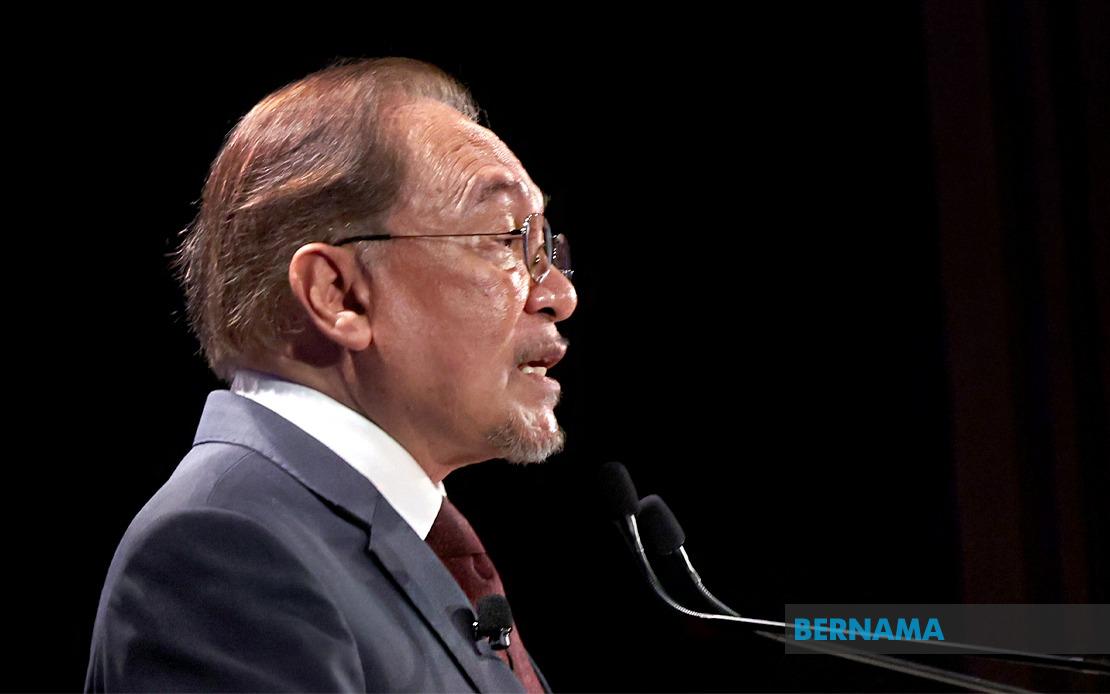
Prime Minister Datuk Seri Anwar Ibrahim will conclude his official visit to Turkmenistan with an intensive schedule of bilateral engagements and diplomatic ceremonies on the second and final day of his stay in the Central Asian nation. The visit underscores Malaysia's growing strategic interest in expanding relationships beyond its traditional geographic boundaries and tapping into opportunities in the resource-rich region bordering the Caspian Sea.
The morning programme at the Presidential Palace will commence with a formal welcoming ceremony hosted by Turkmenistan President Serdar Berdimuhamedov, followed by a one-on-one meeting between the two leaders. This private discussion will set the tone for broader diplomatic conversations scheduled throughout the day, providing an opportunity for the Malaysian and Turkmen heads of government to exchange perspectives on bilateral relations and mutual strategic priorities in their respective regions.
The bilateral meeting proper will follow, during which both countries are expected to ink a joint statement alongside several significant agreements and memoranda of understanding. These documents will formalise cooperation across multiple sectors critical to both nations' development agendas. The comprehensive nature of these agreements reflects Malaysia's intent to establish a multifaceted partnership rather than limiting engagement to narrow commercial interests.
Key areas of cooperation to be discussed include strengthening bilateral trade and investment frameworks, collaborative ventures in the oil and gas sector where both nations have significant interests, agricultural and commodities exchanges, energy initiatives, tourism promotion, educational partnerships, and technological advancement in the digital sphere. For Malaysia, engagement with Turkmenistan's energy sector holds particular significance given Petronas's substantial long-term presence and investments in the country, which have reached RM52.73 billion since 1996. This makes Turkmenistan one of Southeast Asia's most important resource-based investment destinations.
Regional and international matters of mutual concern will also feature prominently in discussions. Both leaders are anticipated to exchange views on developments affecting ASEAN and Central Asia respectively, recognising that stability and cooperation in each region carries implications for the broader Indo-Pacific architecture. This dimension of the talks reflects Malaysia's broader foreign policy approach of engaging regional powers on issues extending beyond bilateral commerce.
Several landmark documents are scheduled for exchange during the visit, including an Air Services Agreement that will facilitate enhanced aviation connectivity between the two countries. Additionally, a memorandum of understanding between Malaysia's foreign affairs institute and Turkmenistan's equivalent body will establish institutional channels for ongoing diplomatic dialogue and research cooperation. These foundational agreements create infrastructure for sustained engagement beyond the immediate diplomatic visit.
Further accords involving transport cooperation, scientific research collaboration, and oil and gas development will also be formalised. An agreement between Malaysia's Ministry of Transport and Turkmenistan's State Service, alongside a memorandum between the Academy of Sciences Malaysia and the Academy of Sciences of Turkmenistan, demonstrate commitment to deepening institutional ties across government, research, and technical bodies. The oil and gas documents reflect the reality that energy cooperation remains central to the bilateral relationship.
Following these formal proceedings, Anwar will join Berdimuhamedov for a presidential luncheon before performing Friday prayers at Turkmenbashi Ruhy Mosque, incorporating religious observance into the diplomatic schedule. This gesture acknowledges the cultural and Islamic dimensions of Malaysia's engagement with Turkmenistan, a Muslim-majority nation, and reinforces commonalities in values alongside commercial interests.
The prime minister will then jointly officiate the Malaysia-Turkmenistan Forum with President Berdimuhamedov at the Chamber of Commerce and Industry of Turkmenistan. This business-focused gathering provides a platform for Malaysian and Turkmen entrepreneurs, investors, and corporate representatives to explore opportunities, share market insights, and establish commercial connections. Such forums are instrumental in translating government-level agreements into practical business relationships that generate tangible economic benefits for both nations.
Ashgabat, Turkmenistan's distinctive capital, has earned the nickname "White Marble City" and holds the Guinness World Record for the highest concentration of white marble-clad buildings, with over five hundred structures displaying the distinctive architectural feature. The city's monumental architecture, extensive gold-leaf ornamentation, and broad, immaculate avenues reflect Turkmenistan's investment in infrastructure and its aspirations as a modern Central Asian power. The choice of venue carries symbolic weight, presenting a vision of contemporary development and stability to visiting dignitaries.
Turkmenistan's strategic importance stems from its geographic positioning as a bridge between Central Asia and the broader region. Bordered by Kazakhstan and Uzbekistan to the north, Afghanistan to the southeast, Iran to the south and southwest, and the Caspian Sea to the west, the country occupies a crucial location in regional trade networks and energy corridors. The Caspian Sea, the world's largest inland body of water, further enhances Turkmenistan's significance as a gateway for commerce and resource development.
Malaysia's trade relationship with Turkmenistan has shown positive momentum, with total bilateral trade in 2025 reaching RM75.80 million. Malaysian exports valued at RM75.50 million represented a nine percent increase compared to the previous year, indicating growing commercial demand for Malaysian products and services. In Central Asian trading contexts, Turkmenistan ranks as Malaysia's fourth largest partner, underlining the importance of this engagement for Malaysian businesses seeking Central Asian market access.
Prime Minister Anwar is accompanied by Minister of Investment, Trade and Industry Datuk Seri Johari Abdul Ghani and Minister of Economy Akmal Nasrullah Mohd Nasir, along with officials from the Prime Minister's Office and Foreign Ministry. This high-level delegation composition signals the Malaysian government's serious commitment to the visit and its outcomes, with multiple cabinet-level representatives available to discuss sectoral opportunities and finalise agreements within their respective portfolios.
The visit concludes with a press conference featuring Malaysian media, allowing the prime minister to articulate Malaysia's perspective on the bilateral relationship, highlight achievements from the visit, and address public interest in the government's engagement strategies in Central Asia. This transparency and direct communication with the Malaysian press ensures domestic constituencies understand the rationale and potential benefits of Malaysia's Central Asian diplomacy.