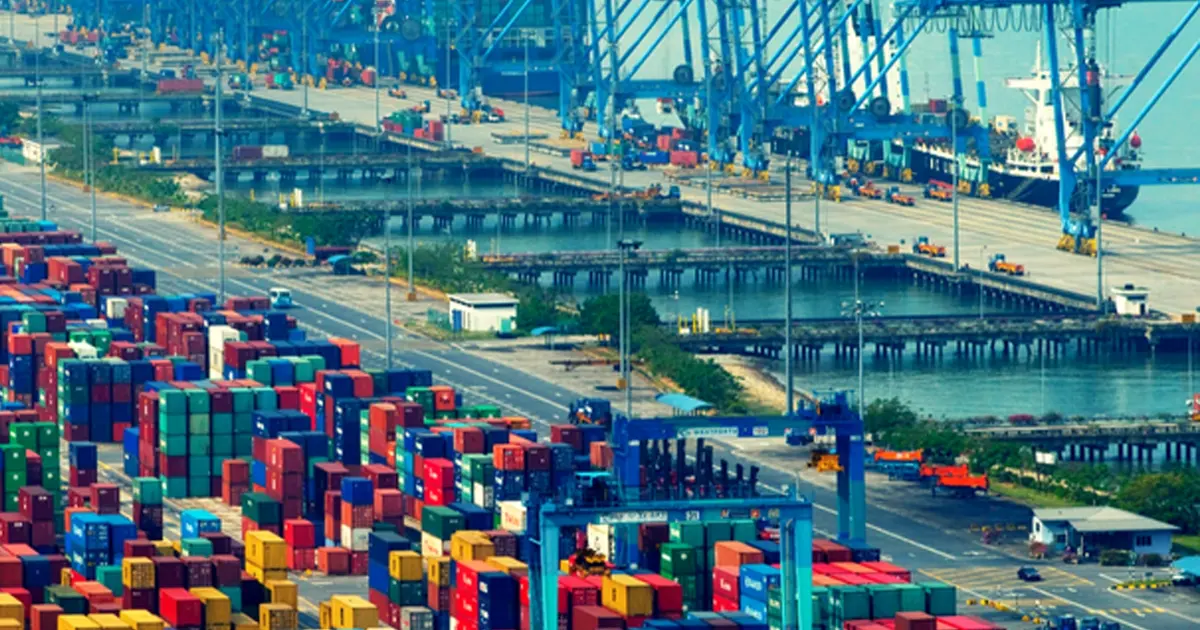
The Port Klang Free Zone has demonstrated substantial momentum in its operational recovery, generating RM108 million in revenue as its comprehensive reactivation initiative approaches near-full implementation at 86 per cent completion. Transport Minister Loke Siew Fook highlighted this achievement during recent remarks, characterising the past 18 months as a period of consistent and encouraging advancement for the facility that has long been central to Malaysia's port operations and regional trade infrastructure.
This resurgence represents a pivotal moment for the free zone, which faced intense scrutiny and operational challenges in preceding years. The reactivation programme reflects sustained efforts to restore confidence among international traders and logistics operators who had previously scaled back their involvement. The steady climb toward full capacity utilisation signals that the facility is successfully recapturing market share in the increasingly competitive Southeast Asian logistics ecosystem, where ports across the region vie aggressively for containerised cargo flows.
The RM108 million revenue figure underscores the economic significance of the Port Klang Free Zone's recovery trajectory. For context, Malaysia's port sector plays a critical role in the nation's merchandise trade, with the Klang Valley port complex handling a substantial portion of the country's containerised imports and exports. A revitalised PKFZ directly benefits downstream industries including manufacturing, retail, and e-commerce, all of which depend on efficient cargo processing and customs clearance mechanisms.
The 86 per cent reactivation milestone reflects progress across multiple operational dimensions. This includes restoration of warehouse capacity, reactivation of value-added service provisions such as repacking and labelling, and resumption of bonded manufacturing activities that had been suspended or curtailed. The sequential unlocking of these capabilities demonstrates a methodical approach to rebuilding operational functionality while ensuring compliance with regulatory standards established by customs and port authorities.
The transport ministry's emphasis on this growth trajectory reflects broader governmental commitment to enhancing Malaysia's trade facilitation infrastructure. In an era where supply chain resilience and speed have become competitive differentiators, the performance of domestic port facilities directly influences the country's ability to attract and retain international trading activity. The PKFZ's reactivation therefore carries implications extending beyond Port Klang itself, affecting Malaysia's positioning as a regional logistics hub.
For Malaysian businesses engaged in import-export operations, the PKFZ's improved functionality translates into practical benefits. Enhanced warehouse availability reduces storage costs for imported goods, faster cargo processing shortens inventory holding periods, and expanded value-added service capacity supports domestic manufacturers seeking to optimise their supply chains through offshore bonded operations. These advantages become particularly meaningful for companies competing in time-sensitive sectors such as electronics, automotive components, and perishable goods.
The recovery also addresses regional competitive dynamics. Neighbouring free trade zones and bonded facilities in Indonesia, Thailand, and Singapore have invested significantly in infrastructure modernisation and service innovation. The PKFZ's reactivation helps ensure that Malaysia retains competitiveness in attracting regional warehousing investment and transhipment operations, which generate substantial employment and value-add in the Klang Valley.
Minister Loke's characterisation of the past 18 months as delivering "steady, encouraging growth" suggests measured optimism rather than exuberant claims. This measured tone aligns with industry realities, where cargo volumes fluctuate according to global economic cycles and trade patterns. The achievement of 86 per cent reactivation represents genuine progress, yet the remaining 14 per cent warrants attention regarding final operational activation targets and timelines.
The revenue performance becomes particularly noteworthy when considered against the backdrop of global trade uncertainty. The past 18 months have encompassed periods of geopolitical tension, supply chain disruptions, and shifting trade patterns as businesses adapt to post-pandemic realities. That the PKFZ achieved RM108 million in revenue during this period demonstrates underlying resilience and renewed shipper confidence in the facility's operational competence.
Looking forward, the challenge for PKFZ management and stakeholders involves sustaining this momentum while completing the final reactivation phase. This requires continued attention to service quality, competitive pricing relative to regional alternatives, and maintaining regulatory reliability. The facility must also adapt to evolving logistics demands, including growing emphasis on supply chain sustainability and digital trade documentation systems that increasingly characterise modern international commerce.
The reactivation programme's near-completion suggests that significant capital investments in facility restoration and technological upgrades have borne fruit. Successful execution of remaining initiatives will be essential for achieving full operational capacity, which would further enhance Port Klang's attractiveness to major shipping lines, freight forwarders, and multinational corporations seeking efficient regional distribution hubs. The trajectory toward 100 per cent reactivation remains a tangible and achievable objective that carries substantial economic significance for Malaysia's trade sector.