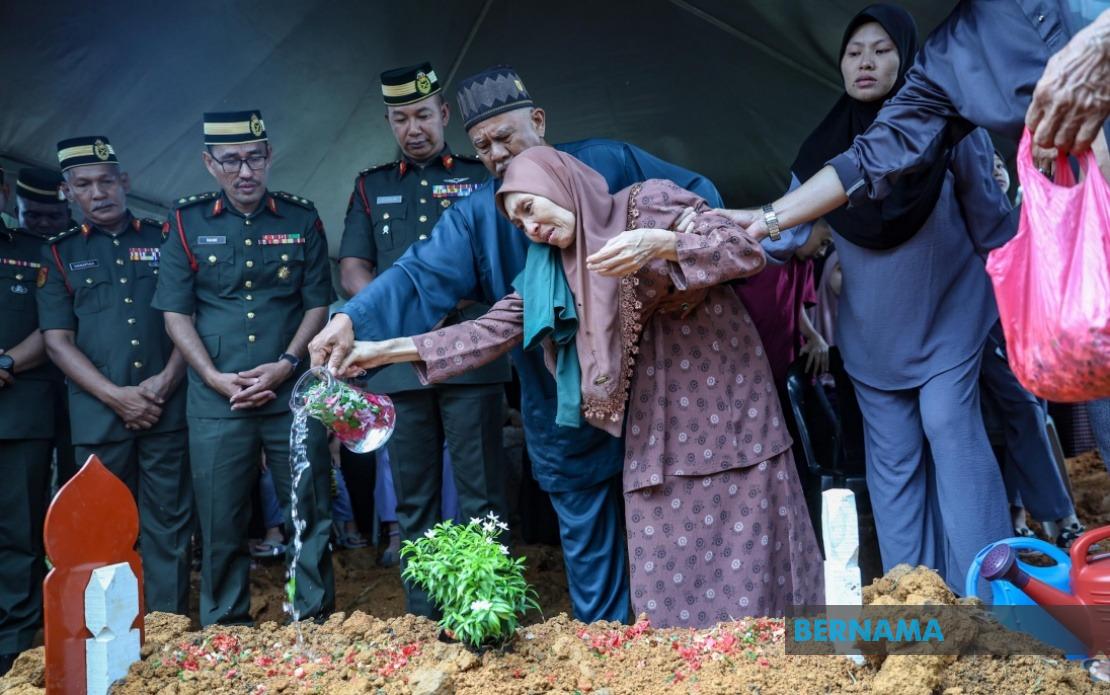
The body of Private Siti Khadijah Sungip, a 24-year-old Malaysian Army soldier, was laid to rest on June 17 at Taman Sri Lambak Muslim Cemetery in Kluang, Johor, after she became one of two service personnel killed in an explosive training accident at Hobart Camp, Gurun, Kedah, the previous day. The funeral service brought together her grieving family, fellow soldiers, and military officers to honour the fallen servicemember, with proceedings conducted with full military protocol and respect.
The fatal incident occurred at 10.57 am on June 16 during a routine grenade-throwing exercise at the training facility's designated range. Private Siti Khadijah, who served with the First Squadron of the Royal Engineer Regiment (RAJD) based at Sangro Camp in Taiping, Perak, sustained catastrophic injuries when an explosion erupted during the live training exercise. The circumstances surrounding the detonation remain part of an ongoing incident investigation, though preliminary reports indicate both victims suffered injuries consistent with blast trauma from ordnance.
Alongside Private Siti Khadijah, Corporal Norazmi Abu Bakar from the Sixth Battalion of the Royal Malay Regiment (RAMD) also perished in the same incident. Both personnel were evacuated from the training area with serious injuries and were being transported to Sultan Abdul Halim Hospital (HSAH) in Sungai Petani when they succumbed to their wounds en route, according to Malaysian Army (TDM) officials. The dual fatalities mark a significant loss within Malaysia's military community and underscore the inherent risks associated with live ammunition and explosives training operations.
Following the tragedy, Private Siti Khadijah's remains were transferred to Sultanah Bahiyah Hospital (HSB) in Alor Setar, Kedah, where a post-mortem examination was completed at approximately 2.30 am on June 17. The body was then escorted to her family residence in Taman Sri Lambak, arriving at 12.10 pm, accompanied by Lieutenant Muhammad Lutfil Hadi Osman, the First Field Troop Leader, along with four members of the First Squadron RAJD. This formal escort reflected military custom honouring deceased personnel and provided dignified transportation of the deceased to her final resting place.
Before interment, Private Siti Khadijah's body was brought to Darul Iman Mosque for the Islamic funeral prayers. The religious ceremony was led by Major Mohd Azlan Shah Abdul Razak from the TDM Field Engineering Institute (IKM), ensuring that the funeral rites adhered to Islamic protocol and traditions. Military personnel formed a significant contingent at the mosque, demonstrating institutional solidarity with the fallen soldier and her bereaved family during this period of intense grief.
The burial itself took place at 1.15 pm at Taman Sri Lambak Muslim Cemetery, witnessed by a substantial gathering that included immediate family members, extended relatives, personal friends, and numerous military colleagues and superiors. The emotional atmosphere at the cemetery reflected the communal mourning typical of such tragic circumstances, with attendees united in paying final respects to the young servicemember whose life was cut short in the line of duty.
A significant moment during the funeral ceremony involved the symbolic presentation of the Jalur Gemilang, Malaysia's national flag, to Private Siti Khadijah's next of kin. This formal handover was conducted by Brigadier General Datuk Zulhelmy Masdar, Commander of the 7th Brigade and Head of the Headquarters of the 7th Malaysian Infantry Brigade based at Mahkota Camp. The presentation of the flag to the deceased's father, Sungip Jais, 65, serves as a traditional military honour recognising the sacrifice made by service personnel and symbolising the nation's gratitude for their commitment.
The incident at Hobart Camp raises pertinent questions about safety protocols and oversight mechanisms governing live explosives training in military installations. Training accidents involving grenades and similar ordnance, while statistically uncommon relative to the volume of exercises conducted annually, carry exceptionally severe consequences when they occur. Malaysian military authorities will likely conduct a comprehensive review of the circumstances surrounding this explosion to determine whether procedural lapses, equipment failures, or other factors contributed to the fatalities.
Private Siti Khadijah's death represents a sobering reminder of the occupational hazards faced by military personnel, particularly those in engineering and combat roles where exposure to explosives is inherent to their training and operational responsibilities. The loss of younger service members in training accidents resonates throughout military institutions and often prompts broader discussions regarding risk mitigation, training supervision, and the balance between operational readiness and personnel safety.
For Malaysia's military community, the tragedy underscores the commitment expected from soldiers who accept the inherent dangers accompanying their service. The Royal Engineer Regiment, to which Private Siti Khadijah belonged, plays a crucial role in Malaysia's defence infrastructure, conducting specialised operations that frequently involve hazardous materials and explosive devices. Her sacrifice, though occurring during training rather than active conflict, remains within the broader context of military service and national defence commitments.
The incident and its aftermath reflect institutional and societal respect for military personnel who dedicate themselves to national service. The presence of senior military officials at the funeral, the formal flag presentation ceremony, and the full honours extended to the deceased all demonstrate recognition within military structures of the significance of such losses. These formal acknowledgements provide meaningful recognition to bereaved families and affirm the value placed on military service within Malaysian institutions and society at large.