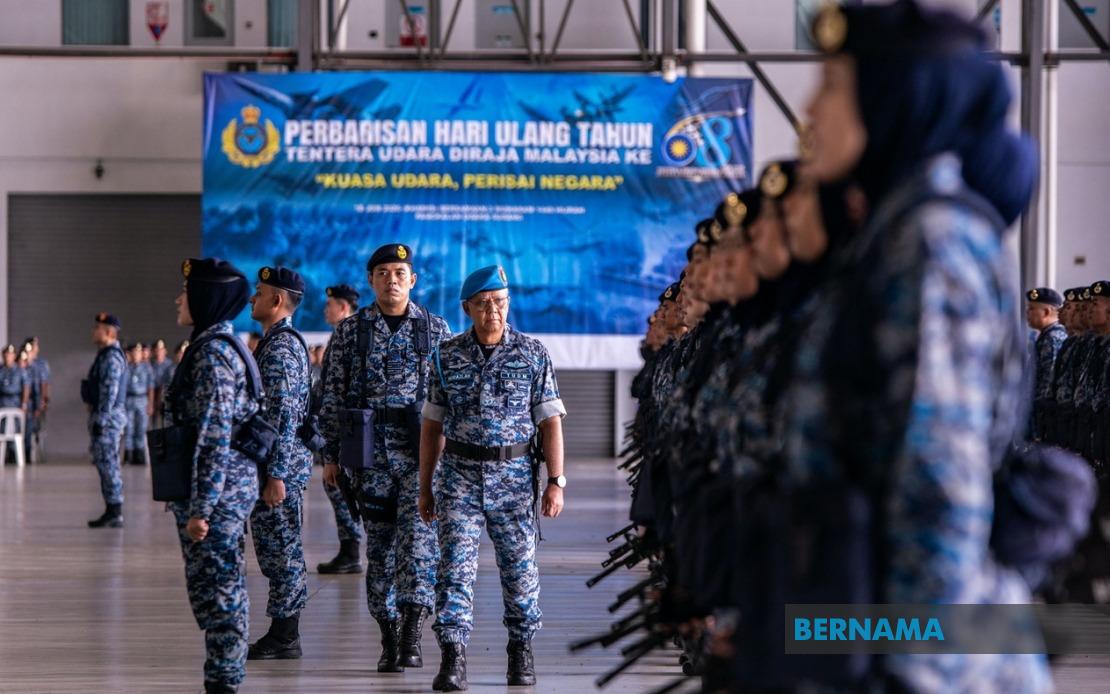
The Royal Malaysian Air Force is moving forward with a comprehensive radar modernisation programme, installing air defence and surveillance systems at multiple strategic locations nationwide to bolster the country's airspace protection and operational readiness. Air Force Chief General Tan Sri Muhamad Norazlan Aris announced the deployment during the RMAF's 68th anniversary celebrations in Subang, outlining how the force intends to maintain technological parity with regional developments and emerging security threats. The phased rollout represents a significant investment in Malaysia's ability to detect and respond to airborne incursions, a capability increasingly important as geopolitical tensions reshape regional dynamics.
The installation programme spans four distinct locations, each chosen for its strategic significance to national defence. Bintulu in Sarawak and Bukit Puteri in Terengganu will receive air defence radar systems designed to detect and track incoming aircraft, while a similar system is being deployed to Bukit Lunchu in Johor to extend coverage across the southern peninsula. Complementing these installations, an air surveillance radar will be established on Pulau Layang-Layang in the South China Sea, extending Malaysia's monitoring capabilities well into its maritime zones. Together, these systems are intended to eliminate blind spots in the country's early warning architecture and provide continuous surveillance across territorial boundaries.
General Muhamad Norazlan characterised these radar projects as essential infrastructure for plugging gaps in airspace surveillance, particularly in regions where national security interests converge with ongoing regional activities. The systems align with the RMAF's Capability Development Plan 2055, a long-term modernisation roadmap designed to ensure the force remains effective through the coming decades. This strategic framework recognises that maintaining air superiority and situational awareness requires consistent investment in surveillance technology, sensor networks, and integrated command systems that can process and respond to threats in real time.
The timing of this modernisation push reflects Malaysia's assessment of the shifting regional security landscape. The air force chief explicitly referenced the conflict unfolding in West Asia as a cautionary lesson, arguing that instability in distant theatres carries implications for Malaysia's own strategic environment. Disruptions to Sea Lines of Communication through the Strait of Hormuz demonstrate how regional conflicts ripple across global supply chains and energy markets, affecting economic stability far beyond the immediate conflict zone. Malaysia, as an energy importer and trading nation, remains acutely vulnerable to such disruptions, underscoring why the RMAF must maintain heightened readiness.
For Malaysia specifically, the security of maritime chokepoints takes on paramount importance. The Strait of Malacca, one of the world's busiest shipping channels, and the South China Sea both serve as critical conduits for the nation's external trade and energy supplies. Any instability in these waters translates directly into economic consequences for Malaysian industries, from manufacturing to financial services. The new radar deployments, particularly the Pulau Layang-Layang system monitoring the South China Sea, represent an attempt to extend Malaysia's own surveillance capabilities in waters where strategic competition among major powers continues to intensify. This localised monitoring capacity complements broader multilateral efforts to maintain freedom of navigation and stable maritime order.
The deployment also signals Malaysia's determination to exercise effective sovereignty over its airspace at a time when drone operations, unmanned reconnaissance missions, and advanced aircraft systems make airspace protection more technically demanding than in previous decades. By establishing integrated radar coverage across geographically dispersed sites, the RMAF gains the ability to construct a comprehensive air picture, fusing data from multiple sensors into a unified operational awareness. This networked approach to air defence reflects modern military doctrine and allows the force to identify and respond to threats with greater precision and speed than systems operating in isolation.
General Muhamad Norazlan's emphasis on vigilance and readiness acknowledges the uncomfortable reality that Malaysia cannot isolate itself from regional instability. The country's geographic position, straddling major sea lanes and neighbouring diverse geopolitical interests, mandates constant defensive preparedness. The RMAF's modernisation programme represents an institutional response to these structural vulnerabilities, translating strategic concerns into concrete investments in surveillance infrastructure. The phased approach embedded in the Capability Development Plan 2055 suggests a pragmatic recognition that comprehensive modernisation requires sustained funding and technological integration over many years.
During the anniversary parade, General Muhamad Norazlan presided over formal ceremonies honouring air force personnel for exceptional service, presenting Pingat Perkhidmatan Am, Pingat Perkhidmatan Setia, and Chief of Air Force Commendation Certificates to 17 recipients. The event, styled with the theme 'Kuasa Udara, Perisai Negara' (Air Power, National Shield), involved 288 personnel organised into four distinct flights representing the RMAF Special Forces, ground defence units, women's composite flight, and multi-trade personnel. This ceremonial recognition underscores the human dimension of air force operations, acknowledging that technological systems depend ultimately on trained personnel capable of maintaining, operating, and managing complex surveillance networks.
The broader implications of this radar modernisation extend beyond immediate operational considerations into questions of regional confidence and strategic transparency. As Malaysia enhances its monitoring capabilities, questions may arise among neighbours regarding the intended use of such systems and whether enhanced surveillance serves primarily defensive or broader strategic purposes. The RMAF's framing of the radars as defensive measures designed to protect territorial sovereignty and international trade rather than to project power outward attempts to situate the modernisation within an established framework of legitimate national security activity. Nonetheless, as surveillance technology spreads throughout the region, regional powers will likely continue calibrating their own air defence capabilities in response.
Looking forward, the RMAF's investment in radar systems represents one component of a broader regional arms dynamic characterised by gradual capability enhancement across military forces in Southeast Asia. Malaysia's approach emphasises surveillance and early warning rather than offensive capability, reflecting both budgetary constraints and strategic preferences for defensive posture. However, sustained modernisation across the region suggests that future crises may occur in an environment of significantly enhanced military-technical capabilities, potentially accelerating decision-making timelines and reducing space for diplomatic resolution. Malaysia's radar deployments should therefore be understood as defensive measures intended to preserve strategic stability through enhanced awareness, even as they contribute to the gradual militarisation of regional airspace and maritime zones.