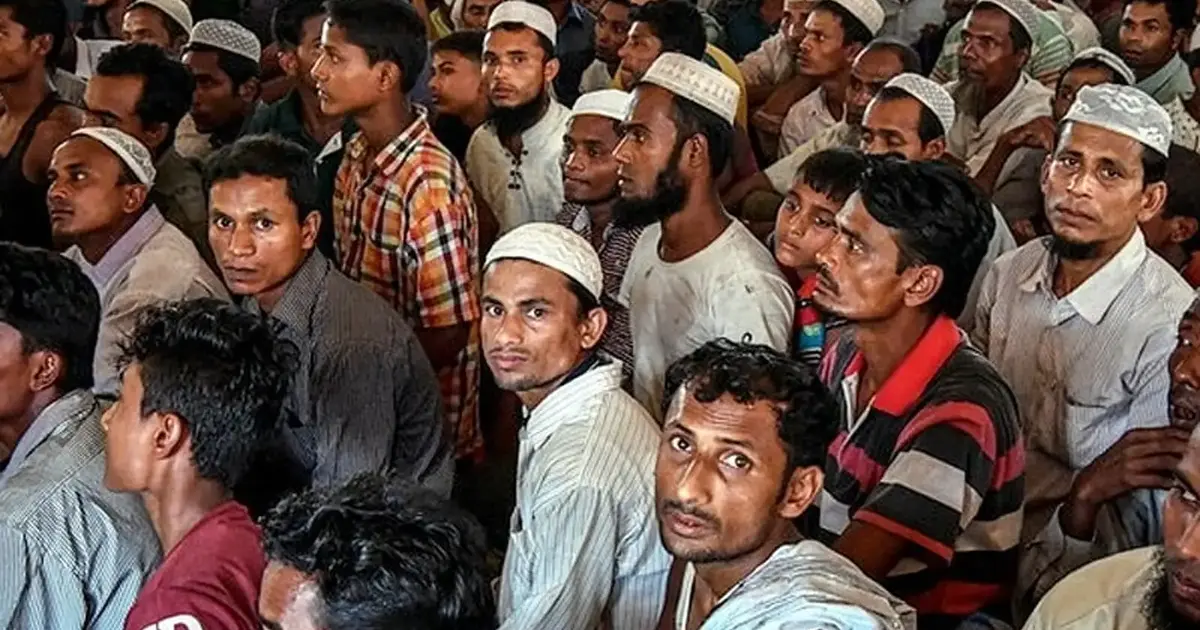
The Rohingya Ulama Council has moved to quash mounting speculation about the community's immigration status in Malaysia, with council chairman Rahimullah Hussain declaring that recent allegations regarding citizenship applications are entirely without foundation. The categorical denial comes amid heightened sensitivity surrounding the Rohingya presence in the country, where nearly a million members of the stateless ethnic minority have sought refuge following decades of persecution in Myanmar.
Rahimullah's statement represents a direct rebuttal to claims that have circulated in recent weeks, which the council characterises as deliberately contrived narratives designed to poison public perception of an already vulnerable population. The chairman's framing of these allegations as fabrications underscores the precarious position occupied by Rohingya communities across Southeast Asia, where they remain perpetually subject to suspicion and scrutiny regardless of their actual intentions or actions.
Malaysia has long positioned itself as a humanitarian haven for Rohingya refugees, hosting one of the world's largest populations outside of camps in Bangladesh. This responsibility has created an ongoing tension between the country's international commitments to vulnerable populations and domestic political pressures from segments of the Malaysian population who harbour concerns about large-scale refugee populations. The false allegations now being rejected by the Rohingya Ulama Council reflect this underlying anxiety, suggesting that rumours about citizenship claims may serve as a proxy for deeper anxieties about immigration and integration.
The deliberate spread of misinformation about Rohingya intentions appears designed to weaponise public opinion against the community by implying that temporary refugee status represents merely a stepping stone toward permanent settlement and naturalisation. Such narratives gain particular traction in regional contexts where citizenship remains closely tied to ethnicity and religion, and where the addition of a new ethnic or religious group to the national body politic triggers visceral political reactions. By asserting that accusations of citizenship-seeking are fabricated, Rahimullah attempts to inoculate the community against this charge before it gains broader currency.
The Rohingya Ulama Council's intervention in this narrative battlefield highlights the critical role played by community leadership in defending against coordinated campaigns of disinformation. As the primary organisational voice claiming to represent Rohingya religious and social interests, the council possesses both the legitimacy and the platform necessary to contest false claims circulating through social media and informal networks. However, the very need to issue such denials reveals the resourcefulness of those invested in portraying the Rohingya presence as inherently threatening to Malaysian society.
Understanding the mechanics of these rumours requires recognition that allegations about citizenship-seeking serve multiple rhetorical functions simultaneously. They imply that Rohingya communities are not grateful temporary guests but rather strategic actors pursuing long-term demographic and political advantage. They suggest that Malaysian authorities have lost control of immigration policy and are being outmanoeuvred by foreign populations. And they position any welfare assistance or humanitarian protection extended to Rohingya as evidence of naive governmental weakness rather than principled adherence to human rights obligations.
The timing and distribution of such allegations typically coincide with moments of heightened public attention to refugee issues or with political cycles in Malaysia when opposition figures seek to mobilise constituencies around immigration anxiety. This pattern indicates that false claims about Rohingya intentions serve partisan political functions, weaponising the refugee presence as a tool for generating electoral advantage. The Rohingya Ulama Council's denial, therefore, addresses not merely a factual dispute but a deeper struggle over narrative control in Malaysian public discourse.
From a regional perspective, the circulation of unfounded claims about Rohingya citizenship aspirations mirrors broader Southeast Asian dynamics surrounding forced displacement and statelessness. Across the region, host countries grapple with the tension between providing sanctuary for persecuted populations and containing domestic political backlash. Thailand, Indonesia, and Bangladesh each face similar pressures, where refugee communities become lightning rods for anxieties about sovereignty, resources, and cultural cohesion. Malaysia's current controversy represents a localised manifestation of this transnational challenge.
The Rohingya community's actual legal status remains carefully circumscribed by Malaysian government policy and international law. Rohingya individuals in Malaysia possess no right of abode and cannot acquire citizenship under Malaysian law. They remain registered with the United Nations High Commissioner for Refugees and depend upon humanitarian protection rather than legal status as residents. These constraints make the citizenship allegations particularly absurd and appear designed precisely to exploit public ignorance about the actual legal framework governing Rohingya presence.
Rahimullah Hussain's characterisation of the allegations as hate-incitement identifies a crucial dimension of this discursive struggle. By framing false claims as deliberate tools for generating prejudice, the council situates the rumours within a framework of harmful speech rather than factual disagreement. This rhetorical move appeals to Malaysian values regarding religious harmony and social cohesion, invoking principles that extend across the Muslim-majority nation's political culture and public rhetoric.
Moving forward, the challenge facing the Rohingya community and its representatives involves sustaining attention to these patterns of misinformation whilst avoiding the defensive posture that perpetual denial can create. Building trust with Malaysian communities requires not only rebutting false claims but also demonstrating tangible contributions to social fabric through education, healthcare provision, and economic participation where opportunities permit. The Rohingya Ulama Council's intervention represents necessary defensive action, but comprehensive integration requires sustained engagement with Malaysian society at multiple levels beyond formal denials of fabricated allegations.