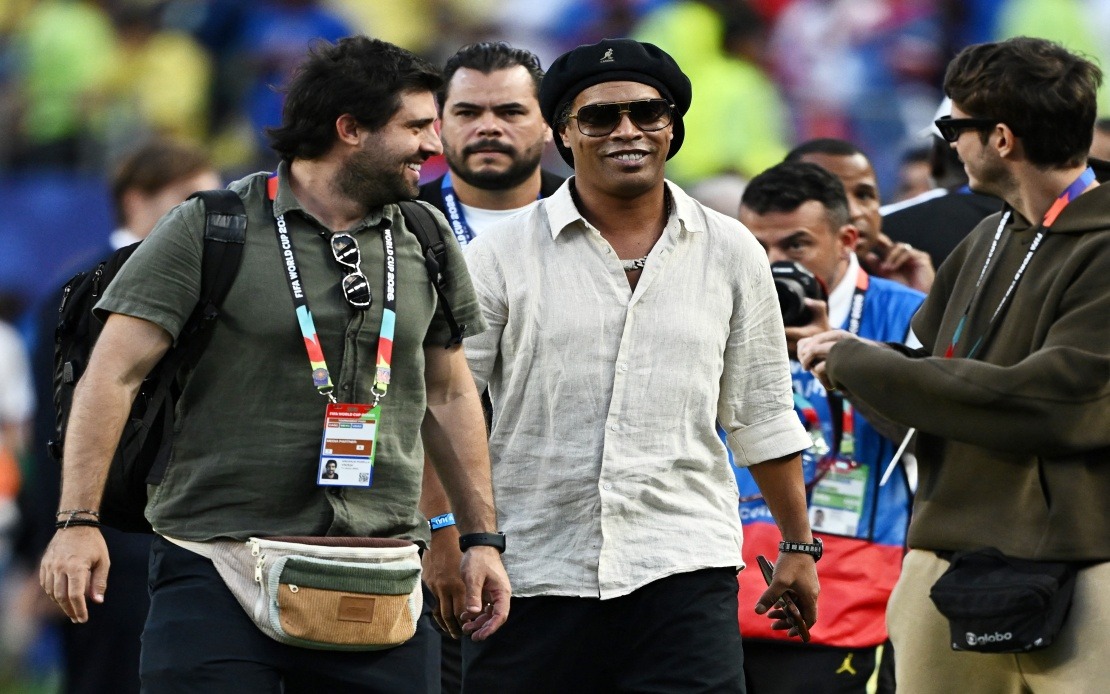
At 46 years old, Ronaldinho appears ready to defy expectations and step back onto the pitch for Italian third-tier outfit Ravenna, marking what would be an extraordinary comeback for the Brazilian icon nearly a decade after his last professional appearance. German Press Agency confirmed the development, citing Italian sports media reports that the two-time FIFA World Footballer of the Year is preparing to ink a contract with the club. However, the precise nature of his involvement remains fluid, with clarity anticipated following a scheduled announcement event in Miami on Tuesday.
The enigmatic Brazilian legend has maintained a mystique throughout his post-playing career, and his potential signing with Ravenna follows the same pattern of intrigue. While contract terms appear to be moving forward, Ravenna's hierarchy has deliberately left ambiguity around whether Ronaldinho will actually feature in competitive matches or assume a different role within the organization. This uncertainty reflects the exploratory nature of negotiations and the complexity of bringing a 46-year-old back into professional football, even at the third-tier level.
Ronaldinho's own remarks, attributed in media reports, reveal a romantic attachment to the possibility of returning. He expressed enthusiasm about dancing with the ball once more and crafting a new narrative alongside club owner Ignazio Cipriani, a prominent businessman and hotel chain proprietor. This evocative language reflects the playfulness and artistry that defined his illustrious career and suggests his motivations extend beyond mere financial incentive or nostalgic exercise.
Ravenna's vice-president Ariedo Braida offered a more measured but optimistic perspective when addressing media inquiries. His statement acknowledged that actual playing time could materialize, while emphasizing Ronaldinho's pedigree and suggesting that age alone need not be a barrier for a player of such exceptional calibre. Braida's comments hint at the club's pragmatic approach: whether Ronaldinho appears on the pitch or contributes in another capacity, his association with the club carries substantial profile and commercial value.
The footballer's resume speaks to generational excellence across multiple continents and competitions. Ronaldinho captured football's highest individual honour twice, winning the FIFA World Footballer of the Year award during his peak years. His trophy cabinet includes World Cup glory with Brazil in 2002, when he was instrumental in ending the nation's 24-year drought in the tournament. His performances at international level showcased technical brilliance that captivated global audiences and redefined what attacking football could achieve.
At club level, his achievements were equally stellar. Barcelona proved the perfect stage for his talents during the mid-2000s, and he formed part of squads that won the Champions League in 2006, returning continental club football's premier trophy to the Camp Nou. His spell in Brazil with Atletico Mineiro saw him secure the Copa Libertadores title in 2013, demonstrating that his influence remained potent even in the twilight of his career. These achievements across Europe and South America cemented his status as one of football's authentic legends.
Ronaldinho's last competitive professional match came in 2015 while wearing the colours of Rio de Janeiro's Fluminense, representing his final appearance in mainstream football. He subsequently extended his playing life through ventures into India's Premier Futsal League, where he had two separate stints before formally announcing his retirement in 2017. The intervening years have seen him maintain a public presence through exhibition matches, coaching roles, and celebrity appearances, but a return to formal professional football remained seemingly improbable.
The prospective move to Ravenna would represent a dramatic shift in that trajectory and raises intriguing questions about his physical condition and competitive appetite. Italy's third division, while below the elite professional tier, nonetheless demands considerable athleticism and tactical awareness. Whether Ronaldinho can meet these demands at his current age remains the central uncertainty, though his statement expresses genuine anticipation about the possibility.
For Ravenna, the arrangement offers multiple strategic dimensions. Regardless of playing involvement, Ronaldinho's name and legacy provide marketing magnetism that could enhance the club's profile domestically and internationally. In an era where digital connectivity amplifies sporting news globally, even a modest third-tier Italian club can leverage such associations through social media and international broadcasting partnerships. The announcement itself has already generated substantial media attention.
The decision also carries implications for how football conceptualizes retirement and comeback narratives. Ronaldinho's potential signing challenges conventional wisdom about age-related decline and suggests that exceptional talent transcends typical physiological limitations. However, it simultaneously risks undermining competitive integrity if his involvement in matches proves token or ceremonial. This tension will likely shape discourse as details become clearer.
Southeast Asian football followers will recognize the broader relevance of this development. The region has witnessed increasing interest in legendary players joining local competitions, and Ronaldinho's potential move demonstrates how marquee international figures can be attracted to lower-tier professional environments. If the Ravenna agreement succeeds, it may inspire similar approaches from ambitious clubs across Asia seeking to elevate their profile and commercial prospects.
The Miami announcement will provide definitive answers about contractual details, anticipated duration, and the scope of Ronaldinho's involvement. Until then, speculation will persist about whether this represents genuine competitive football or an extended exhibition partnership. Regardless of the outcome, the news demonstrates that Ronaldinho remains a figure capable of capturing global football attention, a testament to the indelible mark left by his extraordinary artistry on the game's collective memory.