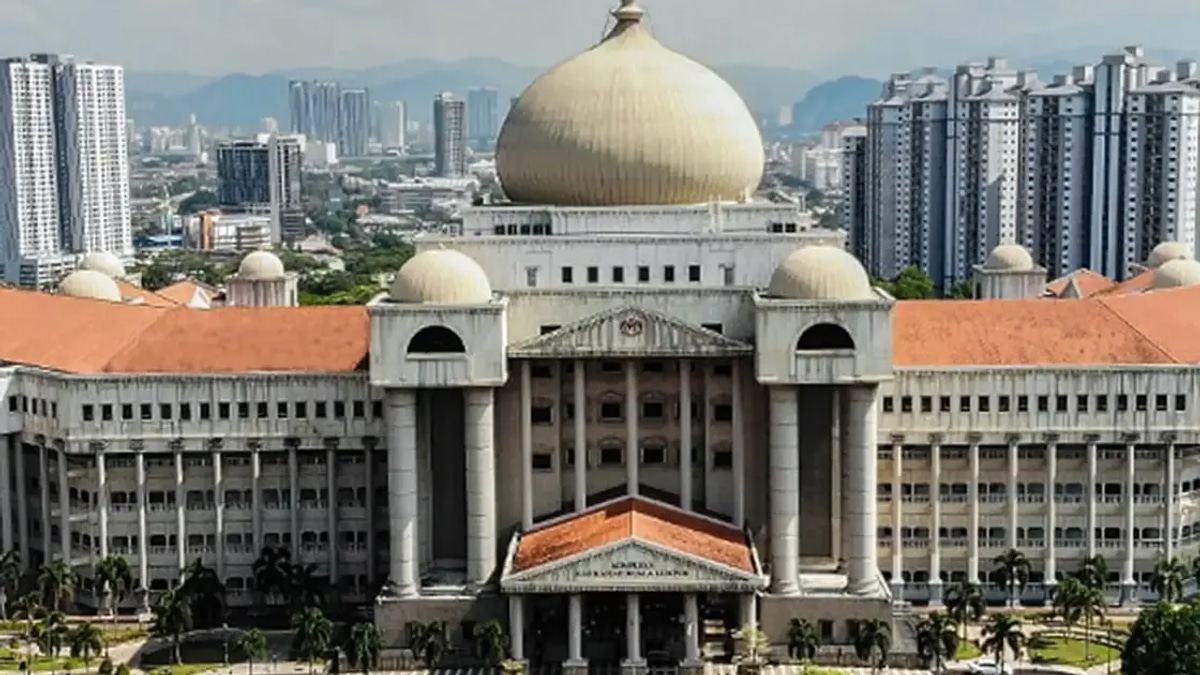
Johor Menteri Besar Onn Hafiz has made clear that commanding public attention and serving as a political figurehead provide no automatic pathway to the highest office in state governance. In remarks addressing the mechanics of state leadership succession, he has underscored that royal consent remains the decisive factor in determining who assumes the role of Menteri Besar, a position that carries constitutional weight beyond popularity metrics or media prominence.
The statement represents an important clarification of Malaysia's constitutional framework, particularly in light of ongoing discussions about political succession and leadership transitions within state administrations. Onn Hafiz's comments serve as a reminder that while public perception and political positioning matter in Malaysia's democratic landscape, the institution of constitutional monarchy plays a defining role in state governance. This reflects the unique Malaysian system where elected leaders must ultimately secure the approval of the respective state ruler, a mechanism that distinguishes the country's political arrangements from purely majoritarian democracies.
In the context of Johor's political environment, the Menteri Besar's remarks carry particular significance. Johor has experienced multiple leadership transitions in recent years, with various political figures gaining prominence through different channels—whether through party politics, grassroots mobilization, or media visibility. The statement appears designed to temper expectations among ambitious politicians who may believe that media presence or public recognition alone provides sufficient grounds for high office. This is a correction to a common misconception in Malaysian politics, where the distinction between popularity and constitutional eligibility sometimes blurs in public discourse.
Royal consent in Malaysia's constitutional monarchy system is not merely ceremonial. The Sultan's approval of the Menteri Besar appointment is a substantive constitutional requirement that reflects the historical partnership between the monarchy and elected government in state administration. This system has evolved over decades and continues to shape how political transitions occur at the state level. The ruler's discretion in confirming leadership ensures that considerations beyond simple electoral mathematics or factional dominance within a political party influence who ultimately leads the state apparatus.
For Malaysian readers and regional observers, Onn Hafiz's statement illuminates a fundamental principle that distinguishes Malaysia's governance structure from its neighbours. While Singapore operates as a parliamentary republic and Thailand's monarchy operates under a different constitutional framework, Malaysia's system explicitly integrates royal consent into executive succession at both federal and state levels. This constitutional interplay between elected representatives and the monarchy remains a defining feature of the nation's political stability.
The timing of these remarks suggests they may address specific succession scenarios or internal party dynamics. In Malaysian state politics, it is not uncommon for multiple contenders within a ruling coalition to position themselves as potential future leaders. Public campaigns, faction-building, and media visibility often accompany such positioning. Onn Hafiz's intervention serves to ground political ambition within constitutional reality, reminding stakeholders that the formal appointment process involves institutional actors beyond party structures and grassroots organization.
This principle carries implications for understanding how Johor, as Malaysia's second-largest state by population and a politically significant entity, conducts its governance transitions. The state has historically been a dominant force within the Federation, and its political dynamics often receive attention nationally. When the Menteri Besar speaks authoritatively about the appointment process, it resonates beyond Johor's borders as guidance for how state politics operates throughout Malaysia. The emphasis on royal consent also reinforces that constitutional norms, rather than purely factional power dynamics, should govern such crucial decisions.
For aspiring politicians in Johor and other Malaysian states, the message is unambiguous: institutional pathways matter more than public relations. A politician may successfully build a public profile, secure media coverage, demonstrate organizational competence, and command support among party members, yet all these achievements remain subordinate to the constitutional requirement of royal approval. This hierarchy of authority prevents personality cults from dominating state governance and ensures that considerations of stability, competence, and constitutional propriety influence leadership selection.
The international dimension merits consideration as well. Malaysia's constitutional monarchy system is often cited as a stabilizing factor in Asian politics, and remarks like Onn Hafiz's reinforce the institutional checks that prevent pure majoritarianism from overwhelming other constitutional principles. Regional scholars and observers interested in comparative governance note how Malaysia's integration of monarchical authority into democratic processes creates a distinct model. This system has weathered multiple political transitions without the systemic crises that have afflicted some neighbouring democracies, suggesting that the constitutional role of the monarchy contributes meaningfully to political stability.
Onn Hafiz's clarification also implicitly addresses the reality that royal preference is not mechanistically determined by public opinion or party factionalism. The ruler exercises independent judgment based on constitutional considerations, personal assessment of candidates' suitability, and broader governance interests. This independence prevents the state leadership from becoming merely a prize for internal party competition or a position awarded purely to the most successful media manipulator. It introduces an external element of accountability and constitutional wisdom into the succession process.
For practitioners of Malaysian politics and observers attempting to understand state-level transitions, these statements provide crucial guidance. Politicians navigating Johor's political landscape—and indeed that of any Malaysian state—must recognize that legitimate pathways to high office require both political organization and constitutional validation. The two are not interchangeable, and the latter cannot be substituted for through media prominence alone. This distinction protects the integrity of state administration and ensures that leadership selection remains grounded in constitutional propriety rather than popularity contests.
Ultimately, Onn Hafiz's intervention serves an important pedagogical function within Malaysian politics. It resets expectations about how state governance actually operates, distinguishing between the visibility of political actors and the formal, constitutional mechanisms through which they assume office. This clarity benefits the political system by establishing that legitimacy in Malaysian governance derives not from popularity alone but from proper observance of constitutional procedures, including the essential requirement of royal consent that distinguishes Malaysian democracy from simpler majoritarian systems.