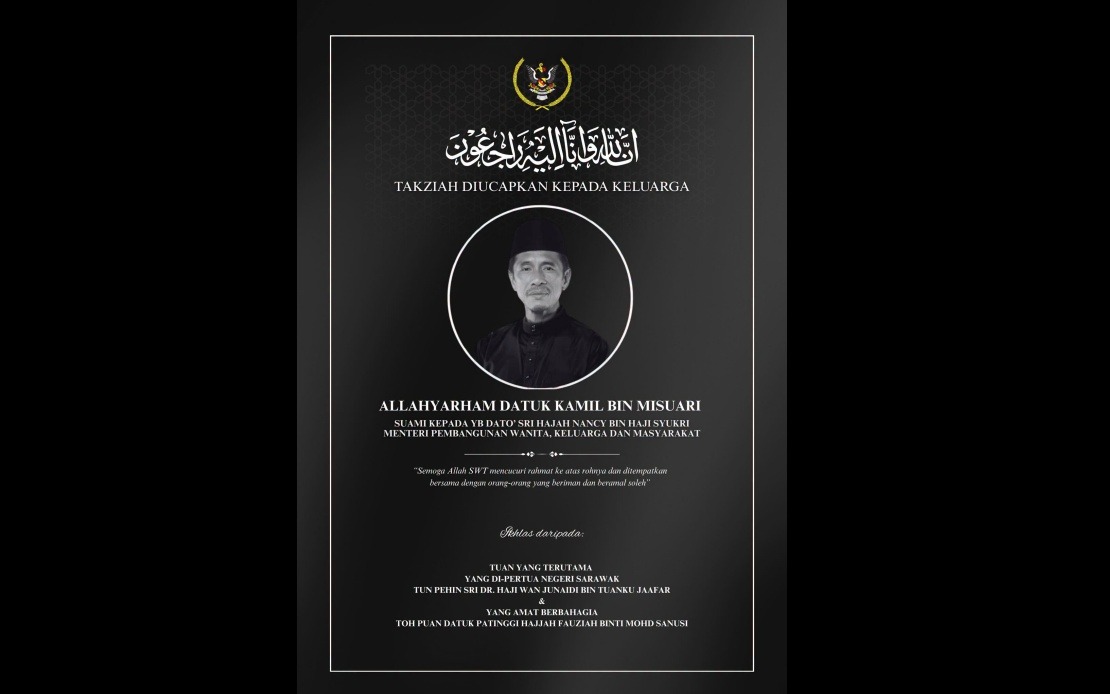
The Yang Dipertua Negeri Sarawak, Tun Dr Wan Junaidi Tuanku Jaafar, has offered his condolences to Women, Family and Community Development Minister Datuk Seri Nancy Shukri following the passing of her husband, Datuk Kamil Misuari, who died at a hospital in Kuala Lumpur on June 18. The late Kamil, who was 65 years old, succumbed to his illness this evening, prompting an official announcement from the minister's office.
In a formal statement released through Astana Sarawak, the state governor and his wife, Toh Puan Fauziah Mohd Sanusi, expressed their deepest sympathies during this difficult period. The couple conveyed their prayers that divine blessings would be bestowed upon the soul of the deceased, seeking that his good deeds be acknowledged and that he be granted a place among the righteous in the hereafter. This gesture reflects the significance of the minister's position within the federal government and the broader network of Malaysia's political leadership.
Beyond the formal expression of sympathy, Tun Dr Wan Junaidi and Toh Puan also lifted up prayers for Nancy Shukri and her extended family, requesting divine intervention to grant them the emotional strength, fortitude, and patience required to navigate the months of mourning ahead. Such gestures from high-ranking state officials underscore the communal nature of grief within Malaysia's political circles, where expressions of support transcend party lines and administrative boundaries. The statement conveyed a message of solidarity during one of life's most challenging transitions.
Datak Kamil Misuari and Datuk Seri Nancy Shukri had been married for nearly four decades, having tied the knot in 1985. Throughout their union, they were blessed with three children, who will now face the loss of their father alongside their mother's continued responsibilities in her ministerial role. The couple's long-standing partnership represents the kind of enduring matrimonial bond that has supported many of Malaysia's public servants throughout their careers in national service.
The minister's husband, despite remaining largely outside the public spotlight compared to his wife's prominent political position, was an integral part of her personal life and family structure. His death marks a significant personal loss for Nancy Shukri as she continues to manage her portfolio addressing women's issues, family welfare, and community development—areas that carry emotional weight given her current circumstances. The intersection of her professional responsibilities and personal grief presents a poignant moment for the minister and her team.
Arrangements have been made to repatriate Kamil's remains to Sarawak, his home state, where his final rites will be conducted according to Islamic customs. The deceased will be transported back to Kuching on June 19 and subsequently laid to rest at the Samariang Muslim Cemetery, allowing family members and friends from both the peninsula and East Malaysia to pay their final respects. This return to his native state underscores the enduring connection many Malaysians maintain with their hometowns, even after decades of residence elsewhere.
The death of a family member of a serving cabinet minister inevitably attracts wider attention within political and administrative circles, as such losses ripple through networks of colleagues, subordinates, and peers. Nancy Shukri's Ministry of Women, Family and Community Development will likely continue its operations with senior officials assuming additional responsibilities during what may be an extended period of leave for the minister. The institutional capacity to maintain government functions during such personal crises speaks to the systems and support structures within Malaysia's civil service.
For Nancy Shukri, balancing her demanding ministerial duties with her role as a widow and head of her household will present new challenges in the coming months. The minister has established herself as a committed advocate for women's empowerment and family welfare, making her own experience with loss potentially informative for her continued work in these portfolios. Her resilience during this period will be observed by both supporters and critics alike, as public figures navigate personal tragedies while remaining accountable to their constituents and colleagues.
The condolences extended by the Sarawak governor's office represent one of the first official acknowledgments of the loss from Malaysia's political establishment. As days progress, similar messages of sympathy are expected from federal and state leaders, reflecting the protocol and mutual respect that characterise interactions among Malaysia's senior political figures across different administrations and regions. Such expressions, while formal in nature, carry genuine weight within a society where respect for family and faith remain central values.