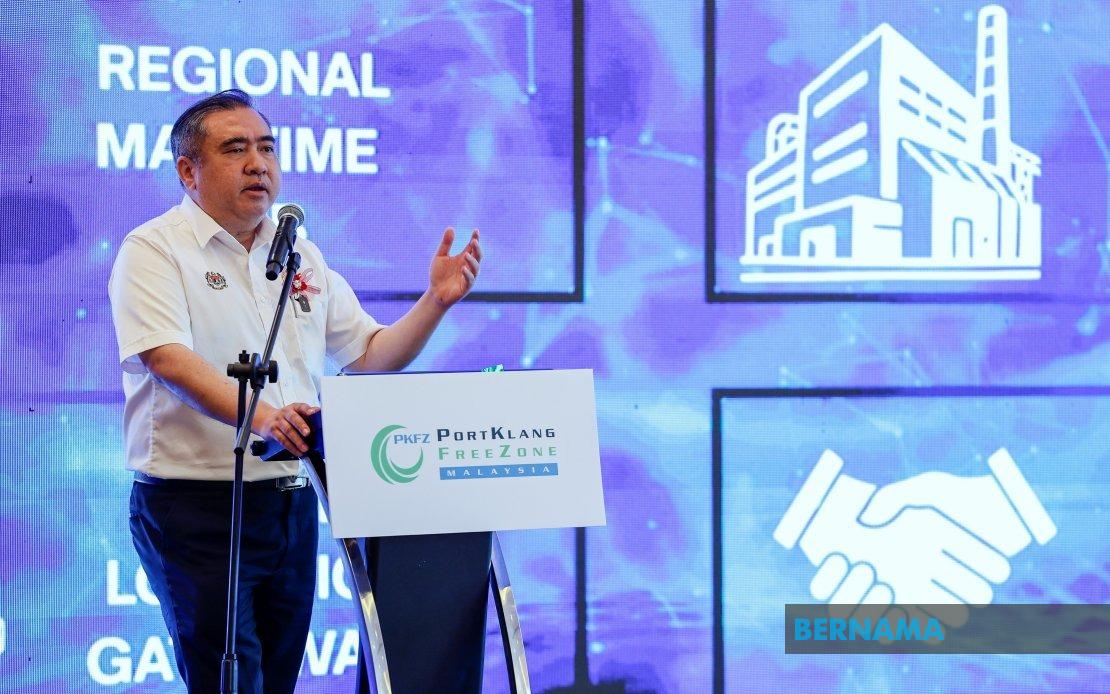
The Selangor State Government has prioritised resolving a critical land ownership dispute that stands between Malaysia and the launch of one of its most strategically important port expansion projects. The Port Klang Third Terminal, to be constructed on Carey Island, represents a significant infrastructure investment designed to enhance the country's competitive standing in regional maritime trade. Transport Minister Anthony Loke confirmed on June 18 that settlement of the land issue forms the essential foundation for moving the development forward, with both state and federal authorities collaborating alongside private sector partners to chart a viable path.
The government structure for the project hinges on a Build-Operate-Transfer model, a framework increasingly common in Malaysian infrastructure development where private operators manage facilities for a defined period before transferring them to state ownership. This arrangement allows the government to leverage private sector expertise and capital while maintaining long-term public control. Loke stated that if land complications can be resolved promptly, the ministry aims to commence construction within the current calendar year, though he emphasised that clearing the property question takes absolute priority over ambitious timelines.
The land complexity reflects Port Klang's intricate ownership landscape. According to Selangor Menteri Besar Datuk Seri Amirudin Shari's statement from September 2025, the state has identified approximately 1,699.68 hectares for the third terminal development. This comprises two distinct parcels: 1,011.71 hectares of seabed land currently managed by the Selangor State Development Corporation (PKNS), and 687.96 hectares of coastal land held by Yayasan Selangor, a state-linked foundation. Reconciling these overlapping jurisdictions and interests has proven more protracted than initially anticipated, highlighting the administrative hurdles that accompany major port infrastructure projects in Malaysia.
The strategic importance of this terminal cannot be overstated for Malaysia's economic trajectory. Prime Minister Datuk Seri Anwar Ibrahim has personally directed all relevant agencies to accelerate the project's realisation, signalling its elevation to the highest political priority. Port Klang already serves as Malaysia's busiest container port and a critical node in Southeast Asian shipping networks. A third terminal would substantially expand handling capacity, reducing congestion and positioning Malaysia to capture growing trade volumes from deepening regional and global commerce, particularly as the region's manufacturing and e-commerce sectors continue expanding.
The project announcement in May followed extended deliberation within government circles about expanding Port Klang's infrastructure. Officials recognised that without capacity expansion, the port risks becoming a bottleneck as containerised trade through Southeast Asia intensifies and larger vessels demand deeper berths and wider terminal facilities. The third terminal is therefore not merely a commercial development but essential infrastructure to prevent Malaysia from losing competitive advantage to rival ports in Singapore, Bangkok, and Ho Chi Minh City.
Beyond the port facility itself, the June 18 launch of ancillary projects demonstrates the broader momentum within Port Klang Free Zone (PKFZ). The opening of Wisma Golden Horse at Q Centre, the Suntek Materials factory, and Golden Horse Rubber Factory Phase 2 collectively represent RM566 million in fresh investment commitments. These initiatives signal investor confidence in the PKFZ ecosystem despite ongoing complications with the third terminal. The introduction of PKFZ: Smart Intelligence Industrial Park reflects efforts to upgrade the zone's technological infrastructure and attract higher-value manufacturing operations, complementing the port's physical expansion.
Parallel to port expansion, the government is addressing labour shortages that persistently constrain Malaysia's logistics and haulage sectors. A memorandum of understanding between PKFZ and the Armed Forces Ex-Servicemen's Affairs Corporation (Perhebat), signed two weeks prior to Loke's June announcement and witnessed by Deputy Prime Minister Datuk Seri Dr Ahmad Zahid Hamidi, creates structured pathways for military retirees to transition into port and logistics employment. This initiative recognises that former military personnel bring discipline, safety awareness, and mechanical competency valuable within port operations and heavy vehicle transport.
The government has complemented this employment initiative with regulatory action to address heavy vehicle driver shortages. In March, Loke announced plans for a special programme enabling military retirees and veterans to obtain Class E licenses for heavy vehicle operation, directly tackling a documented shortage within Malaysia's haulage and logistics industries. These complementary policies—infrastructure expansion coupled with targeted workforce development—reflect a holistic approach to strengthening Malaysia's logistics competitiveness at a moment when Southeast Asia's supply chain networks are reshaping following pandemic disruptions and geopolitical realignments.
For Malaysian businesses dependent on port services, resolution of the Carey Island land issue carries immediate implications. Delayed construction timelines increase operating costs and potentially divert containerised cargo to competing regional ports offering better capacity and faster turnaround times. International shipping lines evaluating Malaysian operations against alternatives in neighbouring countries will closely monitor progress. The third terminal's eventual completion promises long-term relief from current congestion, lower port charges through increased competition among terminal operators, and improved service reliability—benefits that cascade through Malaysia's entire export-dependent manufacturing and trading sectors.
The convergence of political will, regulatory frameworks, and private sector participation creates momentum for the project's advancement. However, the persistent focus on land settlement underscores a fundamental challenge within Malaysia's infrastructure development: translating strategic vision into operational reality often requires navigating complex property rights, institutional jurisdictions, and competing stakeholder interests. The Selangor government's commitment to finalising these arrangements within the current fiscal period suggests recognition that further delays risk undermining investor confidence and allowing regional competitors to consolidate advantages.
Looking forward, the Port Klang Third Terminal embodies Malaysia's broader ambitions to position itself as Southeast Asia's premier logistics hub. Success requires not only physical infrastructure completion but also labour force readiness, technological systems integration, and regulatory agility. The government's concurrent efforts to recruit military retirees, modernise industrial parks, and streamline planning processes demonstrate awareness that port capacity alone cannot generate competitive advantage without supporting ecosystem development. As the land dispute moves toward resolution, stakeholders across Malaysia's trading and logistics sectors will be watching closely whether this year genuinely marks the beginning of construction or whether complications re-emerge to further delay this long-anticipated expansion.