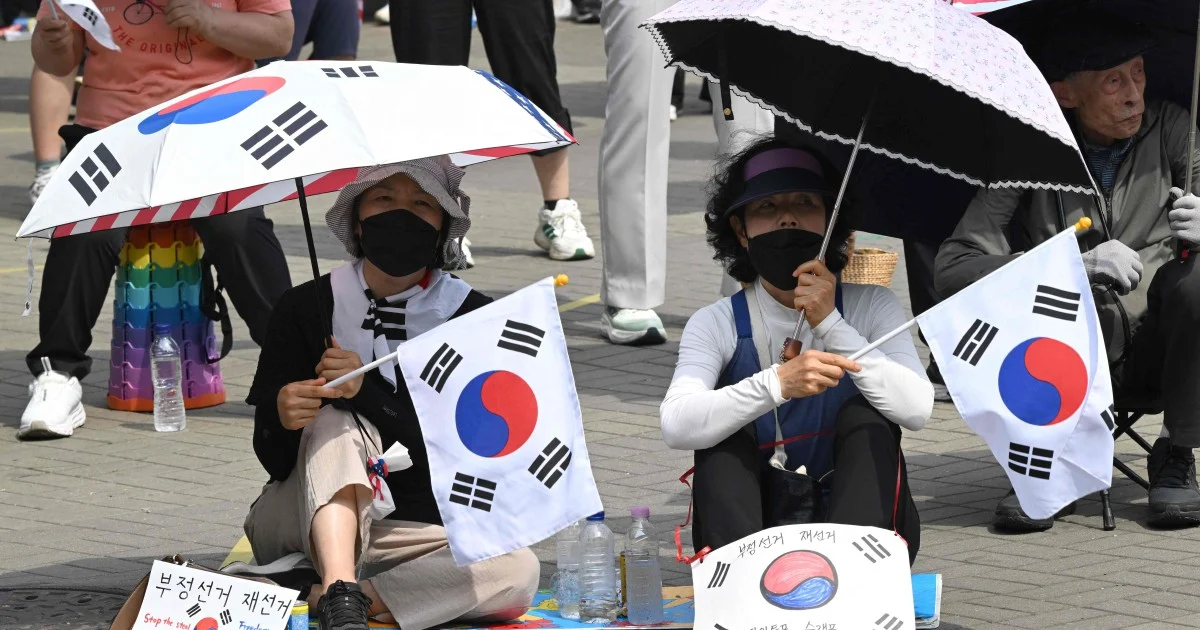
South Korea's National Assembly approved a comprehensive parliamentary investigation into the National Election Commission this week, responding to serious operational failures that marred the country's June 3 local elections. The probe will span 45 days and examine the circumstances surrounding significant ballot paper shortages that disrupted voting procedures across multiple constituencies. The decision to launch the inquiry marks a significant political response to what many lawmakers view as a critical breakdown in the mechanics of democratic participation.
Ballot shortages in an advanced democracy like South Korea represent more than a mere logistical inconvenience—they strike at the heart of electoral integrity and voter confidence in institutional competence. When voters arrive at polling stations expecting to exercise their constitutional rights, only to find that physical ballots are unavailable or insufficient, it creates tangible barriers to democratic participation and raises uncomfortable questions about whether election authorities have adequately planned for national voting events. The June 3 elections, which determined local and provincial leadership across the country, attracted millions of voters, yet the election commission's preparation proved inadequate in critical ways.
The National Election Commission's responsibility extends far beyond simply administering the mechanics of voting—it serves as the public's guarantee that electoral processes will function smoothly and fairly. The agency must balance numerous complex variables: population distribution across urban and rural areas, anticipated turnout rates, the number of contests on each ballot, and contingency planning for higher-than-expected participation. The shortages that occurred suggest systemic weaknesses in one or more of these planning areas, whether through miscalculation, insufficient resource allocation, or failures in supply chain coordination.
For Malaysian observers, the South Korean case offers instructive lessons about maintaining institutional credibility during electoral cycles. While Malaysia's election commission operates under different constitutional frameworks and administrative traditions, both countries share an interest in sustaining public faith in the legitimacy of electoral outcomes. When voters encounter preventable problems at polling stations—whether ballot shortages, long queues, or unclear procedures—the underlying cause matters less than the cumulative effect on democratic confidence. The South Korean parliament's willingness to investigate and potentially hold the election commission accountable reflects a democratic system treating electoral administration as a matter requiring serious oversight.
The 45-day timeline signals that parliament intends a thorough examination rather than a perfunctory review. Such investigations typically examine internal communications, supply chain records, contingency plans that may or may not have existed, staffing decisions, and the specific circumstances that led to shortages in particular polling locations. Investigators will likely determine whether the commission failed to anticipate demand accurately, whether printing or distribution contractors fell short of their obligations, or whether local polling station managers lacked adequate procedures for reporting and addressing shortages in real time.
Southeast Asian democracies frequently confront similar challenges during large-scale electoral exercises, particularly when governing across geographically dispersed populations or when elections occur more frequently than in some developed nations. Thailand, Indonesia, and the Philippines have each experienced various ballot-related complications during elections, ranging from printing delays to distribution problems in remote areas. South Korea's response—through transparent parliamentary investigation—represents a model of institutional accountability that Southeast Asian legislatures might usefully consider when electoral administration breaks down.
The broader political implications extend beyond the immediate technical failure. Elections at the local and provincial level shape governance closer to citizens' daily lives—determining who manages public services, allocates municipal budgets, and addresses community concerns. When ballot shortages disrupt these elections, they potentially affect the democratic legitimacy of the officials who are ultimately elected. Questions inevitably arise about whether the actual outcome would have differed had all potential voters been able to cast ballots without obstruction, particularly in closely contested races.
The National Election Commission may face recommendations for structural reforms, enhanced resource allocation, improved forecasting methodology, or strengthened coordination with local authorities responsible for ballot printing and distribution. International observers of electoral processes have noted that developed democracies often underestimate the complexity of scaling ballot production and logistics across diverse geographical contexts. Even with sophisticated planning tools and historical data, unexpected variables—population shifts, higher-than-anticipated turnout, last-minute candidate additions to ballots—can strain even well-resourced election commissions.
The parliamentary investigation also reflects broader governance patterns in South Korea, where oversight bodies take seriously their responsibility to scrutinize executive agencies and public institutions. This approach contrasts with electoral systems where political parties may lack sufficient incentive to investigate administrative failures affecting elections they may have won, or where parliamentary structures provide limited leverage for minority parties seeking accountability. South Korea's party system apparently permits cross-party concern about election administration quality to translate into concrete investigative action.
For regional election administrators, the South Korean parliament's response underscores an important principle: technical competence in electoral management cannot be treated as a merely technical matter insulated from political accountability. When ballot shortages occur, they create political consequences that legislative bodies must address seriously, both to restore public confidence and to drive institutional improvements. The investigation's findings will likely generate recommendations that ripple through South Korea's election administration system for years to come.
The broader context matters as well. South Korea has invested substantially in technological modernization of voting systems and election administration in recent decades. Despite this infrastructure, the commission still encountered ballot paper shortages—a reminder that technological advancement does not automatically solve all electoral logistics challenges. Hybrid approaches combining digital systems with traditional paper ballots require parallel attention to both technological and physical supply chain components.
As the 45-day investigation proceeds, it will produce a public record of what went wrong and, ideally, a detailed blueprint for preventing similar failures in future elections. The South Korean example demonstrates how democratic institutions can respond to administrative failures without undermining the legitimacy of election outcomes themselves—a distinction that matters deeply in maintaining public confidence in electoral systems across Asia's democracies.