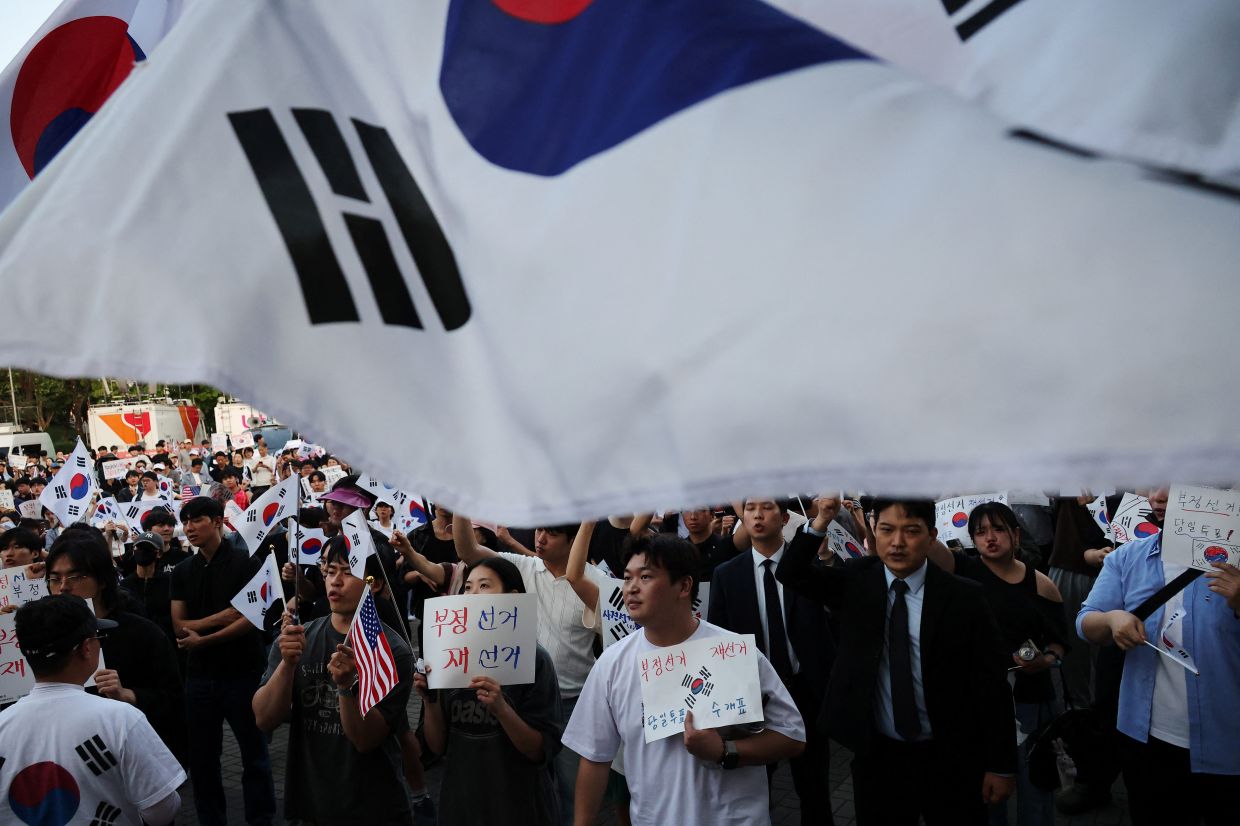
South Korean President Lee Jae Myung has attempted to strike a delicate balance in responding to weeks of demonstrations triggered by significant administrative failures during the June 3 local elections, calling on dissidents to respect the rights of others whilst acknowledging genuine public grievances about voting irregularities. His measured statements, delivered via social media on June 15, represent an effort to validate voter concerns whilst simultaneously containing what officials regard as a dangerous drift toward baseless conspiracy theories about election rigging. The political tightrope reflects the sensitive nature of electoral integrity within democratic societies, particularly in South Korea where electoral credibility remains foundational to public trust in democratic institutions.
The unrest centres on the ballot paper shortage that plagued polling stations across the country on election day, causing voting delays and temporary suspensions that prevented some citizens from casting their ballots. The Olympic Park handball arena, which served as the vote-counting centre and temporary storage facility for ballot boxes, has become the focal point for ongoing protests, with demonstrators blocking access to the facility and disrupting operations at sports organisations headquartered within the complex. Lee's remarks specifically targeted what he characterised as overly aggressive protest tactics, noting that sports bodies with offices in the park had experienced work disruptions that compromised their ability to complete administrative requirements for South Korean athletes competing in international sporting events. This framing subtly repositions the conversation around the collateral damage inflicted by protest activities rather than dwelling exclusively on electoral management failures.
Lee's dual approach proved evident in his public positioning on June 14, when he acknowledged the National Election Commission's handling as a serious institutional failure whilst drawing a sharp distinction between legitimate criticism of operational incompetence and what he termed baseless conspiracy narratives alleging outright electoral manipulation. Speaking during a video conference with senior advisers from the Vatican, he characterised the voting rights infringement as genuinely problematic and democratically unacceptable, statements designed to demonstrate his alignment with public indignation. However, he simultaneously warned against what he characterised as certain forces exploiting the administrative failures to promote unsubstantiated claims of election fraud, suggesting that such narratives represented a different category of transgression against democratic norms. His framing attempts to partition the discourse, preserving space for accountability regarding administrative shortcomings whilst delegitimising more expansive claims about systemic electoral manipulation.
The president's concerns about protest activities extending beyond acceptable bounds gained specificity through his reference to reported incidents involving threats toward police and citizens, unexplained inspections and searches, and obstruction of legitimate facility access. He instructed law enforcement to investigate not merely those directly obstructing operations through force but also individuals allegedly conspiring in such activities, suggesting a comprehensive approach to identifying and pursuing accountability throughout protest networks. This instruction signals that authorities view some demonstration activities as crossing from protected expression into criminality, a determination that carries particular weight in the South Korean context where protest movements have historically commanded substantial public sympathy. The threshold between acceptable dissent and unlawful obstruction remains contested terrain in democratic societies, and Lee's insistence on holding both categories of actors accountable reflects institutional concern about precedent-setting regarding protest boundaries.
Lee's statements incorporated an implicit recognition that public anger about voting rights infringement possessed legitimacy deserving institutional response. He acknowledged fully comprehending and accepting citizen concerns, language carefully calibrated to demonstrate official responsiveness without conceding ground on the broader question of electoral rigging. Rather than dismissing demonstrations entirely, he reframed them as opportunities for strengthening democratic governance through transparent investigation and constructive reform. This rhetorical manoeuvre attempts to channel public energy toward institutional accountability mechanisms rather than extraparliamentary mobilisation, positioning parliamentary investigation and prosecutorial review as sufficient mechanisms for determining responsibility and implementing preventive measures. The emphasis on speed, transparency, and comprehensive fact-finding suggests recognition that institutional credibility itself hangs partly on the thoroughness of investigative responses.
For Malaysian and Southeast Asian observers, the South Korean situation illuminates enduring tensions between electoral integrity, institutional accountability, and protest dynamics in democracies navigating challenges to public confidence in electoral systems. The ballot paper shortage represents a textbook case of administrative failure rather than deliberate electoral manipulation, yet the distinction between incompetence and conspiracy frequently blurs in public discourse, particularly when institutional failures directly affect citizens' fundamental democratic participation. The willingness of South Korean authorities to investigate thoroughly whilst simultaneously warning against unfounded narratives reflects a sophisticated understanding that electoral confidence depends partly on clear communication distinguishing between remediable operational problems and systemic undermining of democratic processes. This distinction carries particular salience in regional contexts where questions about electoral integrity periodically surface, requiring careful institutional navigation between accountability and institutional stability.
The involvement of prosecutors and police in joint investigation teams charged with determining responsibility without sanctuary reflects a commitment to holding officials accountable that extends across institutional boundaries. Lee's emphasis on speed and transparency in investigative processes suggests awareness that prolonged uncertainty regarding responsibility could further erode public confidence whilst allowing responsibility to dissipate across institutional cracks. The focus on parliamentary investigation represents reliance on elected representatives to establish facts and implications in settings designed for democratic deliberation, reinforcing the notion that electoral failures ultimately require political rather than purely technocratic remedies. This institutional approach acknowledges that technical corrections to ballot distribution systems, whilst necessary, prove insufficient without parallel determinations of human accountability and systemic reform.
The underlying challenge confronting Lee involves validating genuine concerns about voting rights whilst simultaneously preventing demonstrations from mutating into broader challenges to electoral legitimacy or institutional authority. His careful language preserving distinction between criticising election administration and promoting rigging narratives reflects recognition that unchecked conspiracy theories could undermine faith in democratic processes even as legitimate administrative reforms proceed. The emphasis on law and institutions as the clearest lines that must be observed attempts to recentre discourse on procedural legitimacy rather than allowing debates to devolve into questions of whether electoral outcomes possess inherent validity. For democracies managing electoral crises, this rhetorical and institutional work of containing damage whilst enabling accountability proves as crucial as technical remedies for specific failures.
Looking forward, South Korean institutional mechanisms face the dual challenge of investigating administrative failures thoroughly whilst preventing findings from being misinterpreted as validating broader election fraud claims. The National Election Commission's cooperation with parliamentary investigation and the prosecutorial review process will signal whether institutions can manage accountability without appearing defensive or dismissive of voter concerns. The resolution of responsibility questions and implementation of preventive measures will substantially influence whether the June 3 local election controversy becomes a historical episode of administrative failure successfully remedied or remains a watershed moment undermining broader public confidence in electoral processes. For regional democracies, the South Korean experience demonstrates both the importance of rapid, credible institutional response to electoral failures and the perils of allowing legitimate questions about administrative competence to migrate into terrain where evidence-based accountability becomes difficult to establish or defend.