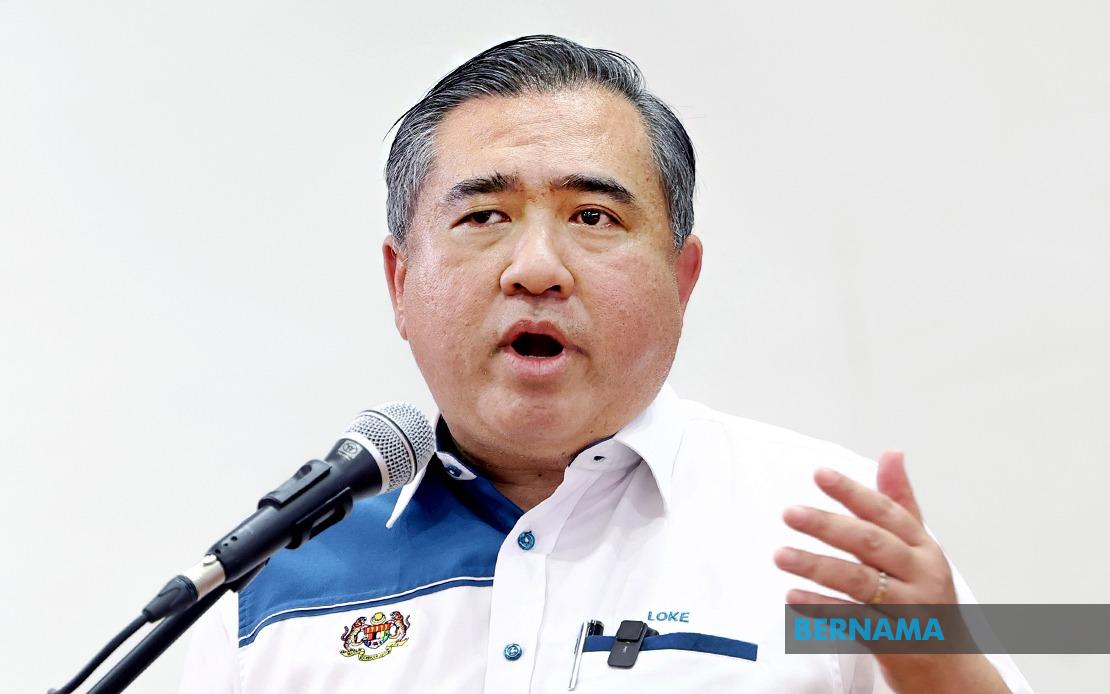
Transport Minister Anthony Loke has clarified that the use of diesel-powered trains on the Southern Shuttle service represents only a temporary operational arrangement, with the transition to modern Electric Multiple Unit (EMU) trains expected to occur once the new fleet becomes available. Speaking in Johor Bahru, Loke explained the rationale behind the ministry's decision to deploy existing rolling stock rather than delay service commencement, framing the choice as a pragmatic response to pressing public demand for enhanced rail connectivity in the southern region.
The ministry faces a fundamental timing dilemma: procuring and constructing ten new EMU train sets is projected to take between two and three years to complete. Rather than withhold the Southern Shuttle service from residents during this extended development period, transport authorities determined that deploying currently available diesel trains represents the most practical interim solution. This approach prioritises immediate community benefit over waiting for technological optimisation, a decision that reflects shifting priorities within Malaysia's public transportation strategy towards rapid service deployment.
To support expanded rail-based public transport accessibility, the Ministry of Transport has committed an annual subsidy ranging from RM11 million to RM15 million. This financial commitment enables the government to maintain affordable fares and operational sustainability while the service establishes itself as a critical component of Johor's transport infrastructure. The subsidy underscores the ministry's determination to make rail services financially accessible to the broader population, addressing historical concerns about public transport affordability in Malaysia.
The Southern Shuttle connects three strategically important nodes: Kulai, JB Sentral, and Pasir Gudang, offering residents and commuters substantially faster journey times compared to road-based alternatives. The Kulai-to-JB Sentral segment can be traversed in approximately 40 minutes, while the Kempas Baru-Pasir Gudang route requires 40 to 45 minutes of travel time. These journey durations represent significant time savings for daily commuters and business travellers, enhancing the service's appeal despite ongoing criticism regarding rolling stock specifications.
A particularly notable development involves the opening of the Kempas Baru-Pasir Gudang corridor to passenger services for the first time in its operational history. Previously reserved exclusively for freight operations, this route has been reconfigured to accommodate passenger demand, demonstrating the government's flexible approach to maximising utilisation of existing rail infrastructure. The transition from freight-only to mixed-use operations reflects broader efforts to unlock untapped capacity within Malaysia's rail network.
Loke indicated that the long-term trajectory for the Southern Shuttle remains fixed upon electrification. Upon completion of the Gemas-Johor Bahru electrified double-tracking project, the service will transition entirely to Electric Train Service (ETS) operations, eliminating reliance on diesel propulsion. This planned evolution aligns with Malaysia's broader sustainability objectives and modernisation agenda for rail infrastructure, though timelines remain subject to project execution variables.
Public discourse surrounding the Southern Shuttle has not been uniformly positive, with various commentators and stakeholders raising concerns about fare structures and rolling stock vintage. Critics have highlighted that ticket prices are approximately three times higher than comparable rail services operating in Kuala Lumpur and Seremban, suggesting potential inequity in regional pricing mechanisms. The deployment of older diesel trains, rather than contemporary electric fleets, has also attracted scrutiny from constituencies advocating for modern, environmentally conscious public transport solutions.
These criticisms reflect deeper tensions within Malaysian transport policy regarding the balance between service accessibility, affordability, and technological modernity. The decision to prioritise immediate service availability over waiting for new EMU arrivals essentially trades fare-paying passengers' expectations for cutting-edge equipment against the practical benefits of enhanced connectivity and reduced journey times. This compromise acknowledges resource constraints while attempting to address legitimate public transport needs in Johor.
For Malaysian readers and Southeast Asian observers, the Southern Shuttle experience offers instructive lessons about infrastructure development timelines and policy trade-offs. The region's rapid urbanisation and economic growth consistently outpace infrastructure provision, creating pressure for interim solutions even when not technologically ideal. The Malaysian government's willingness to deploy imperfect interim systems rather than delay indefinitely reflects pragmatic governance, though it simultaneously exposes tensions between public expectations and service delivery realities.
The broader context suggests that Malaysia's transport sector continues navigating the challenging intersection of modernisation, affordability, and rapid deployment. While diesel trains represent a transitional measure, their deployment demonstrates commitment to expanding rail networks beyond major urban centres. Success of the Southern Shuttle, despite its current limitations, may influence future infrastructure policy decisions and demonstrate whether interim solutions can effectively bridge gaps until permanent modern systems become operational.
The transition timeline remains uncertain, contingent upon both the completion of new EMU train manufacturing and the finalisation of the Gemas-Johor Bahru electrification project. These interdependent infrastructure initiatives will collectively determine when Southern Shuttle services can fully transition to modern electric operations. Until then, residents will depend upon diesel-powered connectivity, representing a compromise between technological ideals and operational necessities that characterises much of Southeast Asian infrastructure development.