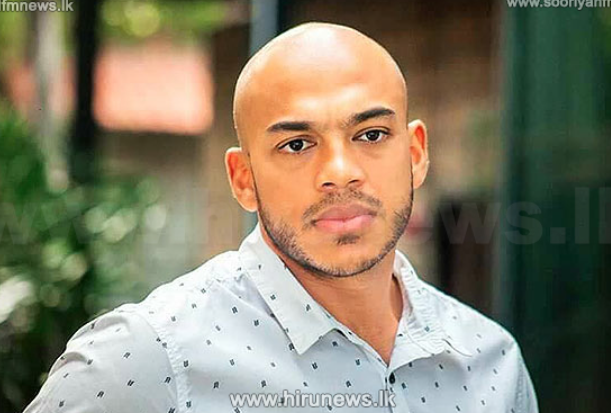
Sri Lanka's Bribery Commission arrested Yoshitha Rajapaksa on Wednesday, June 17, on corruption charges stemming from his time as a naval officer, marking another significant blow to the once-dominant political dynasty. The 38-year-old was taken into custody after an investigation revealed he had allegedly tapped state resources to finance overseas military training while lacking the necessary professional credentials to justify such advancement through the ranks. The arrest underscores the new administration's determination to hold powerful figures accountable following electoral promises to dismantle what many viewed as a system of entrenched elite impunity.
According to the Bribery Commission's formal statement, Yoshitha stands accused of aiding and abetting officials in securing his naval recruitment despite failing to meet the minimum qualification standards. Most significantly, investigators found that he subsequently leveraged his position to access government funds for advanced training at Dartmouth, Britain's prestigious naval college. The trajectory of his military career—marked by rapid advancement seemingly disconnected from demonstrated competence—became a focal point of scrutiny as authorities examined whether his surname rather than merit had propelled his progression through the officer corps.
The Dartmouth placement itself became emblematic of the broader grievances many Singaporeans and other regional observers hold regarding nepotistic advancement in South Asian governance structures. When Yoshitha attended the elite British institution, his father Mahinda Rajapaksa held the presidency from 2005 onwards, affording the family considerable state apparatus influence. Critics contended that his admission displaced a qualified naval cadet whose place should have been earned through competitive merit rather than paternal proximity to state resources. This particular case reflects regional concerns about how institutional access systematically privileges connected families over talented newcomers in military and civil service frameworks.
Yoshitha's legal troubles extend well beyond the current corruption investigation. He had already faced designation as an accused in two separate money-laundering cases and operated under a foreign travel restriction imposed by authorities seeking to prevent his departure from Sri Lanka. Prior to Wednesday's formal arrest, he had been released on bail, a status that clearly failed to deter investigators from pursuing additional charges as their examination of his financial and professional history deepened.
The anti-corruption momentum targeting the Rajapaksa family intensified dramatically following President Anura Kumara Dissanayake's election victory in 2024, which was secured explicitly on an anti-corruption mandate. The new administration has made clear its intention to prosecute members of the former ruling clan regardless of their historical political stature or continued influence within establishment circles. This represents a departure from the relative impunity the family enjoyed under previous leadership and reflects broader voter frustration with governance failures that contributed to Sri Lanka's catastrophic 2022 economic collapse.
Beyond the immediate training funds allegation, prosecutors are pursuing Yoshitha in connection with his acquisition of substantial real estate during his father's presidency from 2005 to 2015. When questioned about the financial sources for the property purchase, he claimed to have sold gemstones gifted by his grandaunt, a explanation that collapsed under scrutiny when the elderly relative admitted she herself could not account for how the precious stones had been obtained. The implausible provenance of wealth accumulation during his father's years in power remains a central investigative focus, suggesting authorities believe larger undisclosed financial networks merit examination.
Additionally, Yoshitha confronts separate legal proceedings stemming from his acquisition of a television network, another transaction that raised questions about the genuine sources and legitimacy of capital employed. Each of these cases represents a distinct vector through which the authorities are attempting to construct a comprehensive picture of financial advantage derived from proximity to executive power. The cumulative weight of these concurrent investigations suggests prosecutors view his activities as symptomatic of broader patterns of state resource misappropriation within the family circle.
The detention arrives amid intensifying legal pressure against multiple Rajapaksa family members and their associates. Over preceding years, various members of the clan faced charges encompassing corruption, embezzlement, and even serious violent offences including murder allegations. Despite their gravity, these cases have proceeded at glacial pace through Sri Lanka's overburdened judicial system, with most remaining adjudicated. The current administration's visible enforcement activity signals its determination to prevent legal momentum from dissipating through procedural delay or political pressure.
Mahinda Rajapaksa's younger brother Gotabaya, who assumed the presidency in 2019, himself faces mounting legal jeopardy. Gotabaya was compelled from office in 2022 following a popular uprising triggered by Sri Lanka's unprecedented economic catastrophe, which left the nation unable to access international capital markets and forced severe currency devaluation. Earlier this month, authorities imposed a foreign travel ban on Gotabaya as legal authorities examine his potential culpability regarding the Easter Sunday bombings of 2019, which killed 279 people and wounded hundreds more. He has petitioned the courts to preemptively block his arrest related to the attacks, arguing insufficient evidence exists to justify detention. The parallel legal exposure facing both brothers demonstrates how the new political dispensation intends to create comprehensive legal accountability across the family hierarchy rather than targeting isolated individuals.
For Malaysia and other Southeast Asian democracies grappling with entrenched corruption and elite capture of state institutions, the Sri Lankan precedent carries instructive implications. The Dissanayake administration's willingness to pursue prosecutions of formerly powerful political families, despite institutional resistance and procedural obstacles, suggests that electoral mandates against corruption can overcome institutional inertia when political will remains sustained. Whether Sri Lanka's courts ultimately convict Yoshitha and his relatives remains uncertain, but the visibility of sustained investigation itself communicates a fundamentally altered political environment where proximity to former executive power no longer guarantees immunity from accountability mechanisms.