South Korean authorities are actively investigating what has become one of corporate Korea's most damaging public relations disasters. Police have begun questioning senior figures at Starbucks Korea's parent company, Shinsegae Group, over the so-called "Tank Day" promotional campaign that ignited a firestorm of public anger when its timing revealed a striking insensitivity to one of modern Korea's darkest chapters. The Seoul Metropolitan Police Agency questioned Yang Jong-hwan, head of Shinsegae Group's audit team, as a witness, according to a company statement released on Thursday, though authorities declined to elaborate on the nature of their inquiry.
The controversy centres on a reusable cup promotion scheduled for May 18, a date that carries profound historical weight in Korean consciousness. Coinciding with the 46th anniversary of the Gwangju uprising, the campaign became a symbol of corporate negligence and institutional disrespect for national memory. The 1980 military crackdown in Gwangju resulted in 165 deaths according to official records, though many historians and civic groups maintain that the true death toll was substantially higher. That Starbucks Korea, which operates more than 2,000 outlets across the country, would launch a celebratory promotion on this commemorative date suggested a comprehensive failure in institutional oversight and sensitivity.
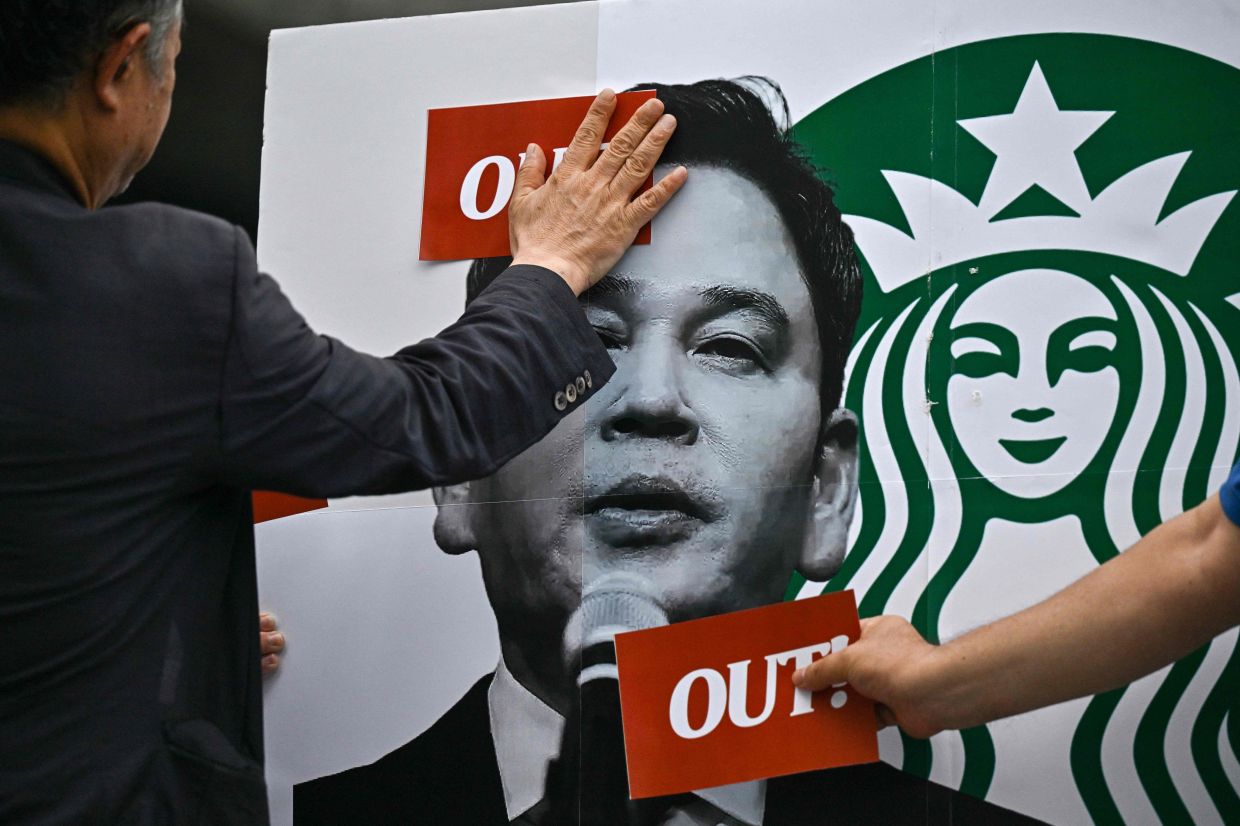
The scale of Starbucks Korea's presence in the national market underscores why this misstep resonated so powerfully. As the third largest market globally for the Seattle-based coffee chain after the United States and China, South Korea represents a cornerstone of Starbucks' Asian expansion strategy. Yet the brand's prominent position amplified the damage when the campaign became public, turning what might have been a minor scheduling error at a smaller enterprise into a matter of national concern and civic outrage. The incident sparked organized protests in both Seoul and Gwangju, with demonstrators expressing deep frustration that a multinational corporation operating thousands of retail locations could commit such a fundamental oversight regarding a watershed moment in Korean democratic history.
Shinsegae Group's initial response acknowledged the gravity of the situation, though some observers questioned whether it was sufficiently swift. The group's Korea chief executive was terminated on the day the scandal broke, a move intended to demonstrate accountability and swift corrective action. Subsequently, Shinsegae Group chairman Chung Yong-jin delivered a public apology, attempting to contain the reputational fallout. However, these corporate gestures proved insufficient to satisfy civic groups concerned with the deeper issues at stake regarding how Korean institutions engage with difficult historical episodes.
A civic organization filed a formal complaint against Chung and other executives, claiming they had violated the 2016 Special Act on Commemorating and Restoring History, which among other provisions criminalizes the dissemination of false or misleading information about the 1980 pro-democracy crackdown. The complaint simultaneously alleged defamation and insult, broadening the legal challenge beyond the specific historical protection statute. This dual approach suggests that complainants viewed the incident not merely as a scheduling mistake but as a potential violation of laws designed to preserve the sanctity of collective national memory.
Investigations revealed a troubling chain of institutional failures that enabled the promotion to proceed unchallenged through multiple approval stages. Shinsegae subsequently acknowledged that a series of negligent acts had culminated in the campaign's approval, including company officials who signed off on the design file without conducting even cursory verification. This revelation raised uncomfortable questions about quality control processes at one of South Korea's largest retail conglomerates. How could such a significant date on the national calendar slip past multiple layers of corporate review? The answer suggested systemic weaknesses in how major corporations vet their public-facing communications for cultural and historical sensitivity.
The financial consequences for Starbucks Korea became immediately apparent as consumers responded with their purchasing decisions. The operator reported a sharp decline in sales during the early days following public exposure of the scandal, as boycott calls circulated through social media and civic networks. While precise figures remain unavailable, the sales impact underscores how swiftly Korean consumers mobilize economically in response to perceived breaches of national dignity or historical respect. The incident demonstrated that in the South Korean market, institutional mistakes touching on historical sensitivities carry tangible business consequences that extend well beyond the immediate news cycle.
By way of remedial action, Starbucks Korea announced that all stores across the nation would close for half a day on the following Monday to enable staff to participate in educational sessions about the Gwangju uprising and its historical significance. This measure acknowledged that the company's workforce itself appeared to lack sufficient understanding of why May 18 merited special consideration. Chairman Chung and other senior executives scheduled attendance at a separate historical lesson two days later, symbolically positioning themselves alongside their employees in a collective effort at institutional re-education. Such measures, while potentially helpful in rebuilding trust, cannot undo the initial damage or fully address questions about how a corporation operating 2,000 retail locations failed to identify an obvious historical sensitivity.
The police investigation proceeds amid broader political attention to the incident. President Lee Jae-myung has publicly expressed outrage, characterizing the promotion as "inhumane and disgraceful conduct," language that elevates the matter beyond corporate malfeasance into a question of national values and institutional integrity. This political dimension adds further pressure to the investigation and may influence how authorities ultimately treat the matter. For Shinsegae and Starbucks Korea, the investigation outcome carries implications extending beyond the immediate legal consequences to encompass longer-term brand rehabilitation and restoration of consumer confidence in markets where historical consciousness remains deeply woven into popular sentiment and purchasing behaviour.
The broader implications of this incident resonate throughout Southeast Asia's corporate landscape, where multinational chains increasingly operate across culturally diverse markets with complex historical narratives. The Starbucks Korea case illustrates the risks that arise when global corporations fail to develop sufficiently granular understanding of local commemorative calendars and historical sensitivities. For Malaysian companies operating internationally and foreign firms establishing regional operations in Southeast Asia, the incident serves as a cautionary lesson about the necessity of embedding cultural and historical literacy throughout organizational decision-making structures. The costs of ignorance in this domain, as Starbucks Korea has learned, extend far beyond the immediate promotional campaign to encompass brand reputation, regulatory scrutiny, and long-term market position.