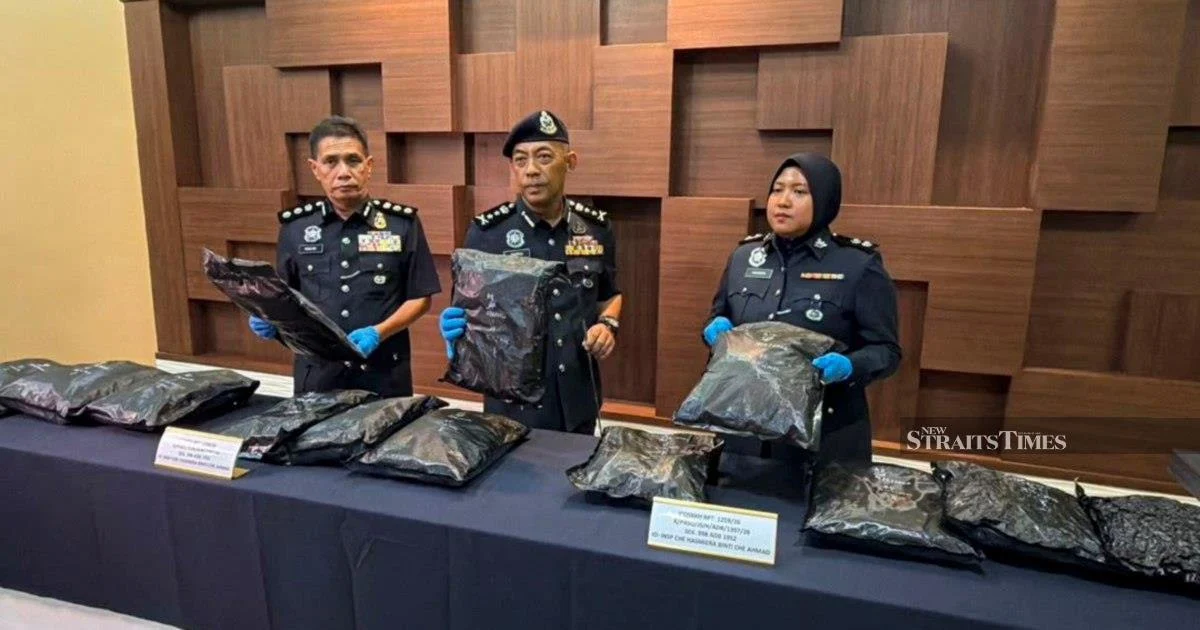
A student enrolled at a private higher education institution has been taken into custody following an attempt to transport cannabis buds valued at RM1.17 million across the Malaysia-Thailand border at Bukit Kayu Hitam on Monday. The individual, identified as an academic pursuer at one of Kedah's private colleges, was intercepted during a routine examination at the border checkpoint carrying 14.63 kilograms of the controlled substance.
The seizure marks a significant enforcement operation in Bukit Kayu Hitam, one of Malaysia's busiest land border crossing points situated approximately 60 kilometres north of Alor Star. The checkpoint has become a critical surveillance location for authorities tracking the movement of narcotics between Thailand and Malaysia, particularly given the expanding drug trafficking networks operating across the northern corridor. This interception underscores the persistent challenge facing border authorities managing the volume of vehicles and individuals transiting daily while maintaining vigilance against increasingly sophisticated smuggling methods.
The detained individual represents a concerning trend in Malaysian drug trafficking operations: the recruitment of younger, educated individuals to serve as transporters and couriers. Students from private institutions are often targeted by trafficking syndicates due to perceived lower-risk profiles compared to known criminals, allowing smuggling networks to reduce their operational security expenses while maintaining plausible deniability. The educational credentials of such recruits can paradoxically work against law enforcement, as border officials must balance efficiency with thoroughness when screening presumably low-risk demographic groups.
Cannabis buds have become an increasingly prevalent commodity in Malaysian drug enforcement statistics, reflecting broader patterns in Southeast Asian narcotics markets. The valuation of RM1.17 million for 14.63 kilograms suggests approximately RM80,000 per kilogram, consistent with street-level retail pricing across Malaysian metropolitan areas and border towns. This particular seizure represents the street value once the substance would have been distributed through local networks rather than wholesale pricing from source countries, indicating the operation targeted the Malaysian consumer market rather than transit trafficking to third countries.
Thailand's role as the source nation is significant for understanding regional drug supply chains. Despite Thai government commitments to counter narcotics enforcement and repeated crackdowns on cultivation and processing facilities, the country remains a primary source region for cannabis reaching Malaysian markets. The porous Malaysia-Thailand border, stretching across multiple states including Kedah, Perlis, and Terengganu, presents continuous enforcement challenges. Bukit Kayu Hitam specifically experiences traffic volumes that strain checkpoint capacity, with some smugglers exploiting timing windows during peak congestion periods when individual vehicles receive reduced scrutiny.
The private education sector's vulnerability to recruitment by trafficking networks has prompted growing concern among campus security and law enforcement liaison officers. Unlike public universities with dedicated campus police and security infrastructure, many private institutions maintain minimal internal security capabilities or formal protocols for addressing student involvement in narcotics trafficking. Educational administrators increasingly find themselves managing unexpected criminal disclosures, creating institutional reputational risks and complicating institutional accreditation processes when students face serious charges.
Border checkpoint modernisation efforts have improved detection capabilities in recent years, though resource constraints limit the sophistication of screening technology available at all crossing points simultaneously. Bukit Kayu Hitam benefits from substantial investment in scanning infrastructure and trained personnel compared to smaller, more remote border locations. The successful interdiction of this shipment reflects effective coordination between customs officials, narcotics enforcement personnel, and border security agencies operating at the checkpoint, though the consistent flow of contraband suggests many shipments successfully transit without detection.
The implications for Malaysian drug enforcement extend beyond this individual case, highlighting the necessity for upstream interventions addressing demand management and community prevention strategies. The consistent availability of imported cannabis at relatively accessible pricing indicates market dynamics favouring supply over law enforcement's capacity to constrain supply. Investment in education campaigns and intervention programs targeting student populations remains underfunded relative to border enforcement operations, despite evidence suggesting community-based prevention approaches yield substantial returns.
The arrested student now faces investigation under the Dangerous Drugs Act 1952, which carries severe penalties including lengthy prison sentences and substantial fines for trafficking-quantity narcotics offences. The quantity seized typically triggers presumption of intent to distribute rather than personal consumption, substantially increasing prosecution severity. The individual's status as a student may influence sentencing considerations in some jurisdictions, though judicial responses to drug trafficking offences have grown increasingly stringent across Malaysia in recent years.
This episode reinforces ongoing transnational drug enforcement cooperation requirements across Southeast Asia. Malaysian authorities coordinate regularly with Thai counterparts on border security matters, though information exchange and coordinated operations remain constrained by bureaucratic procedures and jurisdictional limitations. The incident demonstrates the necessity for enhanced intelligence sharing regarding trafficking network activities, particularly targeting recruitment patterns and smuggling route preferences that evolve in response to enforcement pressure.
Looking ahead, the interception illustrates the persistent cat-and-mouse dynamics characterising regional drug enforcement. While this particular shipment was successfully intercepted, the underlying market fundamentals driving trafficking continue operating. Trafficking networks maintain sufficient operational redundancy that the loss of individual couriers and shipments rarely disrupts supply chains substantially. Addressing the structural factors enabling cannabis trafficking to Malaysia, particularly addressing demand management and disrupting market economics at source regions, remains essential for moving beyond reactive border enforcement to sustainable supply reduction.