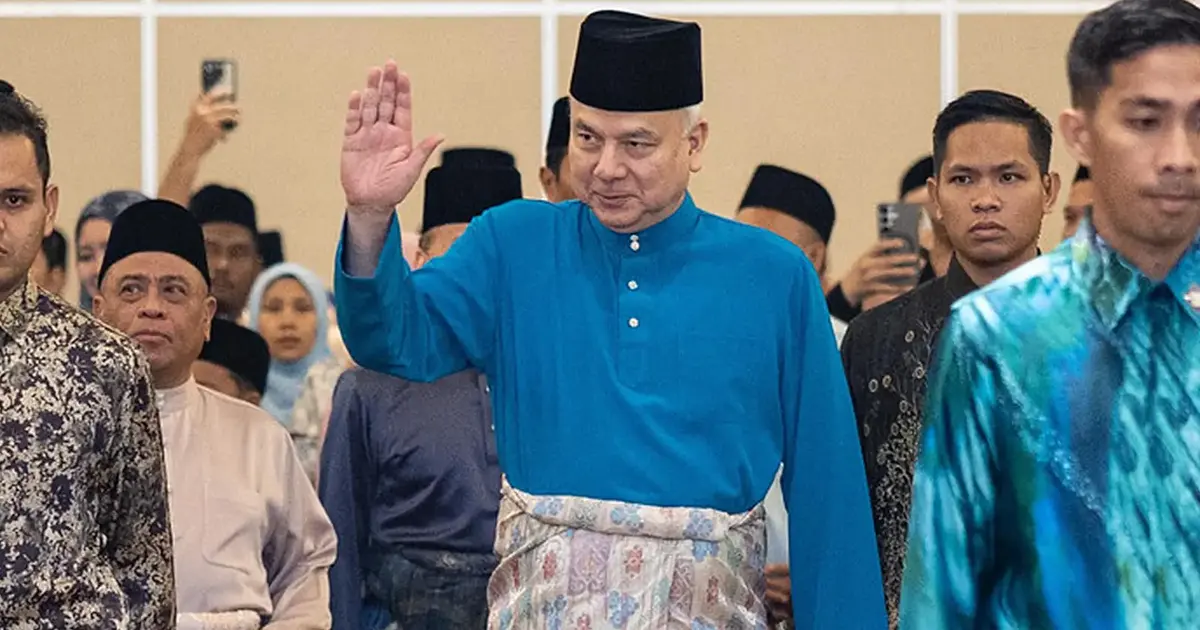
Sultan Nazrin Shah, the Deputy Agong, has delivered a pointed reminder to Malaysia's leadership cadre that the health of the nation rests not on reactive decision-making driven by momentary sentiment, but rather on deliberate, measured governance rooted in principle and foresight. In remarks that carry particular weight given his constitutional role as a senior custodian of the realm, the Perak Sultan underscored the imperative for those in positions of authority to exercise restraint and wisdom when confronting the pressures and complexities of public administration.
The Deputy Agong's intervention speaks to a broader anxiety within Malaysia's institutional framework about the quality of political leadership at a time when the country navigates economic headwinds, communal sensitivities, and the demands of an increasingly divided electorate. His emphasis on avoiding impulsive action reflects a classical understanding of governance that prioritizes stability and consensus-building over populist theatrics or short-term political gain. Such counsel from the highest constitutional office carries moral and historical resonance, drawing on the role of the monarchy as guardian of national unity and institutional integrity.
Central to Sultan Nazrin's message is the proposition that national advancement cannot be achieved through command or coercion alone. Instead, he articulated a vision in which the foundation of state success lies in the voluntary participation and active cooperation of the citizenry. This framing suggests a recognition that Malaysia's plural society—ethnically, religiously, and culturally diverse—requires leadership approaches that build bridges rather than entrench divisions. When leaders make decisions fueled primarily by emotion or immediate political pressure, they risk alienating constituencies whose buy-in remains essential for implementing policy and maintaining social cohesion.
The emphasis on mutual respect forms another pillar of the Deputy Agong's counsel. In a nation where intercommunal relations have at times been tested by grievances, political opportunism, and competing historical narratives, leaders who model and enforce standards of civility and reciprocal regard set a tone that permeates institutions and public discourse. Sultan Nazrin's framing suggests that respect transcends mere courtesy; it encompasses recognition of the legitimate interests and dignity of all communities within the Malaysian federation, regardless of their electoral weight or political influence at any given moment.
Harmonious coexistence, the third element of Sultan Nazrin's formulation, represents perhaps the most challenging aspiration in contemporary Malaysian politics. The country's constitutional settlement, established at independence, was premised on a delicate bargain in which different communities agreed to particular arrangements regarding citizenship, religious establishment, and cultural recognition. Over subsequent decades, interpretations of this original compact have shifted and tensions have surfaced. For leadership to maintain harmony, Sultan Nazrin's remarks suggest, it must continually recommit to principles of fairness and inclusion rather than allowing short-term political victories to unravel the broader social fabric.
The Deputy Agong's intervention also carries implicit criticism of decision-making styles that have occasionally characterised Malaysian politics: the sweeping announcement made to satisfy a vocal base, the policy reversal prompted by public outcry, the appointment or dismissal driven by factional pressure rather than merit. Such reactive governance creates uncertainty among investors, civil servants, and ordinary citizens attempting to plan their lives within a stable legal and administrative framework. By contrast, measured deliberation—even when it moves slowly and requires compromise—generates predictability and confidence in institutions.
For Malaysia's federal and state governments, as well as the civil service and judiciary that interact with elected representatives, Sultan Nazrin's message constitutes a call to institutional resilience. In systems where executive power has periodically overreached or where political transitions have been marked by sharp ideological swings, judicial independence, administrative impartiality, and respect for constitutional limits become especially important. Leaders who allow emotion to drive decisions often correlate with those who view constitutional constraints as inconveniences rather than protections.
The Deputy Agong's remarks also carry relevance beyond Malaysia's borders, resonating across Southeast Asia where democratic institutions remain comparatively young and vulnerable to erosion. In regional neighbours where political instability, court interventions, and institutional capture have periodically destabilised governments, the case for sober, principle-based leadership becomes evident. Malaysia's constitutional monarchy model, which reserves ultimate custodianship of national interests to an institution separate from partisan politics, offers a particular mechanism for checking impulse-driven governance—provided political actors respect those bounds.
Sultan Nazrin's framing further invites reflection on how Malaysian society might cultivate a political culture that rewards restraint and strategic thinking rather than inflammatory rhetoric or maximalist demands. Educational institutions, media outlets, civil society organisations, and religious leaders all play roles in setting expectations for public discourse and leadership conduct. When influential voices consistently praise pragmatism, mutual accommodation, and long-term thinking, political entrepreneurs who resort to emotional manipulation find their appeal diminished.
The substance of the Deputy Agong's counsel also intersects with persistent governance challenges facing Malaysia: education reform, economic inclusion, infrastructure development, and institutional anti-corruption efforts. Each of these domains demands sustained commitment and difficult trade-offs that cannot be navigated through emotion or populism. For instance, decisions about resource allocation, regulatory frameworks, or institutional restructuring require analysis of data, expert consultation, and consideration of diverse stakeholder interests—precisely the deliberative mode that Sultan Nazrin advocates.
Ultimately, the Deputy Agong's message reflects confidence that Malaysians, when led with wisdom and respect for their legitimate aspirations, are capable of building a genuinely cohesive nation. This optimism stands in counterpoint to darker narratives suggesting that Malaysian diversity renders genuine national unity impossible and that political survival demands polarisation and zero-sum competition. Sultan Nazrin's intervention thus constitutes both a warning against democratic degradation and an affirmation of Malaysia's potential when leadership rises to its constitutional responsibilities.


