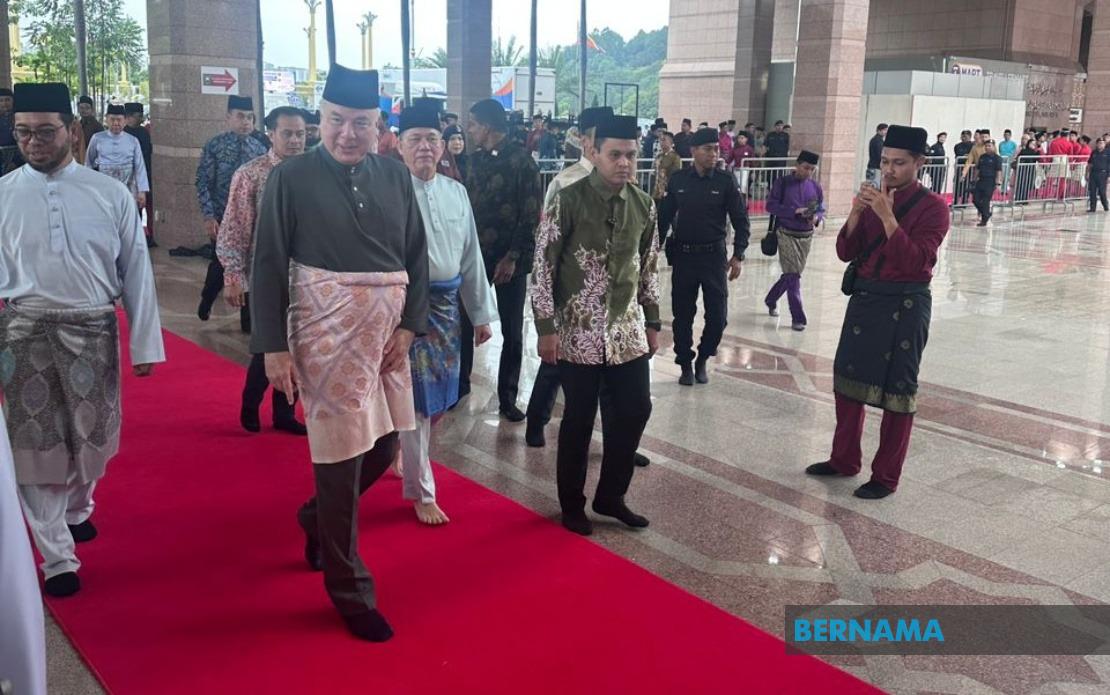
Malaysia's Deputy Yang di-Pertuan Agong Sultan Nazrin Shah has issued a pointed warning to national leaders, cautioning that countries suffer greatly when those in power succumb to impulsivity and emotional reactions rather than exercising measured judgment. Speaking at the National Level Maal Hijrah 1448 Celebration at the Putra Mosque in Putrajaya on June 17, the Perak Sultan underscored that hasty decisions taken without rigorous deliberation inevitably inflict damage that ordinary citizens must ultimately pay for through grave consequences.
The Sultan's intervention comes at a time when Malaysia's political landscape continues to grapple with questions about governance quality and decision-making standards. His emphasis on "calmness, openness, and cautiousness" in the decision-making process reflects growing concerns within the establishment about the need for institutional discipline and rationality in policymaking. When leaders prioritise short-term political gains over long-term national interests, the resulting harm extends far beyond immediate policy failures—it erodes public trust and destabilises social cohesion.
Sultan Nazrin drew parallels between contemporary governance challenges and the historical Hijrah, the Prophet Muhammad's migration from Mecca to Medina in 622 CE, which remains a foundational event in Islamic history. The Ruler highlighted how the Prophet's appointment of Abdullah bin Uraiqit, a non-Muslim guide renowned for his desert expertise and reliability, demonstrates Islam's pragmatic recognition of competence and integrity regardless of religious background. This historical example carries significant weight in Malaysia's multiethnic and multireligious context, where effective governance depends on meritocratic principles and the ability to work across communal lines.
The Sultan emphasised that true national greatness cannot rest merely on celebrating past achievements. Instead, successful societies extract lessons from history to construct improved futures. This distinction is particularly relevant for Malaysia, which possesses a remarkable post-independence track record of development and relative stability but faces mounting pressures from regional competition, economic transformation, and internal polarisation. A nation that rests on historical laurels without learning from both successes and failures risks stagnation and decline.
Crucially, Sultan Nazrin voiced alarm about the erosion of the sacrifice principle within the Muslim community. He characterised sacrifice not as passive acceptance of loss but as the deliberate subordination of personal interest to collective good—a willingness to endure hardship in pursuit of nobler objectives. The Sultan expressed concern that this spirit, once central to community resilience, has become increasingly rare and sometimes merely rhetorical. For Malaysia, where rapid urbanisation and consumerism have transformed social values, the revival of this principle could prove essential for navigating future challenges requiring shared responsibility and deferred gratification.
The Ruler stressed that without sacrifice, struggle loses its meaning and purpose. He called for systematic efforts to educate the Muslim community about the value of sacrifice and to embed it as a lived practice rather than an abstract concept. This resonates beyond religious circles, as societies generally require some degree of shared sacrifice during periods of transition or crisis. The challenge for contemporary Malaysia lies in reconciling individual aspirations with collective needs—a tension that effective leadership must help manage rather than exploit.
Unity and cooperative governance formed another central pillar of Sultan Nazrin's message. He invoked the Medina Charter, the foundational document that established governance in the early Islamic state, which successfully unified people from diverse ethnic and religious backgrounds through tolerance and equitable leadership. This historical reference underscores that Malaysia's own plural character represents not a weakness to be overcome but a potential strength if managed through inclusive institutions and fair decision-making.
The Sultan reinforced that national success depends fundamentally on citizens' willingness to cooperate and respect one another across ethnic, cultural, and religious lines, provided that such unity operates under just and wise governance. For Malaysia, where communal harmony remains both an achievement and a perpetual challenge, this formulation offers important guidance. It suggests that diversity alone is insufficient; what matters is the quality of institutional frameworks and leadership that either enables or impedes constructive interaction among communities.
Beyond commemorative dimensions, Sultan Nazrin reframed Maal Hijrah not as a historical anniversary but as an occasion for critical self-reflection and institutional renewal. He called upon Muslims to review past errors with genuine intention to awaken awareness and counter the heedlessness that arises when people become absorbed in worldly concerns. This inward-looking dimension holds implications for Malaysian governance broadly, suggesting that periodic reassessment of institutional performance and collective values serves essential functions in preventing institutional sclerosis and moral drift.
The Sultan's address at this celebration, attended by Deputy Prime Minister Datuk Seri Fadillah Yusof and Minister in the Prime Minister's Department (Religious Affairs) Dr Zulkifli Hasan, appears designed to communicate expectations to Malaysia's political leadership during a period when questions about governance standards and leadership quality remain elevated. By framing these concerns in Islamic historical and ethical terms, Sultan Nazrin speaks to moral foundations that resonate within Malaysia's Muslim-majority society whilst remaining applicable to broader principles of good governance.
The event's theme, "MADANI Dihayati, Ummah Diberkati," echoes the government's MADANI framework while emphasising spiritual renewal. With approximately 5,000 attendees, the national-level celebration provided a substantial platform for the Sultan's messages about decision-making standards, sacrifice, and unity. These themes will likely continue circulating within policy circles as Malaysia confronts the dual challenges of economic transformation and the need to reinforce institutional credibility during a period of significant political and social adjustment.