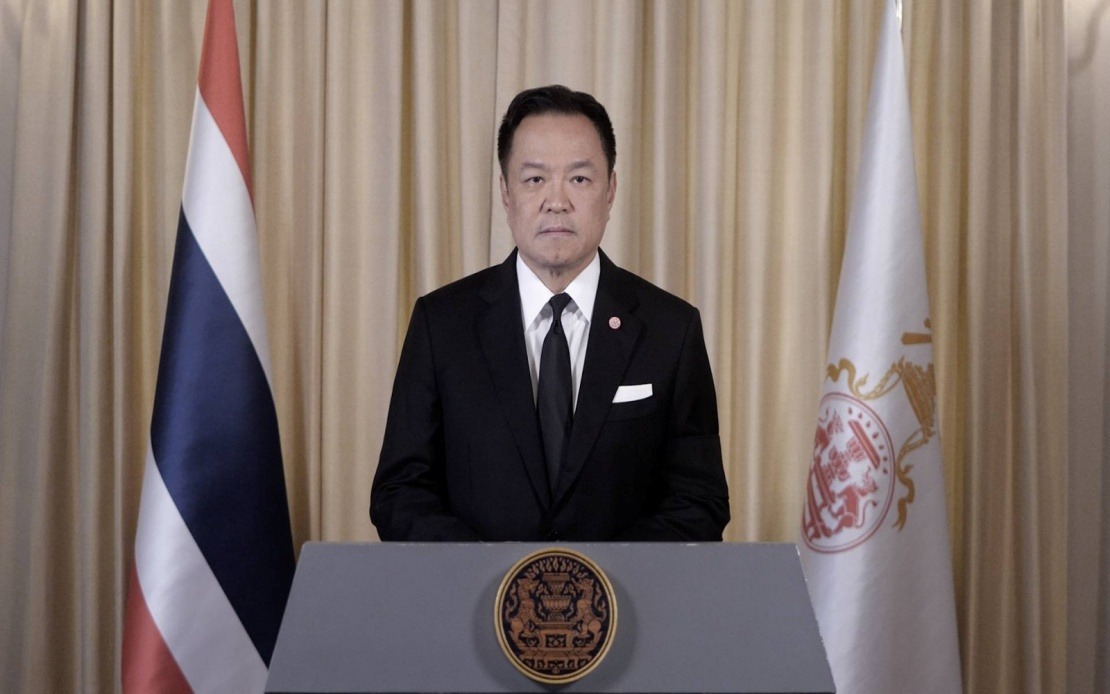
Thailand's government has signalled strong support for indications of a ceasefire between the United States and Iran, viewing the potential breakthrough as a stabilising force for the broader regional economy and global commodity markets. Prime Minister Anutin Charnvirakul conveyed this perspective during remarks at Government House on Monday, emphasising that progress in resolving tensions in West Asia would represent a meaningful step toward easing multiple concurrent international crises. The Thai leader's comments follow announcements from US President Donald Trump on Sunday regarding finalisation of an agreement with Iran, including plans to reopen the Strait of Hormuz and lift the American naval blockade.
Anutin's measured optimism reflects Thailand's pragmatic approach to navigating an increasingly volatile geopolitical environment. Rather than adopting a reactive posture toward daily global developments, the Prime Minister stressed that his administration has constructed a comprehensive long-term strategic framework capable of absorbing external shocks. This emphasis on preparedness signals confidence in Thailand's institutional capacity to weather ongoing uncertainties, even as complex geopolitical tensions persist across multiple regions. The government's positioning suggests an understanding that major economies like Thailand must balance external vigilance with internal stability mechanisms.
The potential benefits of a US-Iran rapprochement extend directly to Thailand's economic interests, particularly regarding energy security and inflation management. Deputy Prime Minister and Finance Minister Ekniti Nitithanprapas elaborated on this connection, noting that a formal cessation of hostilities would likely trigger moderating pressure on global energy prices. For a nation heavily dependent on imported petroleum and natural gas, such price relief would translate into tangible benefits across multiple economic sectors. Higher energy costs have persistently constrained growth in developing economies throughout Southeast Asia, making any reduction in global fuel prices a consequential development for Thailand's inflation trajectory and household purchasing power.
Thailand's experience managing disruptions in global supply chains demonstrates the country's adaptive institutional capacity. The economy has navigated successive shocks from various sources—pandemic-related production bottlenecks, shipping route disruptions, and commodity price volatility—without experiencing the severe contractions witnessed elsewhere. This resilience stems partly from Thailand's diversified manufacturing base and established trade relationships across multiple partners. However, policymakers recognise that structural vulnerabilities remain, particularly in relation to energy imports and the country's exposure to commodity price fluctuations.
Ekniti's remarks on inflationary pressures underscore the Thai government's attentiveness to cost-of-living challenges affecting ordinary households and small business enterprises. Energy price volatility cascades through supply chains, raising production costs for manufacturers and transportation expenses for distributors before ultimately reaching consumers through higher prices for goods and services. Households with limited disposable income experience disproportionate hardship from such shocks, as energy and food typically consume larger budget shares in lower-income brackets. By welcoming developments that could ease energy costs, the Deputy Prime Minister signals responsiveness to these distributional concerns.
The government's confidence that improved global conditions might support stronger economic growth than currently projected reflects cautious optimism about medium-term prospects. Thailand's growth forecasts have been subject to repeated downward revisions as international conditions have deteriorated. A genuine de-escalation in major geopolitical tensions could restore investor confidence, potentially attracting capital flows back toward emerging markets that have recently experienced outflows during periods of heightened global uncertainty. Enhanced foreign investment and improved business sentiment would provide growth drivers beyond energy price relief alone.
Thailand's commitment to its 200-billion-baht energy transition programme represents a significant policy declaration even amid expectations of lower oil prices. This programme encompasses investments in renewable energy infrastructure, grid modernisation, and reduced fossil fuel dependence. Ekniti's insistence on proceeding with the transition despite potentially lower energy costs reflects recognition that price volatility itself constitutes a strategic vulnerability requiring structural solutions. Rather than treating lower prices as an opportunity to defer green investments, the government maintains that long-term energy independence requires continued commitment to diversification away from imported hydrocarbons.
From a regional Southeast Asian perspective, Thailand's position carries implications for neighbouring economies facing similar energy security challenges. Many ASEAN nations share Thailand's heavy reliance on imported petroleum and vulnerability to price shocks transmitted through global markets. Any stabilisation of Middle Eastern geopolitics could benefit the broader region through improved energy market conditions. Furthermore, Thailand's relatively large economy and influential voice in ASEAN mean that Thai officials' assessment of global conditions helps shape regional outlooks and policy discussions among other member states.
The timing of these statements reflects the delicate balance Thai leadership must maintain between optimism and prudence. Celebrating geopolitical developments prematurely could undermine credibility if negotiations falter, while excessive caution might suggest weakness or lack of confidence in economic preparedness. By acknowledging positive developments while emphasising Thailand's intrinsic institutional resilience, Anutin and Ekniti project an image of competent stewardship capable of capitalising on favourable international conditions while maintaining stability during periods of tension.
Looking forward, Thailand's energy transition programme and broader economic strategy will likely proceed along established trajectories regardless of immediate geopolitical developments. However, successful US-Iran negotiations could provide crucial breathing room, allowing policymakers to implement structural reforms and green investments under less pressure from immediate energy price spikes. For Malaysian readers and Southeast Asian observers, Thailand's approach illustrates how regional economies must simultaneously prepare for shocks while positioning themselves to benefit from stability when it emerges. The underlying message resonates across the region: institutional readiness and long-term strategic planning offer more reliable foundations for economic security than hope that external circumstances will remain favourable.