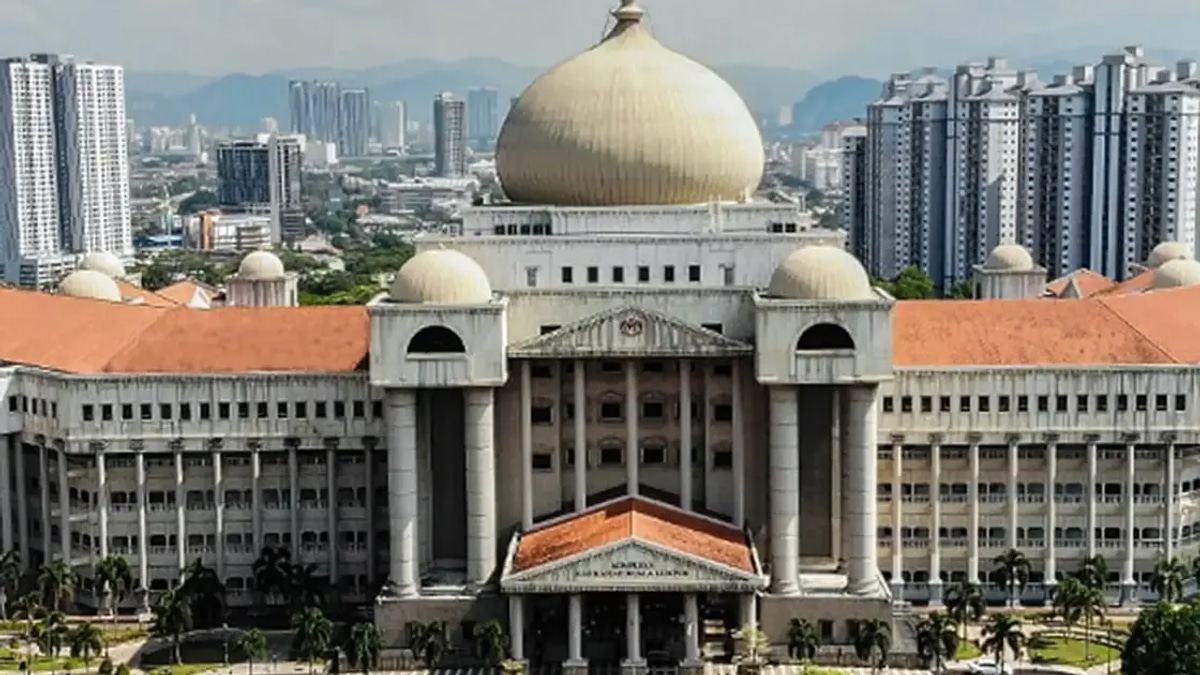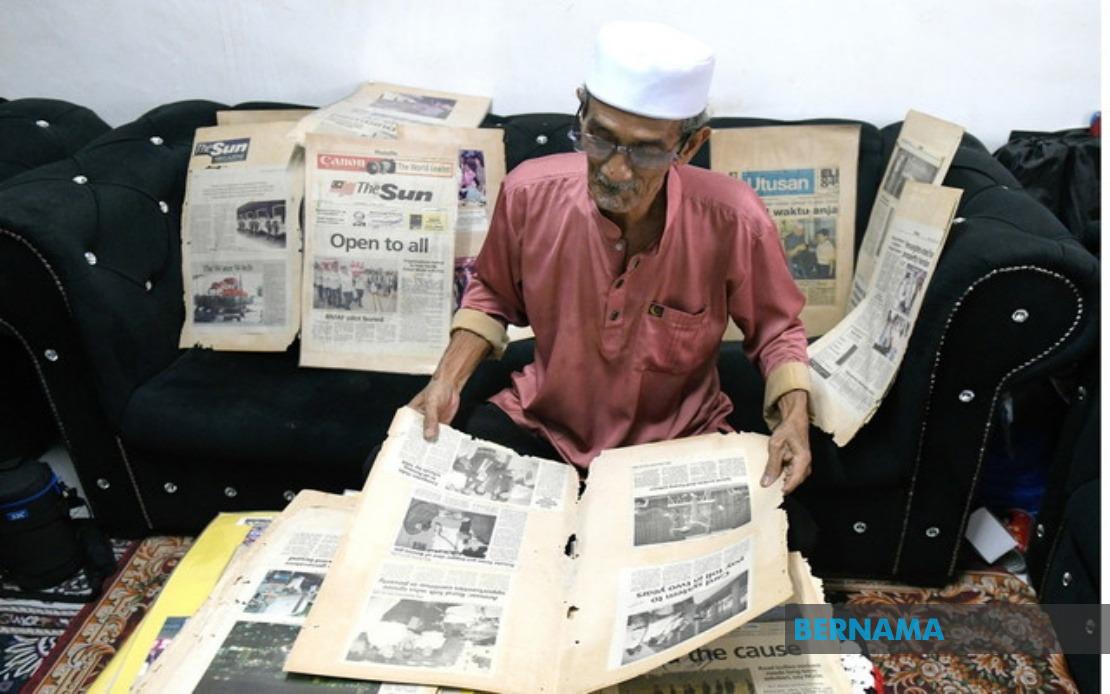
Azmi Sapiei's career in Malaysian journalism spans more than 30 years, a tenure marked by memorable encounters both triumphant and perilous. The 64-year-old veteran cameraman and photographer, now retired, recalls with candour the day a suspect assaulted him while he worked a court assignment around 2001, an incident that remains vivid in his memory. Such hazards of the trade, however, never deterred him from pursuing what he describes as a calling that demanded not just technical skill but considerable physical and mental fortitude.
Before establishing himself as a news professional, Azmi worked in factory settings while nurturing his passion for photography. His ambition eventually drove him to relocate to Kuala Lumpur, where he worked independently with various agencies and publications focused on women's issues and lifestyle content. This groundwork proved instrumental in shaping his visual sensibility and work ethic before he formally entered the news media sector.
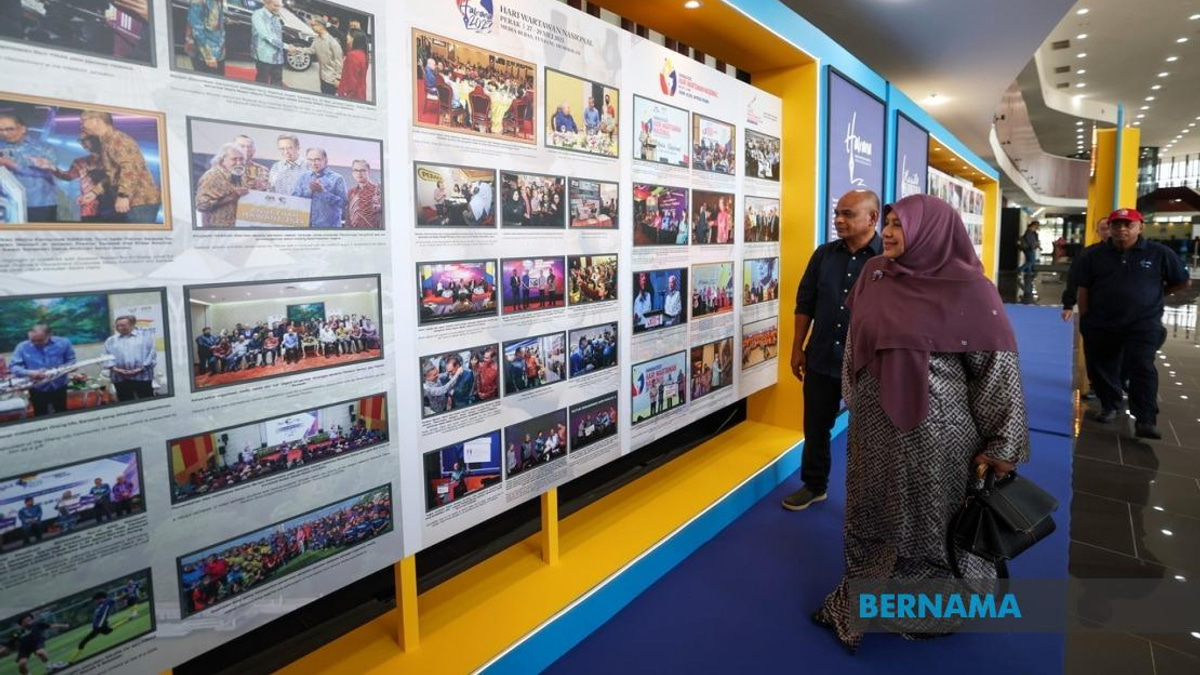
His formal journalism career began in 1993 when he joined Bernama, the national news agency, as a photographer. During his nearly three years there, he witnessed and documented pivotal moments in Malaysia's modern history. Among his most significant assignments was the exclusive photography of Shamsiah Fakeh's return from China in July 1994. Shamsiah, a former Malayan Communist Party member, was returning to her nephew's residence in Gombak. Azmi and a journalist managed to gain early access before authorities cordoned off the area, an advantage that proved decisive in securing photographs no other media outlet obtained.
The exclusivity came with editorial challenges that tested his resilience. Upon returning to the office with three rolls of film—a substantial quantity for that era—his supervisor questioned why he had used only three rolls, expressing disappointment rather than encouragement. Each roll was discarded into the waste bin, a moment that bruised both Azmi's confidence and pride. Yet his frustration transformed into vindication when the photographs were developed and processed; every major newspaper in Malaysia republished his images the following day, validating his photographic judgment and news instincts.
Azmi characterises Bernama as a formative institution that functioned as a professional school, instilling discipline and cultivating standards for accuracy and news value. The agency, he notes, produced numerous skilled photographers whose work set benchmarks for the industry. The training he received there became the foundation upon which he built a career spanning multiple news organisations and technological eras.
After leaving Bernama at the end of 1996, Azmi returned to his home state of Penang, subsequently working at The Sun newspaper. During his tenure there, the assault he experienced while covering a court case underscored the unpredictability and occasional danger embedded in frontline journalism. Rather than viewing such experiences as aberrations, Azmi integrated them into his understanding of the profession's demands, recognising that news gathering sometimes placed journalists in hostile or volatile situations.
His career trajectory subsequently took him through Bernama TV and eventually to RTM Penang, where he worked as a part-time cameraman from 2003 until retiring in mid-2020. The transition from still photography to video work introduced new physical demands. During his time with Bernama TV, Azmi operated Betacam equipment—cameras he and colleagues colloquially termed "junk iron" owing to their substantial weight of approximately 12 kilogrammes. Shouldering such apparatus during field assignments required endurance that still photography, by comparison, did not demand.
The shift from analogue to digital technology fundamentally altered news production workflows, yet Azmi's core responsibilities remained conceptually similar. In the film era, photographers could only view their images after processing, necessitating careful shot discipline and intuitive judgment about framing and composition. Azmi performed additional labour beyond picture-taking, writing photo captions for editorial review before distribution to Bernama's clients. These supplementary responsibilities reflected the integrated nature of newsroom functions before digital systems separated many tasks into specialised roles.
Azmi's contributions to Malaysian media earned formal recognition when he received the 2006 Penang State Media Award in the visual electronic media category, acknowledging his sustained professional excellence and commitment to the field. More personally meaningful to him, however, is the continuation of his legacy through his family. His second son, Muhammad Syafiq, aged 30, now works with Media Prima Television Network as a camera operator, perpetuating the family's involvement in visual journalism.
Muhammad Syafiq's pathway into the profession began in childhood, observing his father's equipment and gradually accompanying him to assignment locations. After completing his secondary education in 2016, he formally began operating cameras a year later, benefiting from his father's mentorship. Azmi provided not merely professional training in technical aspects such as filming techniques and camera angles, but equally important instruction in workplace discipline and the ethical dimensions of news gathering. This intergenerational transmission of knowledge and values reflects how professional cultures and standards propagate within families and communities.
Azmi's reflections on three decades of Malaysian journalism illuminate broader transformations in how news organisations document national events and public affairs. From the exclusive photography of communist-era political movements to the digital recording of contemporary court proceedings, his career trajectory maps the technological and institutional evolution of Malaysian media. His experiences emphasise that regardless of technological advancement, the fundamental journalistic imperative—to bear witness accurately and courageously—remains constant. The physical toll, the occasional hostility from subjects, and the daily challenge of capturing moments of genuine news value continue to define the profession, even as equipment and distribution methods have fundamentally changed the nature of the work.