Two residents were pulled to safety from a burning flat on the 13th storey of Block 842 Jurong West Street 81 in Singapore after the Singapore Civil Defence Force responded to an emergency call at approximately 3.35am on June 17. The timely intervention by firefighters, combined with quick thinking from an alert neighbour, prevented what could have been a tragedy in the densely populated residential block.
When SCDF personnel arrived at the scene, they discovered the living room of the affected unit engulfed in flames and thick smoke. Teams of firefighters made their way through the hazardous conditions into the smoke-filled flat, working swiftly to contain and suppress the blaze using water jets until the fire was completely extinguished. The prompt action ensured that occupants trapped inside could be located and evacuated, though two individuals required immediate medical intervention.
All four family members from the affected unit were hospitalised at Singapore General Hospital following the incident. The two rescued residents had sustained injuries consistent with smoke inhalation and thermal burns, whilst the other two family members also received treatment and observation. A precautionary evacuation was also carried out for approximately 40 other residents living in nearby units, underscoring the potential danger such fires pose to high-rise residential communities.
Preliminary investigation by SCDF officers determined that the fire most likely originated from an electrical fault located in the living room of the unit. This finding reflects a troubling pattern in urban fire incidents across Southeast Asia, where ageing electrical infrastructure, overloaded circuits, and faulty appliances frequently trigger residential blazes. The particular danger in high-rise buildings lies in the speed at which fires can spread and the difficulty residents face in evacuating, especially those on upper floors.
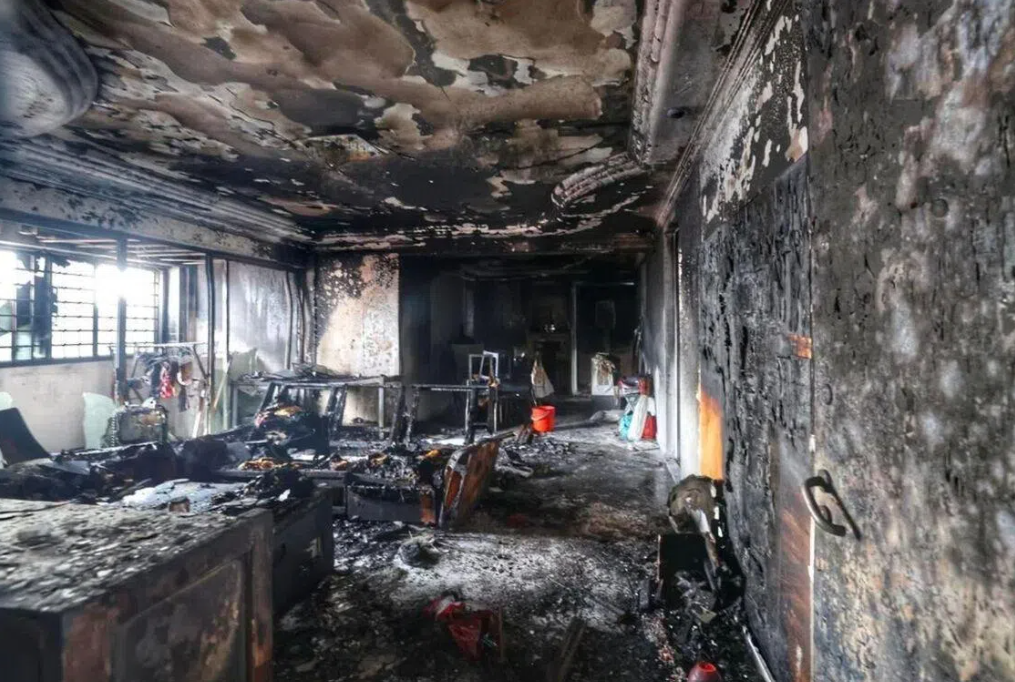
Reporters from the Chinese-language daily Lianhe Zaobao who visited the scene several hours after the incident documented significant structural damage to the flat. The walls and ceiling bore heavy scorch marks, the windows had shattered from the intense heat, and the interior presented a stark picture of the ferocity of the blaze. The damage assessment highlighted how quickly an electrical fire can consume a residential space and the importance of early detection.
The family had been asleep when the fire ignited, and might have remained unaware of the danger had it not been for the vigilance of an 18-year-old student living in the unit directly above them. Awake at the time and playing video games, the young man detected the smell of smoke and observed wisps of it rising from the windows of the flat below. His decision to investigate rather than ignore the warning signs proved crucial to alerting occupants and authorities.
Describing his actions to journalists, the student recounted touching the door of the affected unit and finding it extremely hot to the touch. Rather than retreating, he began knocking loudly on doors throughout the corridor to rouse neighbours and urge them to evacuate immediately. He then rushed back to his own unit to warn his family to leave the building before notifying emergency services. His mother subsequently called the police and SCDF, triggering the rapid response that saved lives.
The young rescuer also witnessed the condition of the residents he had alerted. A young woman from the burning flat appeared at his door requesting towels to treat wounds, and he observed her hair was singed and her face darkened with soot. He also saw a man whose back and arms displayed the unmistakable redness of severe thermal burns, evidence of the extreme conditions inside the unit. These visual accounts underscored the narrow margin between survival and tragedy in such incidents.
Neighbours living elsewhere in the block corroborated the scale of the emergency response, with a resident on the 12th floor reporting that at least five fire engines were stationed outside the building at the height of operations. The deployment reflected SCDF's commitment to rapid mobilisation in urban residential areas, where high-rise fires demand substantial resources and coordinated effort.
In response to such incidents, SCDF has intensified public safety messaging across Singapore, urging residents to adopt preventive measures that could significantly reduce residential fire risk. The agency advises the public to avoid overloading electrical outlets, a common practice in modern households with multiple devices competing for limited power sources. Equally important is the habit of switching off appliances when they are not in active use, particularly high-power devices such as air conditioning units and water heaters that generate substantial heat during operation.
SFCD has also emphasised the critical importance of using only electrical appliances and plugs bearing the Safety Mark certification, a credential issued by Singapore's Consumer Product Safety Office. This mark indicates that products have been tested and comply with safety standards designed to minimise fire risk. Additionally, the agency warns against leaving batteries and electronic devices unattended while charging, particularly overnight or for extended periods, a practice that has been linked to numerous residential fires across the region.
Statistical trends underscore the growing concern about residential fires in Singapore. According to SCDF's latest annual report released in February, the total number of fires increased by three per cent, rising from 1,990 incidents in 2024 to 2,050 in 2025. Most alarmingly, more than half of these fires—specifically 1,051 incidents—occurred in residential buildings, indicating that homes remain the highest-risk environment for fire incidents. This trajectory suggests that the Jurong West incident reflects a broader pattern requiring sustained public awareness and infrastructure investment across urban Southeast Asia.