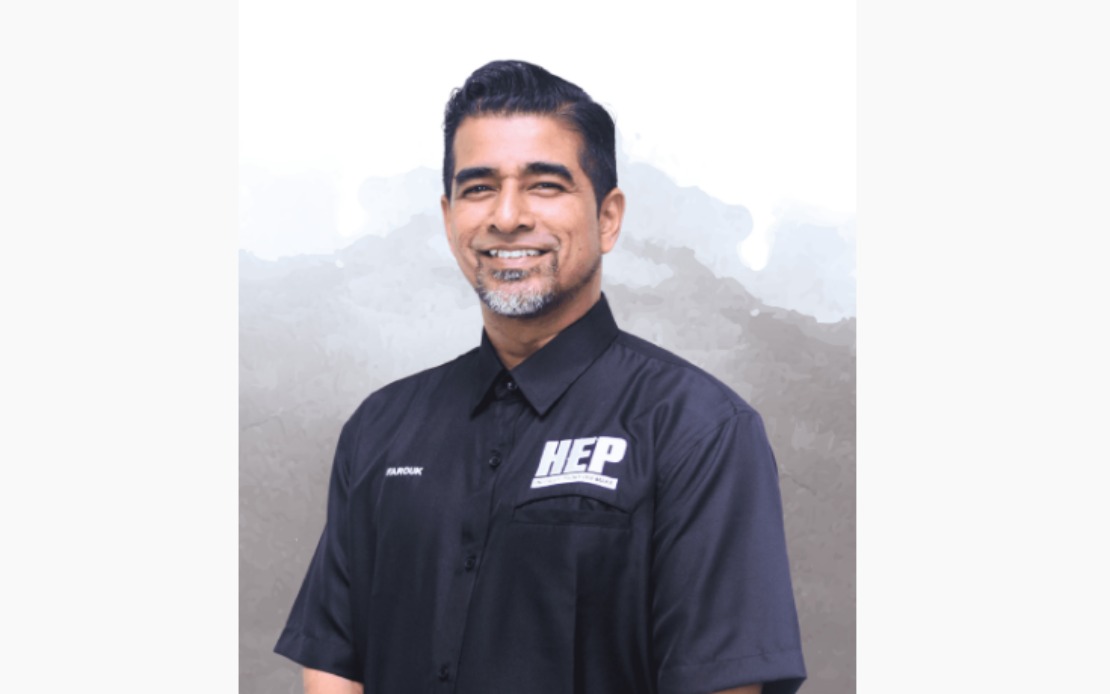
The Kelantan campus of Universiti Teknologi MARA (UiTM) is making an active push to ensure that financial constraints do not prevent talented students from underprivileged backgrounds from pursuing tertiary education. Speaking at the UiTM Kelantan Branch Rector's Cakna Programme in Kota Bharu, Deputy Rector for Student Affairs Meer Zhar Farouk Amir Razli emphasized that prospective students should not hastily decline admission offers out of fear that they cannot afford tuition and living expenses. The message reflects a growing institutional recognition that Malaysia's talented pool extends across all income levels, and that systemic barriers to access remain a significant challenge in the country's higher education landscape.
While many students and families automatically assume that PTPTN, the National Higher Education Fund Corporation, represents their only financial lifeline, UiTM Kelantan has deliberately expanded its support mechanisms to provide a safety net that extends well beyond conventional loan schemes. The university offers zakat assistance drawn from Islamic charitable funds, dedicated welfare allocations for the neediest students, and access to the Dapur MADANI initiative, a residential college programme designed specifically to help students manage their day-to-day living costs throughout their academic journey. This multi-layered approach acknowledges that financial hardship often stems not merely from tuition fees but from the cumulative burden of accommodation, meals, transport, and educational materials.
The Dapur MADANI initiative deserves particular attention as a model of practical intervention. By providing direct assistance with essential living expenses through residential colleges, the programme addresses a frequently overlooked reality: many students can theoretically secure loans for fees but still face insurmountable obstacles when it comes to affording basic necessities. For students from rural areas or those whose families live far from campus, these costs can quickly become prohibitive. By embedding support within the residential college system, UiTM Kelantan has created a mechanism that reaches vulnerable students before financial desperation forces them to abandon their studies.
The intensifying competition for places in Malaysia's public higher education institutions adds urgency to this outreach effort. With demand far exceeding available seats, securing an offer represents a genuine achievement that reflects both academic merit and, often, considerable personal sacrifice on the part of students and their families. Meer Zhar's message—that students should thoroughly investigate available assistance before rejecting an opportunity—recognizes that many families make acceptance decisions based on incomplete information or ingrained assumptions about affordability rather than concrete knowledge of the support actually available.
The Rector's Cakna Programme itself exemplifies UiTM's commitment to proactive engagement. Operating in partnership with local non-governmental organisations, the initiative directly reaches newly enrolled students who face the greatest vulnerability during their transition to university life. By collaborating with NGOs already embedded in communities across Kelantan, the university extends its reach beyond the campus gates and into the households where financial decisions are actually made. This partnership model also ensures that support is culturally sensitive and delivered through trusted local channels rather than purely institutional bureaucracy.
A concrete example illustrates the programme's real-world impact. Norzarra Dhania Amir Abdullah, a nineteen-year-old from a low-income household, initially received an offer from UiTM Sarawak but felt compelled to decline despite her strong desire to continue her education. Her family situation exemplifies the structural vulnerabilities that can derail promising students. As the eldest of seven children, Norzarra Dhania carries weight beyond her years. Her father's diagnosis with diabetes four years ago fundamentally altered her family's economic trajectory, shifting the primary income responsibility to her mother, who works as a restaurant assistant—employment that offers neither high earnings nor financial stability. In this context, attending university at a location far from home seemed like an impossible luxury.
When Norzarra Dhania received her second offer from UiTM Kelantan, the changed circumstances—proximally and financially—made the opportunity feel genuinely attainable. The reduced travel costs and ability to maintain closer family connections without incurring additional accommodation expenses transformed the equation. Her intention to pursue a Diploma in Management reflects not merely personal ambition but also a calculated effort to develop skills that could eventually improve her family's economic position. As the eldest sibling with university education, she would become a pathway for others in her family.
The laptop presented to Norzarra Dhania by Meer Zhar during the Rector's Cakna Programme visit carries symbolic weight beyond its material value. In contemporary education, digital tools have become essential rather than optional. Without personal computing access, even a fully funded student would struggle with assignments, research, and collaborative learning. By proactively distributing laptops to students from low-income backgrounds, UiTM Kelantan recognizes that educational equity requires attention to the detailed material conditions of study, not merely tuition assistance.
For the broader Malaysian education system, this approach offers important lessons. The reliance on PTPTN as the primary support mechanism, while necessary, has created a narrative wherein students internalize the assumption that higher education is fundamentally a debt-financed proposition. This psychological barrier, combined with genuine concerns about graduate debt burdens in a volatile job market, has contributed to declining participation rates among lower-income cohorts. By demonstrating that universities can provide diverse forms of support—grants, welfare allocations, in-kind assistance—UiTM Kelantan challenges that limiting narrative.
The programme also highlights the ongoing tension between meritocratic ideals and structural inequality in Malaysian higher education. Competition for places is indeed fierce, yet many rejected applicants possess genuine talent and capability. When financial anxiety alone drives rejection of offers, the system loses talent, and students lose opportunity. The gap between stated commitment to accessibility and the lived reality of affordability remains substantial across the sector.
For prospective students across Kelantan and surrounding regions, the explicit message from UiTM leadership is clear: financial difficulty should not automatically trigger rejection of an offer without first thoroughly investigating available support. The university has deliberately constructed a framework designed to catch students who might otherwise fall through the cracks. Prospective and current students are encouraged to engage directly with student affairs offices, residential college administrators, and external partner organisations to understand the full landscape of assistance available.
Looking forward, the success of initiatives like the Rector's Cakna Programme and the expansion of support beyond PTPTN depends on consistent funding, institutional commitment, and continuous outreach to communities where awareness of these schemes remains limited. As Malaysia faces demographic shifts and increasing pressure to raise educational attainment levels across all socioeconomic strata, the model UiTM Kelantan is pioneering—combining multiple funding streams, institutional partnerships, and proactive student engagement—may offer a template worth emulating across the public higher education sector.