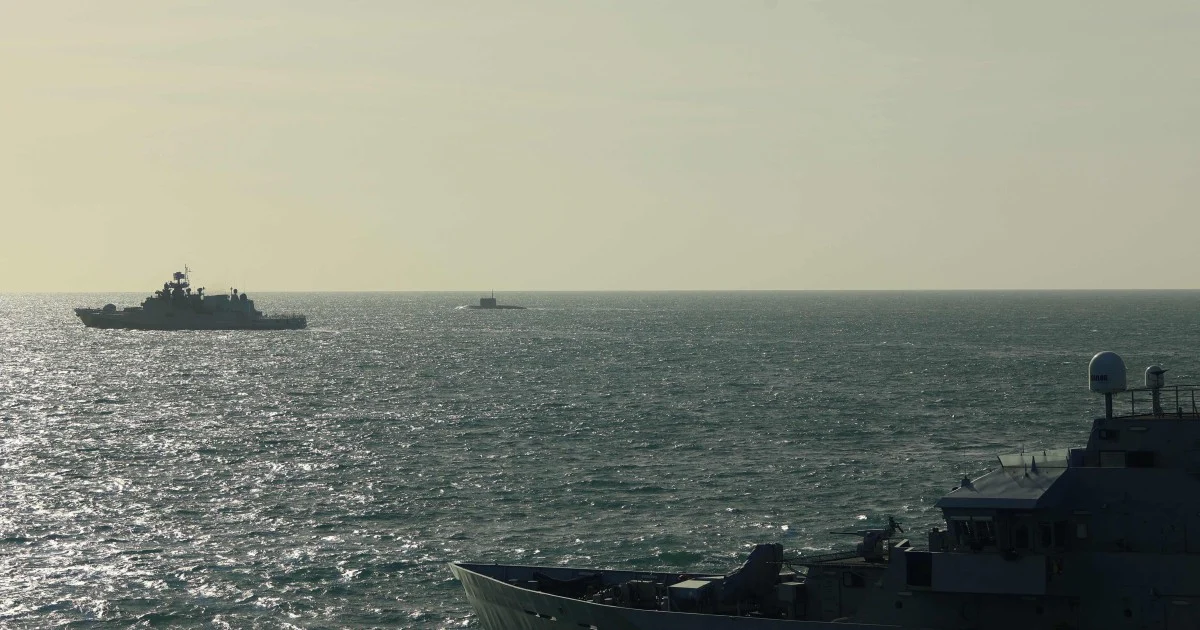
British Prime Minister Keir Starmer on Wednesday defended his characterisation of warning shots fired by a Russian warship near a yacht in the English Channel, describing the incident as reckless without suggesting deliberate malice. The comments came amid escalating tensions between London and Moscow over maritime incidents in European waters, a pattern that has intensified as geopolitical friction between the Western alliance and Russia shows no sign of abating.
Starmer's distinction between recklessness and sinister intent reveals the delicate diplomatic language officials must navigate when responding to Russian military conduct that poses real danger yet falls short of outright acts of war. The Prime Minister appeared to be attempting to acknowledge the severity of the incident—in which warning shots create genuine risk to civilian vessels and their crews—while avoiding rhetoric that might be perceived as inflammatory or undiplomatic. This calibrated response reflects the challenges facing Western leaders who must respond forcefully to Russian assertiveness without triggering further escalation in an already tense environment.
Warning shots fired across the bow of commercial or civilian vessels represent a serious escalation of maritime conduct and violate international norms governing freedom of navigation in international waters. The English Channel, one of the world's busiest shipping corridors, has become an increasingly contentious zone where Russian naval activities are monitored closely by NATO allies. For Britain, which maintains significant naval presence and depends heavily on secure maritime trade routes, such incidents carry strategic importance beyond the immediate moment of confrontation.
The incident underscores a broader pattern of Russian military posturing in European waters that Western governments have documented extensively over recent years. These confrontations, which have occasionally involved aggressive manoeuvres by Russian vessels near NATO shipping and military assets, are understood by analysts as demonstrations of Moscow's willingness to challenge Western naval operations and commercial traffic. Yet they typically stop short of causing actual physical harm, creating a grey zone of conduct that is dangerous and destabilising without constituting direct military action that would trigger collective defence responses.
For Southeast Asian observers, these dynamics in European waters carry important lessons about how great powers contest for influence and assert their interests in strategically vital maritime zones. The English Channel confrontations parallel concerns in the region about freedom of navigation, particularly in the South China Sea, where territorial disputes and military modernisation have created similar tensions. Malaysia, as a nation dependent on secure sea lanes and with its own maritime interests to protect, watches developments in European waters as instructive case studies in how smaller powers navigate assertive behaviour by stronger actors.
Starmer's response also reflects the United Kingdom's position as a medium power seeking to maintain credible deterrence against Russian assertiveness while managing the risks of direct military confrontation. Britain's naval investments and NATO commitments have positioned it as a key player in countering Russian activities in European waters, yet London must balance firmness with prudence. The Prime Minister's language suggests an effort to signal resolve to allies and domestic audiences while preserving space for continued diplomatic engagement and avoiding unnecessary escalation spirals.
The incident involving the warship and yacht occurred within a broader context of heightened scrutiny of Russian naval movements. NATO members have increased monitoring of Russian vessels transiting through key waterways and operating near their territorial waters. These surveillance operations have generated detailed documentation of incidents that Western governments use to build cases against Russian conduct they view as reckless or threatening, even when the actions do not constitute actual attacks. This documentation serves multiple purposes: it creates accountability through international discourse, it strengthens coordination among allies, and it builds public records that shape long-term assessments of Russian behaviour.
The English Channel remains particularly sensitive because of its significance for Britain's trade, security, and identity as a maritime nation. The waters have long been zones of competition and assertion of rights, from the historic Spanish Armada through to Cold War naval operations and into the contemporary period. Russian naval activity in these waters is therefore charged with particular symbolic weight for British audiences and policymakers, who view them as part of the nation's core interests and traditional sphere of security responsibility.
Starmer's framing of the incident as reckless rather than sinister may also reflect assessments from military and intelligence advisors regarding Russian intentions. Rather than indicating a deliberate campaign to provoke or inflict harm, the warning shots might be interpreted as part of tactical operations or demonstrations of capability and will that are conducted with less careful consideration of consequences than is standard for professional militaries. This distinction, while appearing subtle, carries significant implications for how Britain calibrates its military and diplomatic responses.
The broader trajectory of Russian naval incidents in European waters suggests this will not be an isolated occurrence. As Moscow continues to emphasise its military capabilities and challenge what it views as Western encroachment in its sphere of influence, similar confrontations are likely to recur. Western governments, including Britain, are developing protocols and communication channels designed to prevent escalation while maintaining clear deterrence messages. These mechanisms remain imperfect, however, and the risk of miscalculation in such encounters remains a significant concern for strategic planners across NATO.