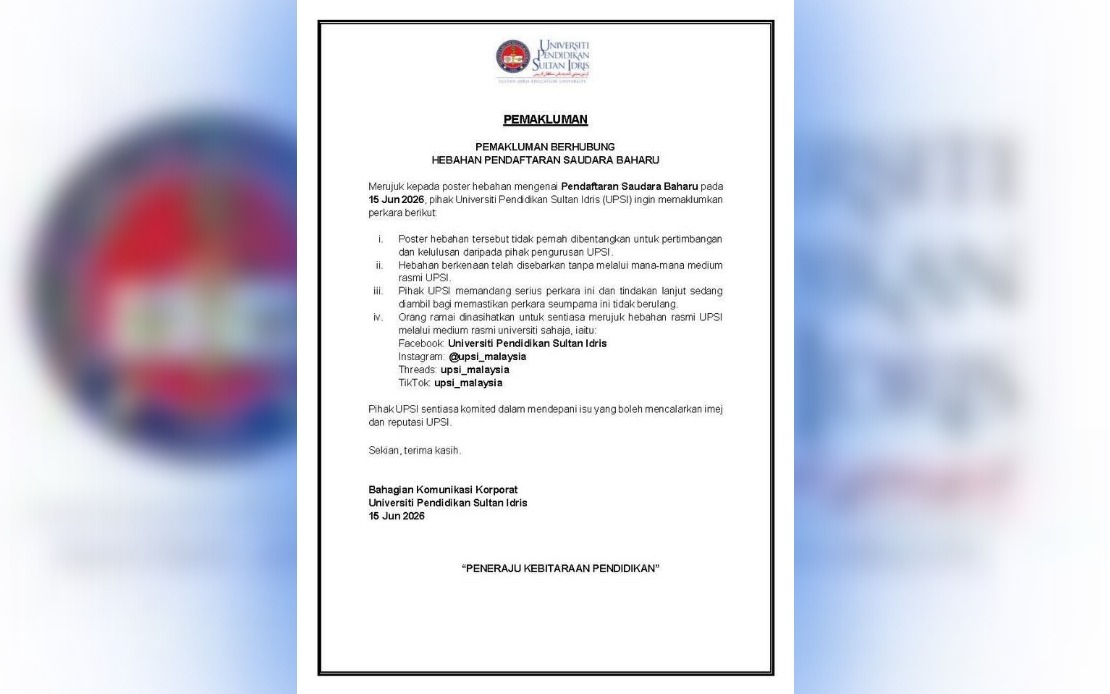
Universiti Pendidikan Sultan Idris (UPSI) has moved to formally distance itself from a poster concerning the registration of 'saudara baharu' or newly converted Muslims that gained traction on social media platforms this month. In a statement released through official university channels, UPSI made clear that the document, dated June 15, was neither presented to institutional leadership for review nor given formal approval before being shared online.
The poster's unauthorised circulation represents a concern for the institution, which serves as a leading teacher training establishment in Malaysia. By releasing a public clarification, UPSI sought to prevent potential confusion among its staff, students, and the broader community about whether the university had initiated or endorsed the campaign. The timing of the denial—occurring shortly after the material began spreading—suggests the university moved quickly to contain any reputational impact.
UPSI's statement emphasised that the poster had not travelled through any recognised official communication pathway belonging to the university. This distinction carries weight in the Malaysian institutional context, where official announcements typically flow through validated administrative channels to ensure accuracy and accountability. The university's emphasis on this point underscores the importance it places on message control and the protection of its institutional voice.
Beyond the immediate denial, UPSI indicated it would pursue further investigative steps to identify how the poster originated and ensure similar incidents do not recur in future. This proactive stance suggests the university is treating the matter with appropriate seriousness, particularly given potential sensitivities surrounding content related to religious conversion. The institution framed its response as part of a broader commitment to safeguarding its image and maintaining public trust.
The university's appeal to the public to rely exclusively on its official announcement channels reflects a wider institutional challenge in the digital age. Social media platforms enable rapid, uncontrolled dissemination of content bearing an institution's name or logo, often without authorisation. For universities and other organisations, this reality necessitates robust communication strategies and active monitoring of what circulates in their name online.
The incident highlights vulnerabilities in how institutional messaging can be compromised or misrepresented. Posters can be easily created, modified, or attributed to organisations without their knowledge or consent. In Malaysia's diverse and religiously conscious society, such unauthorised materials—particularly those touching on matters of faith—carry additional potential for misinterpretation or controversy. UPSI's swift response demonstrates awareness of these sensitivities.
The university's commitment to addressing the root cause of the problem, rather than merely issuing a blanket denial, suggests a more comprehensive approach to institutional governance. By promising to take action to prevent recurrence, UPSI signalled that it would examine internal processes, perhaps reviewing how its visual identity and name are protected, or how awareness among staff and students about proper channels could be enhanced.
For other Malaysian educational institutions, UPSI's experience offers a cautionary lesson about the speed at which unauthorised content can spread and the reputational consequences that follow. The institution's decision to communicate transparently through its own social media platforms—using the very medium through which misinformation travels—represents a sensible contemporary approach to crisis management.
The broader context matters as well. In Malaysia, where religious matters are closely observed and institutional credibility is paramount, any ambiguity about an organisation's involvement in faith-related initiatives can generate unwanted speculation. UPSI's clear disclaimer prevents such speculation from taking root and potentially damaging the institution's standing among stakeholders, including parents, prospective students, government officials, and the general public.
The incident also underscores the importance for Malaysian institutions to maintain robust digital security and identity protection practices. As universities continue to integrate digital communication into their operations, ensuring that official announcements are verified and that impersonation or unauthorised use of institutional branding is quickly identified becomes increasingly critical. UPSI's response demonstrates that institutional leadership is attuned to these modern realities.