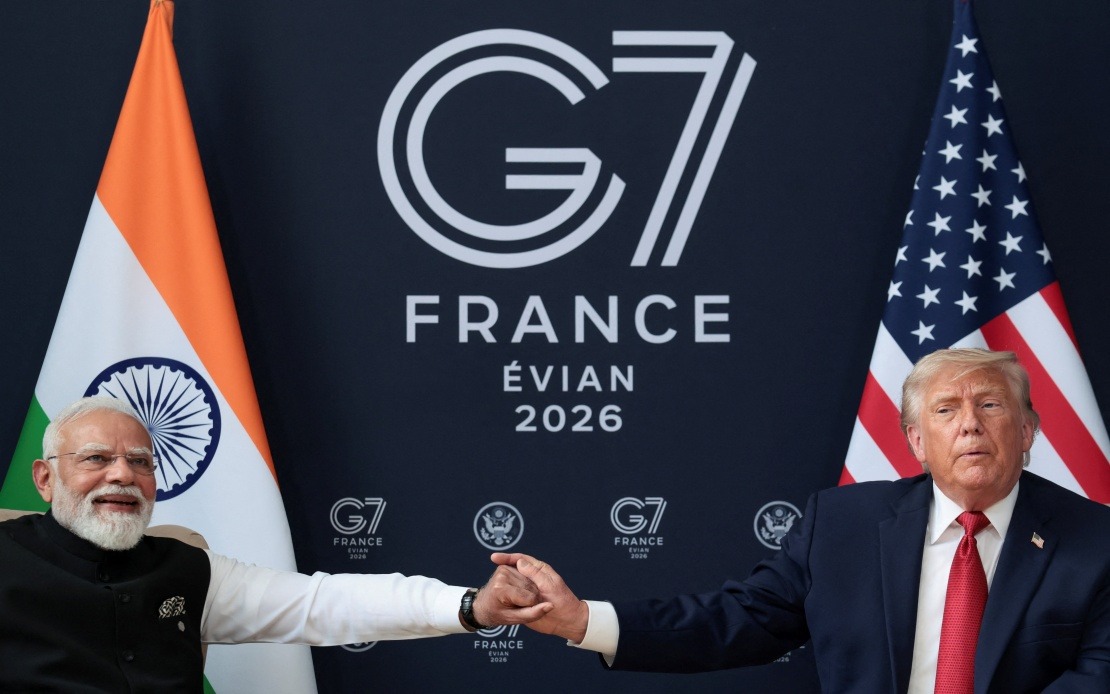
Negotiations between the United States and India toward a comprehensive bilateral trade agreement have reached what both nations describe as a pivotal turning point. India's External Affairs Ministry confirmed the breakthrough following discussions between Prime Minister Narendra Modi and US President Donald Trump during their bilateral meeting at the Group of Seven summit held in Evian, France on Wednesday. The statement indicated that both leaders expressed particular satisfaction with the trajectory of talks aimed at producing what they characterised as a balanced, mutually beneficial, and commercially meaningful accord to be concluded at the earliest opportunity.
The momentum behind these trade discussions carries considerable significance for the broader Asia-Pacific economic landscape. An enduring trade pact between Washington and New Delhi would represent a major milestone in cementing strategic economic ties between two nations increasingly aligned on geopolitical concerns. For Malaysia and other Southeast Asian economies, such an agreement would reshape regional trade dynamics and potentially influence investment flows and supply chain configurations across the region.
The current negotiation phase builds upon groundwork laid earlier in the year. In February, both countries reached an interim trade agreement under which the United States agreed to reduce tariffs on Indian goods to 18 per cent, a modest lowering of trade barriers that nonetheless signalled willingness from both sides to engage constructively. This interim arrangement provided a foundation upon which more substantial negotiations could proceed, though observers noted that the path remained contentious given the historical tensions between the two trading partners.
Trump's characterisation of Modi as a formidable negotiator underscored the complexity of these discussions. The US president, responding to questions about the ongoing negotiations, described the Indian prime minister as among the toughest negotiators he has encountered. In remarks tinged with admiration, Trump noted that Modi, despite appearing "like an angel," possessed negotiating prowess "as tough as a killer." Such candid observations from the American side suggest that India has successfully leveraged its strategic importance to secure meaningful concessions during bilateral discussions.
The urgency to conclude these talks reflects a broader context of escalating trade tensions that have characterised Trump's trade policy approach. In 2025, the US administration imposed substantial tariffs on Indian exports, implementing a base 25 per cent tariff rate while adding an additional 25 per cent penalty specifically targeting Indian purchases of Russian oil. These punitive measures created tangible pressure on Indian exporters and underscored the need for a comprehensive agreement that would provide clarity and stability to bilateral commercial relations.
US Trade Representative Jamieson Greer's planned visit to India in the coming week signals that high-level engagement will intensify in the immediate term. The presence of such a senior trade official in New Delhi indicates both nations view the next phase of negotiations as critical to achieving a final accord. Greer's visit will likely involve detailed technical discussions with Indian counterparts regarding tariff schedules, rules of origin, and sectoral trade arrangements that will form the backbone of any final agreement.
For Malaysian policymakers and business leaders, the implications of a US-India trade agreement warrant close attention. Deepened US-India commercial integration could create both opportunities and challenges for Malaysian exporters. Enhanced market access for Indian goods into the United States might redirect some supply chains that currently flow through or benefit Malaysia, while simultaneously opening new possibilities for Malaysian companies to participate in complementary manufacturing networks linking Indian suppliers with American consumers.
The negotiating dynamics between Washington and New Delhi also reflect shifting global trade architecture. Unlike the more adversarial posture Trump has adopted toward Beijing, the administration appears willing to accommodate Indian interests within parameters it considers strategically important. This selective approach to trade relationships demonstrates that geopolitical alignment and strategic partnership carry weight in shaping tariff policies, a consideration relevant to how other nations position themselves in the evolving international economic order.
The interim agreement reached in February already provided some relief to Indian exporters facing elevated US tariffs, though the additional penalties on Russian oil purchases suggested that broader geopolitical considerations remained entangled with commercial negotiations. Any final comprehensive agreement would need to address not only traditional tariff elimination across sectors but also issues related to intellectual property protection, labour standards, environmental commitments, and regulatory harmonisation.
The timeline for concluding negotiations remains fluid, though both sides have signalled commitment to reaching a resolution promptly. The compression of negotiating timelines reflects mutual interest in providing certainty to business communities in both nations that have endured significant uncertainty during the extended discussion period. Indian exporters, particularly in pharmaceuticals, textiles, and information technology services, stand to benefit substantially from reduced American tariffs and improved market access.
Regional observers will watch closely how negotiations on agricultural products unfold, given the political sensitivity of farm policy in both nations. India's agricultural sector and America's farming constituencies both wield considerable political influence, making agricultural trade liberalisation potentially contentious despite the overall momentum toward agreement. Balancing these domestic political pressures while achieving commercially meaningful outcomes will test the negotiating resolve of both sides during final discussions.
The broader strategic partnership between the US and India has deepened considerably in recent years, encompassing defence cooperation, technology collaboration, and coordinated responses to Chinese assertiveness in the Indo-Pacific. A comprehensive trade agreement would complement these dimensions of the relationship and deepen economic interdependence in ways that reinforce political alignment. For Southeast Asian nations navigating the strategic competition between the United States and China, the solidification of US-India economic ties carries implications for regional security architectures and commercial networks.