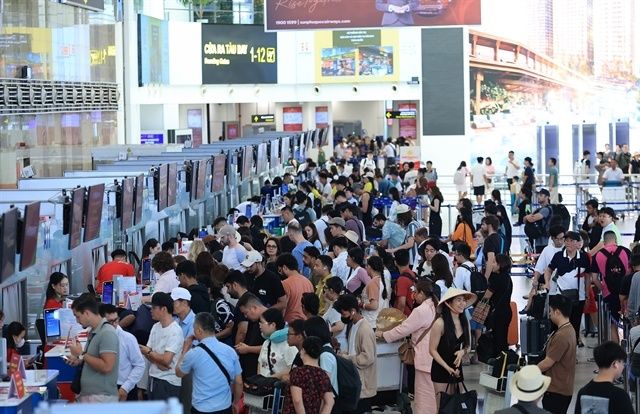
Vietnam's government has released a sweeping new aviation regulation that will fundamentally reshape passenger rights across its airlines, marking a significant shift towards consumer protection in the Southeast Asian nation's aviation sector. Decree No. 208, issued this week, establishes mandatory compensation frameworks for passengers affected by flight disruptions—a development that underscores growing regional momentum towards stronger airline accountability standards. The regulation will come into force at the beginning of next month, giving carriers limited time to restructure their operations and internal processes to ensure compliance.
The new decree defines what constitutes a flight delay with precision: any departure occurring more than 15 minutes past the scheduled time qualifies as a delay, while delays of four hours or longer are classified as "long delays." This technical classification becomes crucial because different compensation thresholds and assistance requirements are triggered at various delay intervals. For carriers, the introduction of specific time markers means they must now implement detailed monitoring systems and passenger communication protocols to track and respond to even minor scheduling slippages.
Airlines operating in Vietnam face immediate obligations whenever a delay is anticipated. Carriers must proactively inform passengers of the disruption, provide a clear explanation for the cause, and continuously update the revised departure time to airport operators and terminal service providers. Critically, airports must display this updated information on flight information screens at minimum intervals of 30 minutes, creating a transparency requirement that extends beyond the airline to the airport infrastructure itself. This multi-stakeholder approach reflects Vietnam's attempt to create accountability across the entire aviation ecosystem rather than placing responsibility solely on carriers.
When delays stretch to two hours or longer, material assistance becomes mandatory. Airlines must provide passengers with drinking water or issue equivalent vouchers, addressing the immediate comfort needs of stranded travellers. The decree recognises that extended disruptions require more substantial support, particularly when delays occur outside standard business hours. For delays happening between 10pm and 7am, carriers must arrange sleeping or resting accommodation suited to local conditions or propose alternative arrangements with passenger consent. Daytime delays between 7am and 10pm require suitable rest facilities, though with more flexibility regarding what constitutes "suitable" given varying airport amenities across Vietnam.
Passengers facing carrier-caused delays gain the right to demand rebooking on alternative flights or rerouting to their final destination at no additional cost. Crucially, airlines must waive all itinerary change restrictions and associated surcharges when the airline itself bears responsibility for the delay. This provision directly addresses a longstanding friction point in aviation: passengers often discover that rebooking options come with substantial additional fees despite the disruption being entirely the airline's fault. By eliminating such charges, Vietnam's decree shifts financial consequences back to the liable party.
Schedule changes—deliberate alterations to departure times by the carrier—receive distinct treatment under the regulation. When a carrier advances or delays a flight by five hours or more from the original scheduled time, passengers gain enhanced rights including the option to request full refunds, request rebooking on alternative itineraries with suitable departure times, or secure placement on another flight within 72 hours at their request. However, minor schedule adjustments of no more than four hours earlier or 15 minutes later remain subject to individual carrier policies, acknowledging that minor timing shifts are inevitable in aviation operations and should not trigger regulatory intervention.
Flight cancellations trigger the strongest protections in the decree. Defined as flights not operated despite at least one passenger holding a confirmed seat and ticket under that flight number, cancellations require carriers to notify passengers immediately, apologise, and explain the reason. When cancellation results from carrier fault, airlines must either rebook passengers on suitable alternative itineraries, secure seats on other flights enabling them to reach their destination, or refund the full fare or unused ticket portions. Importantly, carriers must waive all restrictions on rebooking and associated surcharges when they cause the cancellation, placing financial responsibility squarely on the airline's shoulders.
The decree also grants the Minister of Construction authority to establish non-refundable advance compensation amounts—a mechanism allowing passengers to receive upfront payments without requiring lengthy claims processes. The minister will prescribe payment methods, deadlines, and reporting obligations for carriers regarding delays, cancellations, and denied boarding situations. This delegation to the ministry suggests Vietnam recognises that compensation frameworks require ongoing refinement as airlines respond to initial regulations and operational realities become clearer.
For Malaysia and the broader Southeast Asian region, Vietnam's decree represents an important regulatory precedent. The aviation sector across ASEAN has historically lagged behind Europe and North America in passenger protection standards, with many carriers operating in a regulatory environment offering limited compensation for disruptions. Vietnam's move signals that regional governments increasingly recognise the competitive advantage of strong passenger rights—carriers that implement transparent, fair compensation systems build consumer trust and differentiate themselves from competitors. Malaysian carriers operating regional routes will likely face growing passenger expectations for similar protections, potentially creating pressure on Malaysia's own regulatory framework.
The implementation challenges should not be underestimated. Vietnamese carriers must now develop sophisticated systems to classify delays, calculate compensation, process refunds, and coordinate rebooking arrangements across their networks. Smaller carriers may face disproportionate compliance costs, potentially affecting regional competitiveness. Airport operators must upgrade information display systems and coordinate with multiple airlines simultaneously. These operational demands will likely produce implementation friction during the initial months following the decree's effective date.
Regional industry observers anticipate that Vietnam's regulation could trigger a domino effect across Southeast Asia, with other nations potentially adopting similar frameworks to harmonise regional standards and prevent regulatory arbitrage. Airlines currently enjoy operational flexibility that Vietnam is now restricting, creating incentives to lobby for exceptions or phase-in periods. However, once implemented, strong passenger protections become politically difficult to reverse, as consumer groups mobilise to defend newly acquired rights. Vietnam's decree thus represents not merely a regulatory change but a potential inflection point in how Southeast Asian aviation balances carrier interests against passenger protections.