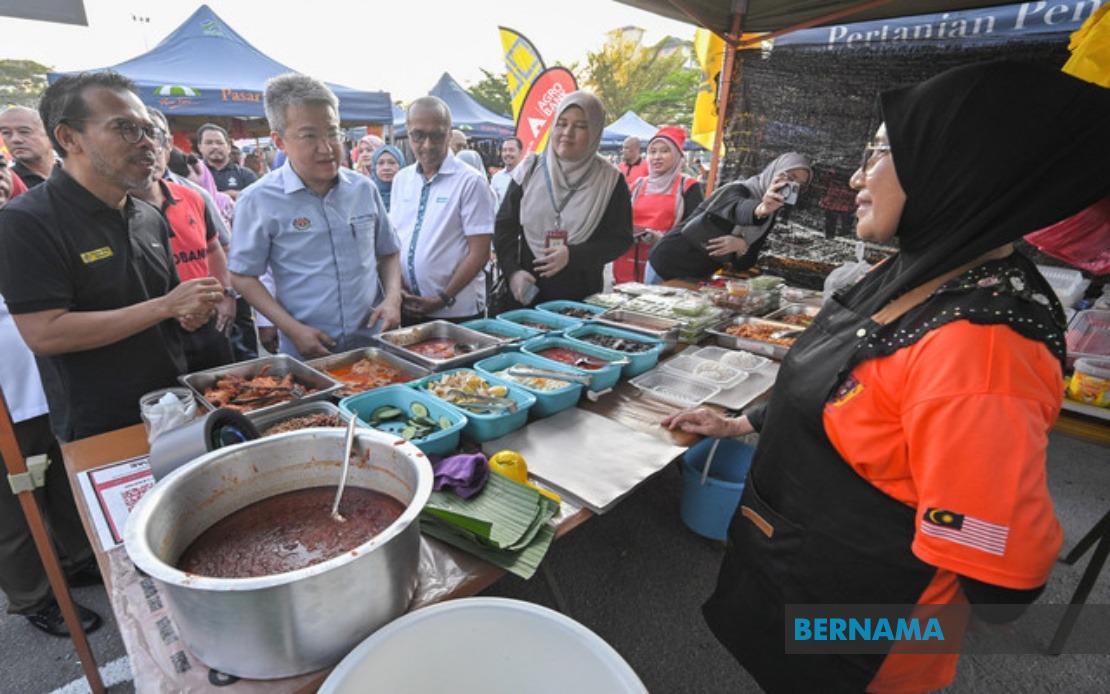
The Malaysian government is making a substantial push to democratise access to credit for the nation's informal economy, committing RM9.8 billion in microfinancing distributed through six major institutions. Deputy Finance Minister Liew Chin Tong unveiled the initiative at the Dataran Puchong Permai Farmers' Market, signalling a deliberate policy shift towards supporting street traders and small entrepreneurs who have historically struggled to qualify for conventional bank loans.
The allocation represents a recognition that Malaysia's microenterprise sector—comprising hawkers, street vendors, and small business operators—has been systematically excluded from mainstream financing channels. These traders typically lack formal collateral, business registration, or credit history, making them invisible to traditional lenders. By channelling billions through specialist microfinance institutions, the government aims to break this cycle and unlock entrepreneurial potential at the grassroots level.
Four financing agencies have already demonstrated traction in the initial phases of the programme. At the Puchong market alone, twelve hawkers have secured approvals, with Amanah Ikhtiar Malaysia (AIM) accounting for seven recipients, Bank Simpanan Nasional (BSN) for three, and Agrobank for two. These early numbers suggest genuine demand among street traders, many of whom operate without formal financial infrastructure and have relied on informal lending networks or personal savings.
The institutional framework supporting the initiative draws on diverse players within Malaysia's development finance ecosystem. BSN, Agrobank, Bank Rakyat, the Companies Commission of Malaysia, TEKUN Nasional, and Majlis Amanah Rakyat form a coordination network designed to lower barriers to application and approval. Rather than forcing traders to navigate bureaucratic channels, the programme brings these agencies directly to market sites, reducing transaction costs and friction that typically exclude informal economy participants from credit markets.
The "Mikro Kredit Turun Padang" programme itself embodies a strategic pivot in how government approaches financial inclusion. The initiative's name—literally "micro-credit going out to the field"—reflects a deliberate rejection of a passive, window-based lending model. Instead, financing teams visit farmers' markets and trading communities with advisors and application forms, democratising access by meeting traders where they already conduct business. This approach acknowledges a fundamental truth about informal economy participation: many hawkers cannot afford to take time away from their stalls to visit distant bank branches during office hours.
The rollout strategy indicates careful geographic sequencing. Puchong joins earlier editions at Taman Melawati, Kelana Jaya, and Bandar Tasik Permaisuri, suggesting coverage of diverse lower to middle-income residential areas across the Klang Valley. This phased approach allows the government to refine implementation, gather operational data, and adjust processes based on what works at different market sites and among trader demographics.
Deputy Finance Minister Liew's emphasis on gathering direct feedback from traders signals that policymakers intend this as an iterative programme. By channelling grassroots experiences through the Ministry of Finance to potentially the Prime Minister's office during budget deliberations, the government is creating a feedback loop that could inform future resource allocation and policy refinement. This contrasts with top-down financing models that ignore trader preferences and constraints.
For the Malaysian SME sector more broadly, this initiative carries important implications. Street traders and informal business operators represent a substantial but largely uncounted segment of the economy. Enabling their access to formalised credit could facilitate graduation from pure subsistence trading to sustainable business operation, encouraging registration, record-keeping, and tax compliance. Better-capitalised informal enterprises also contribute more to local economies and are more resilient to shocks.
The Southeast Asian context underscores the significance of this commitment. Regional neighbours including Indonesia, Thailand, and the Philippines have invested heavily in microfinance as a poverty reduction and entrepreneurship tool. Malaysia's RM9.8 billion allocation, distributed through established institutions rather than experimental microlenders, positions the nation within this regional trend whilst leveraging existing institutional capacity. The involvement of Bank Rakyat and TEKUN Nasional particularly demonstrates integration of development-focused institutions alongside commercial entities.
For individual traders, the practical impact hinges on loan terms and conditions. Microfinance typically charges higher interest rates than conventional commercial loans, reflecting higher default risk and servicing costs. The critical question becomes whether the RM9.8 billion allocation translates into genuine affordability for street vendors operating on tight margins, or whether rates remain prohibitively high. Early feedback from the Puchong market's twelve approved borrowers will reveal whether this financing actually enables business expansion or simply adds debt burdens.
Looking forward, the success of this programme will likely determine whether the government increases the allocation or extends it into other sectors of the informal economy. Petty traders, street food vendors, and informal retailers have sustained Malaysian urban and rural communities for generations. Providing them structured access to growth capital represents both social policy and economic strategy, potentially unlocking productivity improvements that benefit the entire economy.